


No, having blood drawn during Ramadan does not break the fast according to the majority of religious opinions. You can therefore have a blood test without breaking your fast, because nothing enters your body. The blood is simply drawn. That said, if the blood draw is large or weakens you considerably, it may be preferable to talk to your doctor. Here is what you need to know to handle things with peace of mind.
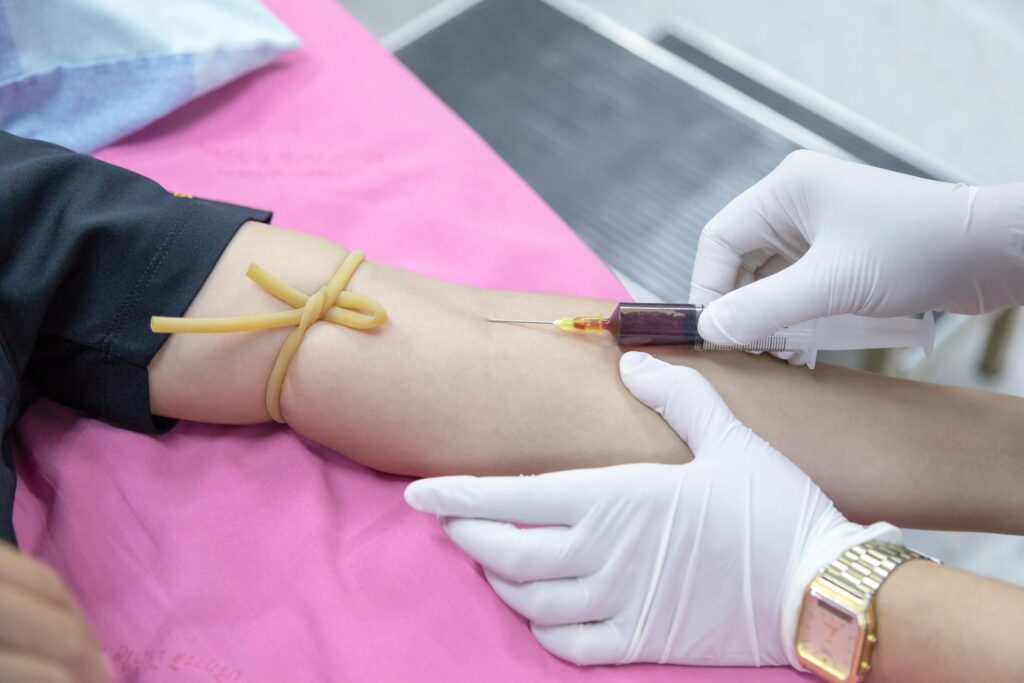
Blood draw during the Ramadan fast: what religion says
Scholars’ opinions on blood draws
Every year, many people wonder: does a simple blood draw break the fast? For the vast majority of today’s Muslim scholars, the answer is no. If it is just a test, the fast remains valid. Authorities such as Ibn Baz or Ibn Uthaymin are very clear: as long as no substance enters the body, the fast is not broken.
In short: drawing a little blood is not seen as eating or as an infusion. It does not nourish, so there is no problem for the fast, except in very particular cases.
Blood draw and validity of the fast according to the schools (Maliki, Hanafi, etc.)
The four main schools (Maliki, Hanafi, Shafi’i, Hanbali) all agree on the essentials: a blood draw for testing does not break the fast. Among the Malikis, the logic is the same: the fast remains valid as long as the person does not become too weak.
Be careful all the same: if a lot of blood is taken, as with a donation, some scholars recommend staying cautious. If the person feels truly weak, it is better to postpone the blood draw or, if needed, break the fast to protect one’s health.
Loose-fit set
A set you can breathe in
Wear it however you like, at home or out and about.

Difference between a test and a blood donation
There is a real difference between a standard test and a blood donation. A test is just a few milliliters. A donation is much more (400 to 500 ml).
- Blood test: does not break the fast, unless the person becomes very weak.
- Blood donation: can invalidate the fast if it causes a major bout of fatigue or a dizzy spell.
| Situation | Fast broken? | Practical tips |
|---|---|---|
| Blood draw (test) | No | Remember to hydrate well beforehand |
| Blood donation | Yes (if dizziness or weakness) | Preferably after iftar |
Hijab Collection
A hijab you forget you’re wearing… because it’s just perfect
Comfort, hold, softness. Put it on in the morning and you’re set all day.

Do you need to make up the fast after a blood draw?
Cases where the fast must be made up
In almost all cases, a blood test does not require you to make up the fast. The only exception: if feeling unwell forces you to eat, drink or receive an IV drip, then you will need to make up that day.
Tips to avoid breaking your fast
- Have your tests done early in the morning, while you still have plenty of energy.
- Avoid physical exertion right after the blood test.
- If you have a health concern or are at risk, talk to your doctor before Ramadan.
Conclusion
Having a blood test during Ramadan does not break the fast in almost all cases. Religious and medical opinions are clear: a blood test and fasting can go together, as long as you take a few precautions. If you have any doubt or a health concern, ask a professional for advice. Your health comes first, even during this special month.
FAQ
No, a blood test for analysis does not break the Ramadan fast, unless you feel significantly unwell.
Yes, it is possible. As long as you do not become so weak that you need to eat or drink, the fast remains valid.
Lie down, rest, and if it doesn’t pass, break your fast for your safety. You can always make up that day later.
Yes, but it’s better to wait until after iftar to avoid any risk of dizziness or heavy fatigue.