


In Islam, congratulating someone on a birth means invoking blessings for the child and the parents. We ask Allah to protect the newborn, to raise them in faith and to make them a source of joy. The best-known phrase is: “Barakallahu laka fil-mawhoubi laka, wa shakartal-wahiba, wa balagha ashuddahu, wa ruziqta birrahu“, a supplication full of blessings. These congratulations can be simple, sincere and full of gentleness. Here are the phrases to say and their meaning.

Dua for congratulating a birth in Islam: the traditional phrase
In the Muslim tradition, congratulating parents on a birth is not just saying a phrase out of politeness. The dua, that is, the supplication, takes on its full meaning at this moment. It is not an automatic message: it is a genuine wish for the child to be a blessing, and a way of thanking Allah. The best-known phrase is: “Barakallahu laka fil-mawhoubi laka, wa shakartal-wahiba, wa balagha ashuddahu, wa ruziqta birrahu.” It has been passed down for generations in the Muslim world, and it sums up everything: the blessing, the gratitude, and the wish that the child grow up on the right path.
This supplication, transmitted by the Companions of the Prophet Muhammad (peace and blessings be upon him), carries real value and legitimacy in the tradition. In practice, it covers three main points:
- That the child be a true blessing for their family.
- That the parents remain grateful.
- That the child grow up in faith and righteousness.
In plain terms, it means:
May Allah place His blessing on this child
May the parents be grateful
May the child grow up and become good and devout
Ideally, offer this dua as soon as the birth is announced, whether in person, by message or in writing. What matters is not the medium, but the intention behind the words. This tradition creates bonds between people and is a reminder of how present spirituality is at every stage of life. A few words, a lot of meaning: the dua is the heart of the message, nothing more, nothing less.
Islamic items
Beautify your space
Islamic items carefully selected

Congratulation variations for a birth depending on the child’s sex
According to Islamic tradition, the dua can be adapted depending on the baby’s sex. It’s a small gesture that always pleases the family. For a girl, the phrase is “Barakallahu laki fil-mawhoubati laki”, and for a boy, “Barakallahu laka fil-mawhoubi laka”. It’s easy to remember and shows that you thought of the detail that matters.
To remember:
- Birth of a girl: “May Allah bless the girl He has granted you.”
- Birth of a boy: “May Allah bless the boy He has granted you.”
You can also add classic expressions such as:
- “Mabrouk!” (congratulations)
- “Mashallah!” (what Allah has willed)
This makes the congratulatory message even warmer and more spontaneous, while remaining faithful to tradition.
Islamic birth congratulations – Quick recap in a table:
| Child’s gender | Formula in Arabic | Phonetics | Translation |
|---|---|---|---|
| Girl | بَارَكَ اللَّهُ لَكِ فِي الْمَوْهُوبَةِ لَكِ | Barakallahu laki fil-mawhoubati laki | May Allah bless the daughter He has granted you |
| Boy | بَارَكَ اللَّهُ لَكَ فِي الْمَوْهُوبِ لَكَ | Barakallahu laka fil-mawhoubi laka | May Allah bless the son He has granted you |
Remember to personalize it to the occasion. A well-chosen word, and you’ll score points with the family!
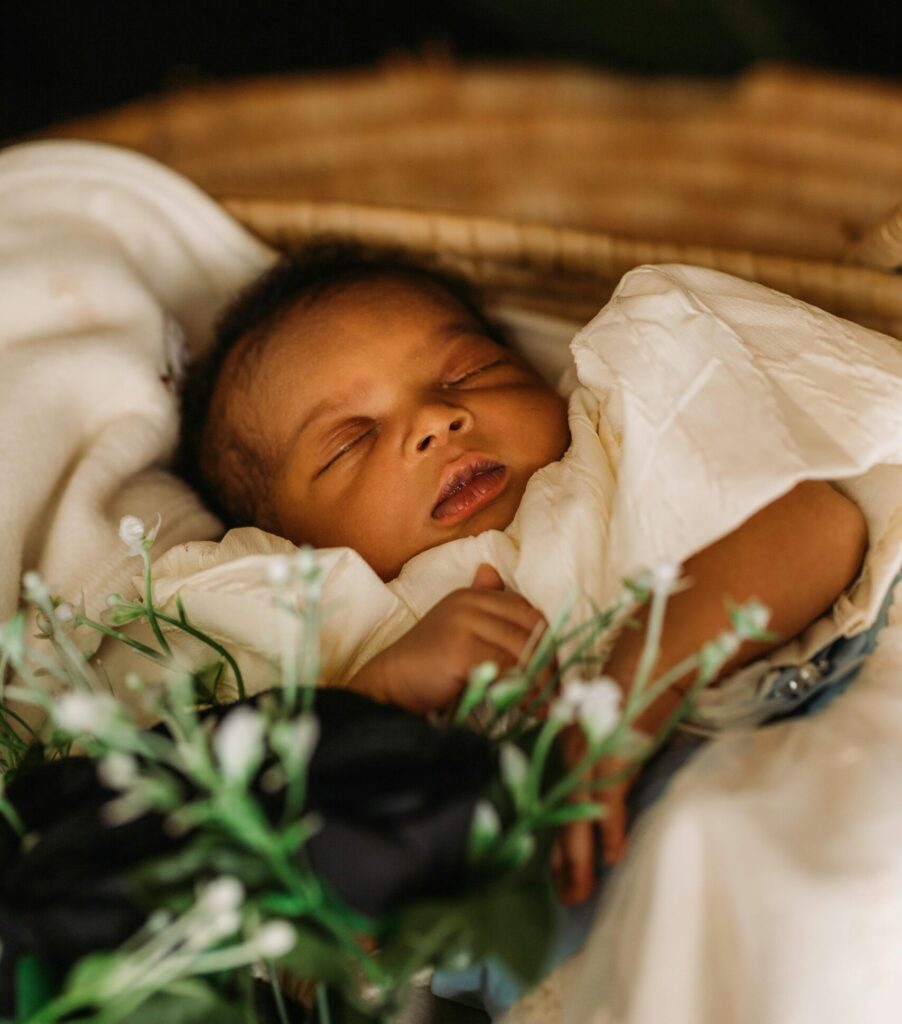
Examples of congratulation messages for a birth in Islam
Today, congratulating someone on a birth often happens through a text message, an instant message or a small card. No need for long speeches: the idea is to stay true to tradition while adapting to our habits.
A few examples to pick from:
- Text message: “Barakallahu laka fil-mawhoubi laka, wa shakartal wahiba… Congratulations on this beautiful baby!“
- Card: “May Allah bless your child and make him/her a source of happiness for your family.”
- Spoken message: “Barakallahu laka fil-mawhoubi laka! Mashallah, congratulations.“
To make your message unique:
- Add the child’s name.
- Slip in a personalized wish, for example: “May he/she grow up healthy and in faith.”
- Stay natural, sincerity is what matters.
Birth congratulation templates to copy/paste if needed:
- “Barakallahu laka fil-mawhoubi laka, wa shakartal wahiba… May Allah grant you joy and health with this newborn.“
- “Mabrouk on the birth! Barakallahu laki fil-mawhoubati laki.”
- “Mashallah, congratulations on your son!”
In digital form as on paper, a simple and authentic message always makes an impact. No need to overdo it: tradition is also about simplicity.
Women’s set
A set you can breathe in
To wear however you like, at home or outside.

As parents – Replying to birth congratulations in Islam
Receiving congratulations on a birth is always a lovely moment. The Islamic tradition offers a simple and meaningful reply, to thank the person who made the dua for you. The formula to prefer (found in the table) expresses gratitude and a blessing in return.
The reply “Wa barakallahu fik, wa jazakallahu khayran” means “May Allah bless you and reward you with goodness.” It is direct, kind, and shows that you appreciate the gesture. No need to look for long sentences: a few well-chosen words are enough.
Small variations depending on the context:
- “Thank you very much, wa barakallahu fik.“
- “May Allah reward you, wa jazakallahu khayran.“
- “Thank you for your invocation, may Allah grant you the best.“
In summary:
- Simplicity and sincerity are your best allies.
- No need for the perfect formula, the main thing is to reply from the heart.
- If you hesitate, remember that tradition values modesty and spontaneity.
Religious sources and references
The tradition of congratulating on a birth rests on solid foundations in Islam. Several hadiths reported by the companions of the Prophet Muhammad (peace and blessings be upon him) mention this invocation. Scholars such as Al-Hasan Al-Basri and Imam An-Nawawi also recommended using this dua to follow the prophetic tradition.
To go further, there are reliable resources:
- The “Fortress of the Muslim”: a reference for all invocations, including those for a birth.
- Sites like “Apprendre-larabe-facilement.com” or “My Little Deen” offer practical guides to understand and apply these traditions.
A little table of useful resources:
| Source | Type | Link |
|---|---|---|
| Citadel of the Muslim | Book/website | [citadellemusulman.com](https://www.citadellemusulman.com) |
| Learn Arabic easily | Educational website | [apprendre-larabe-facilement.com](https://www.apprendre-larabe-facilement.com) |
| My Little Deen | Educational blog | [mylittledeen.com](https://www.mylittledeen.com) |
A quick visit to these sites, and you can be sure to stay within tradition. And if you’re ever looking for an evening read, the Citadel of the Muslim never disappoints!
Conclusion
Congratulating a birth in Islam is much more than a simple message: it’s about sharing a true blessing and carrying on a tradition full of meaning. Whatever the medium, the dua remains the heart of the gesture. A short, sincere message, and the joy comes through right away. What matters is the intention: simplicity always makes the difference.
FAQ
Use the traditional dua: “Barakallahu laka fil-mawhoubi laka, wa shakartal-wahiba, wa balagha ashuddahu, wa ruziqta birrahu“. You can add a “Mabrouk” or a “Mashallah” to complete it.
In Arabic: بَارَكَ اللَّهُ لَكَ فِي الْمَوْهُوبِ لَكَ
In phonetics: Barakallahu laka fil-mawhoubi laka
The recommended reply: « Wa barakallahu fik, wa jazakallahu khayran » (May Allah bless you and reward you with good).
Yes, the phrase changes depending on the gender:
- For a girl: « Barakallahu laki fil-mawhoubati laki »
- For a boy: « Barakallahu laka fil-mawhoubi laka »
Absolutely, the dua can be sent by text message, written on a card or said out loud. What matters most is that the message comes from the heart.