


Wearing trousers above the ankles is permitted in Islam, and it is even recommended for men according to several hadiths. What is discouraged is deliberately letting a garment hang below the ankles, especially in order to appear superior. For women, the rule is not the same. Here is what you need to know to choose an outfit that complies with Islamic tradition.
In brief
- Wearing trousers above the ankles is permitted, and recommended for men.
- The main issue is letting a garment hang below the ankles out of pride.
- The main sources are the hadiths, with nuances depending on intention.
- Women are not affected by this rule in the same way.
What is the rule on wearing trousers above the ankles in Islam?
In Islam, it is permitted for a man to wear his trousers above the ankles. According to several hadiths, it is even recommended. What is criticized is mainly wearing a garment that falls below the ankles, particularly if it is done out of arrogance.
Islamic tradition emphasizes simplicity and humility in the way one dresses. Wearing clothes that end above the ankles is seen as being in line with the sunnah, that is, with the example of the Prophet. The idea is to avoid any sign of ostentation or of seeking superiority, two attitudes strongly discouraged in Islam.
In everyday life, this translates into a thoughtful, simple choice of clothing, without overdoing it or trying to stand out. Wearing trousers above the ankles is therefore a gesture of modesty. And if, by accident, the trousers fall a little lower, it is not a serious matter as long as the intention remains good.
Summary table
| Trouser length | Religious status for men |
|---|---|
| Above the ankles | Permitted, recommended |
| At the ankles | Permitted |
| Below the ankles (without arrogance) | Discouraged, blameworthy |
| Below the ankles (out of arrogance) | Forbidden, considered a sin |
Scholars’ opinions on trouser length
Scholars rely on the hadiths to set the rule. Most say that a man should wear his garment above the ankles. Some accept that it may touch the ankle, but advise against going beyond it, unless necessary. Intention matters a great deal: the more arrogance involved, the more serious it is.
Each school of jurisprudence (Hanafi, Maliki, Shafi’i, Hanbali) agrees on the principle, even though the details differ slightly. For example, some tolerate the garment reaching just to the ankle, without fully covering it. Others insist on staying well above, to avoid any doubt. What truly matters is the intention: if the long garment is worn to stand out or to show off wealth, it is blameworthy. If it is out of necessity or without any particular intention, the fault is lessened, or even absent. Scholars remind us that modesty should always guide the choice of one’s clothing, far more than mere measurement.
Difference between mid-calf, ankles and below the ankles
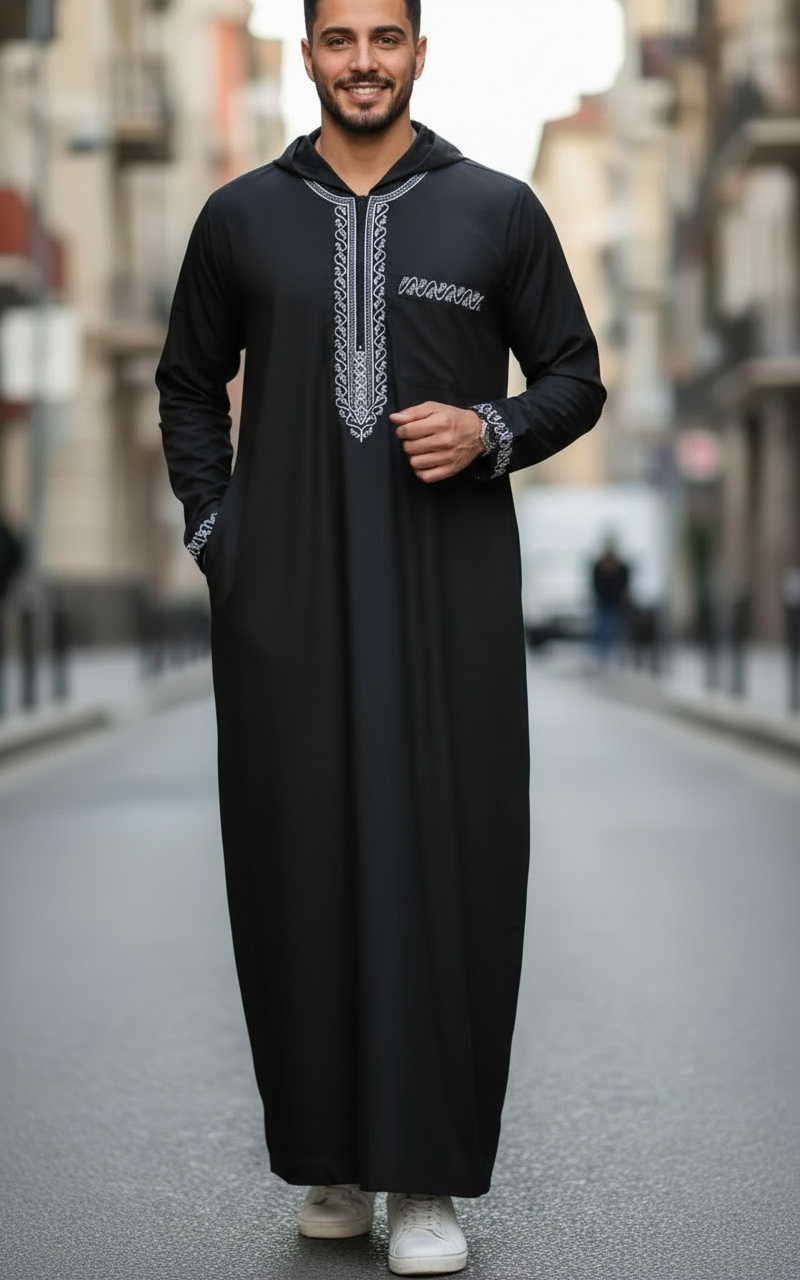
The texts do not require wearing trousers at calf level, but it is permitted. The main thing is to avoid having the garment go below the ankles. Wearing trousers above or at the ankles is in line with the tradition, whereas letting them drag below, especially to attract attention, is discouraged.
In practice, here are the different possible lengths:
- Mid-calf trousers: permitted, but not required; some companions of the Prophet preferred this length, but it is not a rule.
- Trousers just above the ankles: this is the main recommendation, faithful to the prophetic example.
- Trousers that touch the ankle without going past it: generally tolerated, as long as they do not cover the ankle.
- Trousers below the ankles: discouraged, and even forbidden if worn out of pride.
The goal is not to pull out a tape measure every time you get dressed, but to keep the spirit of modesty and humility.
-
Bestseller-20 %

Men's long hooded Muslim sweatshirt
Original price was: £25.80.£20.64Current price is: £20.64.Select options This product has multiple variants. The options may be chosen on the product page -
Sold out
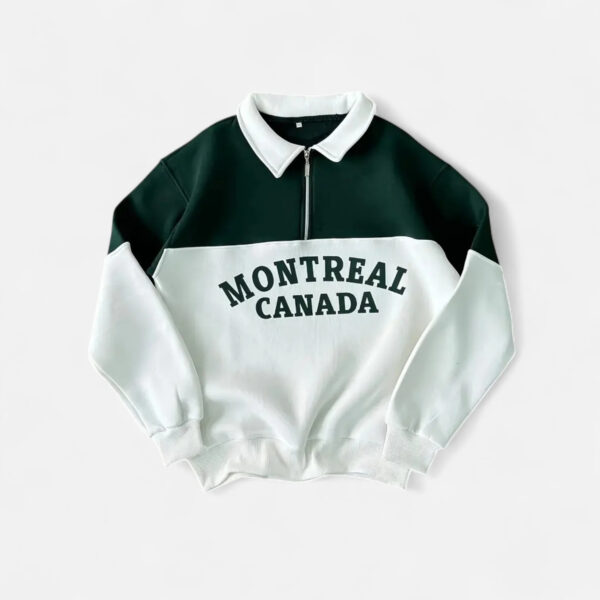
“Montreal Canada” High-Neck Sweatshirt – Unisex Polyester Jumper, Casual Style
£24.84Select options This product has multiple variants. The options may be chosen on the product page -
-22 %
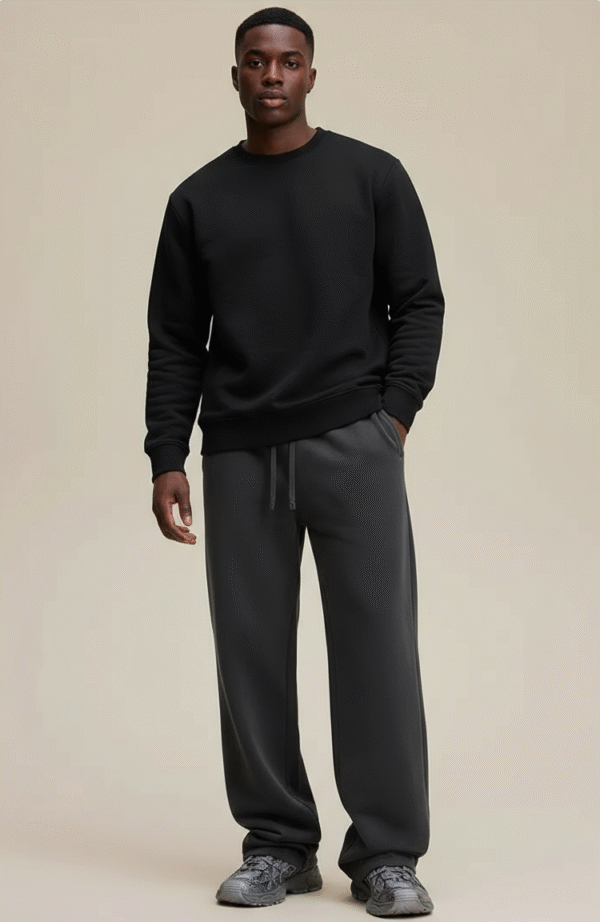
Oversized Straight Trousers – Premium Cotton
Original price was: £33.12.£25.80Current price is: £25.80.Select options This product has multiple variants. The options may be chosen on the product page

What do the hadiths and religious sources say about clothing and ankles?
Authentic hadiths show that the Prophet advised against letting one’s clothes hang below the ankles, except for a valid reason. There are nuances depending on intention and circumstances.
The religious texts mention the length of garments several times. The hadiths reported by the companions insist: clothes should not be left to drag, because at that time it was a sign of pride or wealth. This rule is therefore meant to encourage humility and to avoid any form of ostentation. Scholars specify that the seriousness of the act depends on intention: if clothes fall below the ankles without any desire to stand out, the fault remains minor.
A few important hadiths to remember
- “Whatever is below the ankles is in the Fire.” (Sahih al-Bukhari)
- “Allah will not look, on the Day of Judgment, at the one who drags his garment out of arrogance.” (Sahih al-Bukhari, Sahih Muslim)
- The Prophet wore his clothes above the ankles and recommended doing the same.
These references are followed by most schools of jurisprudence. They remind us that simplicity and discretion are at the heart of Islam, even in the way one dresses.
Meaning of the hadiths on garments below the ankles
The hadiths mainly aim to prevent pride and ostentation. At that time, dragging one’s garment was seen as a sign of wealth or superiority. Even today, the rule remains valid: avoid wearing trousers below the ankles, especially in order to be noticed.
The real message of these texts is to avoid any form of vanity. Islam encourages dressing properly, without seeking to attract attention or to display one’s social standing. Even as fashions change, the spirit of the rule remains the same: stay modest, avoid excess, and do not turn clothing into a marker of superiority. In short, trouser length is only a detail in service of an overall attitude of humility.
The case of arrogance or ostentation
Everything depends on intention. If the trousers fall below the ankles without any intent of arrogance, the fault is less serious. But if it is done to stand out or out of pride, it becomes a sin according to the texts.
Intention is the heart of Islamic jurisprudence. Scholars remind us that what matters most is your state of mind. Wearing a long garment for practical reasons (cold weather, habit…) is not the same as wearing one to impress. When in doubt, choose simplicity and avoid giving the impression that you want to stand out. This logic applies to every area of life, and clothing is no exception. A touch of humility is always a winner (even in your wardrobe).
Are there any exceptions or special cases?
Yes, there are exceptions: the rule mainly concerns men, and there are cases of necessity or of no intention of arrogance. For women, the question is approached differently.
Islamic jurisprudence takes real-life situations and constraints into account. For example, if a man has to wear longer trousers for health, weather or work reasons, he is not blamed. Islam seeks ease and takes genuine difficulties into account. And if a garment falls below the ankles without any intention of pride, the fault is much lesser.
For women, the rule on trouser length does not apply in the same way. Modesty generally recommends covering the ankles, so wearing long clothing is permitted, even advised. Scholars agree on this, while reminding us that intention and necessity always remain essential.
Wearing long trousers out of necessity or constraint
When there is a necessity (weather, work, no other choice), there is no blame in wearing trousers that fall below the ankles. Islam takes difficulties and intention into account.
A few cases where the rule is relaxed:
- Cold, rain, snow or difficult weather conditions
- Work requirements (uniform, safety…)
- No suitable clothing available or no way to do otherwise
- Health or mobility reasons
In all these situations, well-being comes first. Islam does not impose unnecessary constraints; the rule adapts to each case.
The rule for women: differences or similarities?
For women, it is a different matter. The texts emphasize modesty and the need to cover the body, ankles included. Wearing long clothing is therefore recommended, even obligatory, for women, unlike for men.
The Islamic tradition emphasizes female modesty, which translates into covering clothing, often down to the ankles. Scholars confirm that the rule on length mainly concerns men, because historically, they were the ones who sought to stand out through their attire. For women, discretion and dignity come first. Choosing long trousers or a long dress is therefore not only permitted, but often encouraged in order to respect modesty.
Practical tips for dressing according to the Islamic rule
To be in line with the Islamic rule, simply choose trousers that stop above the ankles, without trying to draw attention. The key is to avoid any excess or any desire to appear superior.
A few simple tips for everyday life:
- Favor trousers or garments that stop just above the ankles.
- Avoid overly long clothing that drags on the ground, especially if it is to attract attention.
- If your trousers fall below the ankles unintentionally, adjust them as soon as possible, without feeling guilty.
- For women, choose covering clothing suited to Islamic modesty.
- No need to measure to the exact centimeter: intention and simplicity come first.
To go further, consider:
- Adapting your outfit to the context (work, sports, outings…).
- Opting for comfortable and practical fabrics.
- Checking the cut of the trousers before buying to avoid surprises.
- Remembering that modesty is not only a matter of length, but also of attitude.
What to avoid
- Wearing long trousers to stand out or out of arrogance.
- Neglecting the opinions of scholars or the religious texts on this point.
- Judging others solely on the length of their trousers.
The key is to keep a balanced approach, without excess or laxity. The rule aims to encourage modesty, not to complicate life. And if you ever need to redo a hem, a quick call to a seamstress and it’s done.
Conclusion
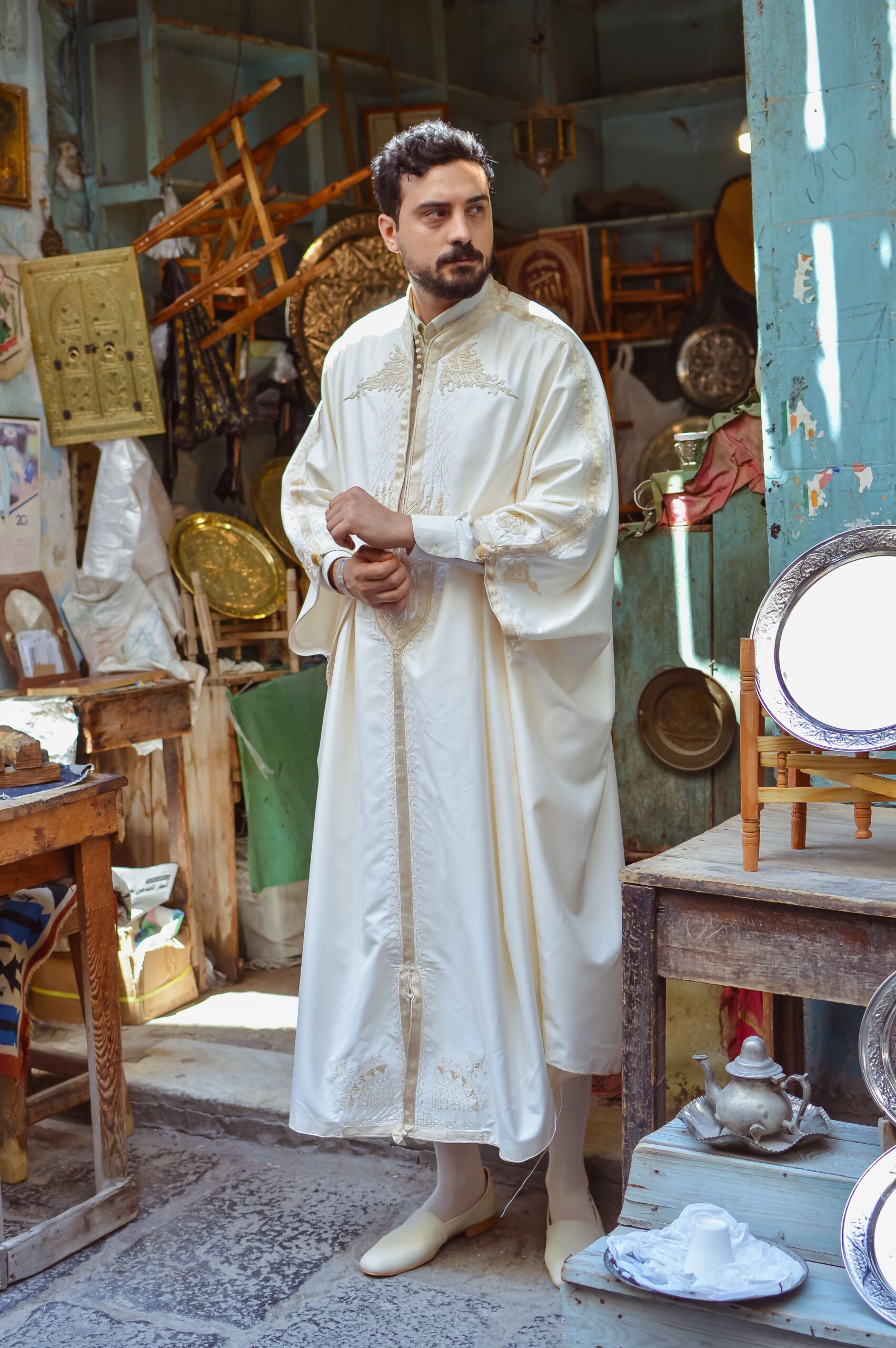
To sum up, wearing trousers above the ankles is permitted and even recommended for men in Islam, according to most sources. What is forbidden is deliberately letting the garment fall below the ankles out of arrogance. For women, the rule is different and mainly concerns modesty. In all cases, intention remains at the heart of the rule.
FAQ
No, trousers are not forbidden in Islam. They simply need to respect the rules of modesty, and for men, not extend below the ankles according to the majority of scholars.
Some Muslims choose to wear their trousers above the ankles to follow the Prophet’s recommendation and avoid what is condemned in the texts.
The rule on garment length mainly applies to men. For women, what matters is modesty and covering the body.
If the trousers go below the ankles without any intent of arrogance or drawing attention, there is no serious fault according to most opinions.
Leave a Reply