


The Muslim wedding follows a well-marked path: it begins with an official proposal (the khotba), a dowry (mahr) is set, and then comes the religious nikah ceremony, surrounded by witnesses. After that, it’s time for the celebration, with henna, a shared meal, and family traditions. This guide gives you a clear picture of each step, the rules to follow, and the customs that go with this big occasion, whether you’re about to get married, are a guest, or are simply curious.
In brief
- The Muslim wedding follows four main steps: proposal, dowry, religious ceremony (nikah), festive traditions.
- It meets specific religious conditions: consent, witnesses, dowry, guardian’s approval.
- The nikah makes the union official before God and the community.
- The traditions vary from family to family, but you often find henna, separation of men and women, and a shared meal.
The key steps of a Muslim wedding
The Muslim wedding takes place in several steps: the proposal (khotba), the setting of the dowry (mahr), the religious ceremony (nikah) before witnesses, and finally festive traditions such as henna. Each moment has its religious and social significance, even though the way of doing things may differ from one family to another.
Each step has its meaning. The khotba is the moment when the families meet, talk, and confirm the agreement of the future spouses. Next, the dowry is set, which shows respect for the future bride. Then comes the nikah, the true commitment before God and the community, where each person’s responsibilities are laid out. Afterward, it’s time to celebrate: traditions, a meal, henna… Depending on the origins (Maghreb, Africa, Middle East, Asia), you’ll find songs, traditional clothing, and sometimes games. Each family adapts the schedule to its values, which makes the Muslim wedding as varied as it is lively.
The khotba (marriage proposal)
The khotba is the official proposal: the groom’s family visits the bride’s family to lay the foundations of the marriage. It’s a key moment to get to know each other, discuss intentions, and see whether everyone agrees. Nothing is religiously official yet, but it’s a necessary step to move forward.
This meeting is often a real exchange. The families talk about values, expectations, and life plans. They also discuss practical matters: where to live, how to organize the celebration, and so on. The khotba is the time when everyone makes sure everything is clear and there are no misunderstandings. Sometimes a meal or a small exchange of gifts seals the meeting, so things get off to a good start.
Setting the dowry (mahr)
The dowry (mahr) is what the groom gives to the bride: a sum of money, a piece of jewelry, or a possession, decided together and freely accepted. It is a right of the woman, not just a symbol. It must be clearly set before the religious ceremony. By the way, there’s no need to bring out the calculator: what matters is agreement and respect.
Setting the dowry means taking the time to listen to the future bride and respect her wishes. It can be money, a precious object, or even a particular commitment (classes, a trip…). The essential thing: no pressure, everything must be transparent. Sometimes part of the dowry is paid later, which secures the bride’s rights. As a reminder: the dowry is not a purchase price, but a mark of respect and commitment.
The religious ceremony (nikah)
The nikah is the heart of the Muslim wedding. It is a religious contract, held before at least two witnesses, in which each person gives their consent. The imam or officiant reminds everyone of the rights and duties, then makes the union official. The nikah can take place at the mosque, at home, or in a hall, depending on preference.
During the ceremony, the imam checks that everything is in order: consent, dowry, witnesses, guardian’s approval. He explains the principles of marriage in Islam: respect, kindness, fidelity. After the exchange of consent, the contract is concluded, sometimes signed. A few verses of the Quran are read, and a prayer is said. The ceremony is simple, but all its meaning lies there: the promise before God.
Associated traditions (henna, meal, etc.)
Around the nikah, there are all sorts of traditions: the henna ceremony, often held the day before, symbolizes joy and blessing. On the big day, a large meal brings together relatives and friends. In many cultures, men and women are separated during the celebration. Each family adds its own touch, but the goal remains to share and celebrate together.
These festive moments give the Muslim wedding real warmth. The henna is a chance for the bride and her loved ones to get together, laugh, and receive advice and encouragement. The meal, with its traditional dishes, brings everyone around the table. Gifts are exchanged, people sing, and sometimes dance or play games depending on sensibilities. Photos, speeches, entertainment… each family personalizes the celebration, but everyone leaves with strong memories.
Summary table of key steps and conditions
| Key step | Main purpose | Associated religious condition |
|---|---|---|
| Khotba (proposal) | Meeting and agreement of the families | Consent of both parties |
| Setting the dowry (mahr) | Security and respect for the bride | Dowry set and accepted |
| Nikah (ceremony) | Religious formalization | Presence of witnesses, guardian’s approval |
| Festive traditions | Social and family celebration | Not religiously required |
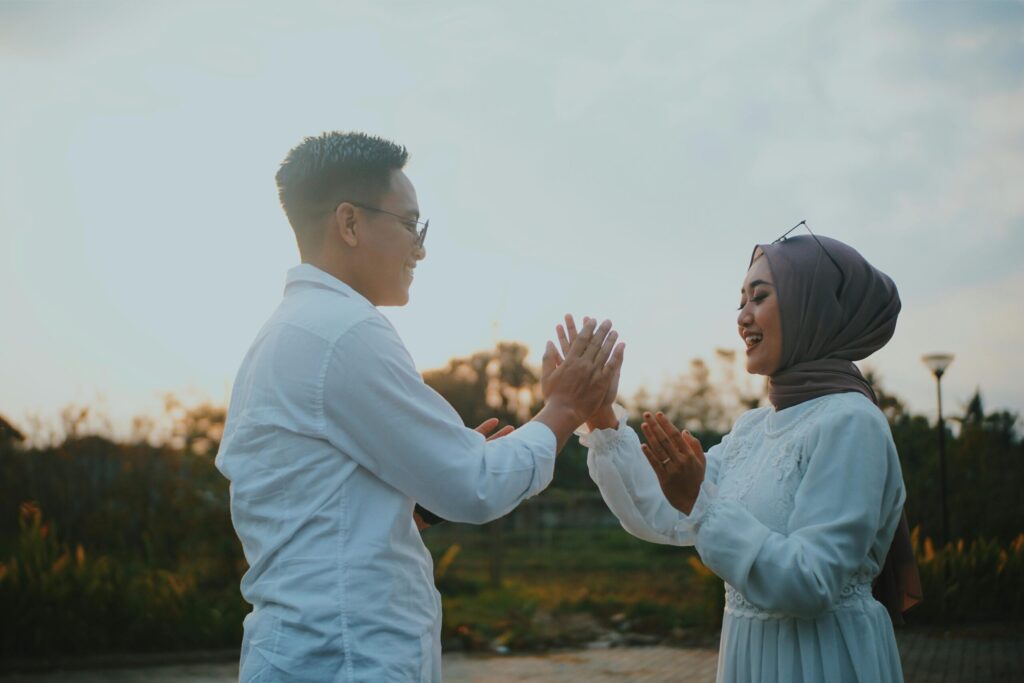
What are the conditions and rules of a Muslim wedding?
The Muslim wedding rests on four conditions: the consent of both spouses, the presence of two male witnesses, a set dowry (mahr), and the approval of the bride’s guardian. These rules ensure the religious validity of the marriage.
Beyond these basics, everything is designed to guarantee fairness and respect. Consent must be freely given, without pressure. The dowry is decided beforehand, according to the wishes of the future bride. The witnesses, for their part, ensure transparency: no secret or forced marriage. The guardian’s approval protects the bride, especially if she is young or inexperienced. Depending on the schools of law, a few details may vary (the exact role of the guardian, the nature of the witnesses…), so it’s best to find out locally. It’s also important to keep in mind the religious prohibitions: no marriage between close relatives, for example. Finally, the marriage must be public, accepted by the community.
The 4 mandatory conditions
The four essential conditions of a Muslim wedding:
- Consent of both spouses
- Presence of two male witnesses
- Dowry (mahr) set and accepted
- Approval of the bride’s guardian (wali)
If even one is missing, the marriage is not religiously valid.
Each of these conditions has its role: consent guarantees freedom, witnesses ensure transparency, the dowry protects the wife’s dignity, and the guardian looks after her interests. This isn’t just paperwork: these rules set a balanced framework so that the commitment is fair and respected. Before getting started, it is therefore crucial to check that everything is in place.
The witnesses and their role
The witnesses are essential: they validate the consent and the ceremony. Their presence makes the marriage official and public. They must be adults, Muslim, and reliable. Depending on the schools of thought, this can be two men or one man and two women.
The choice of witnesses really matters. They must be able to attest to the validity of the marriage if needed. Their mission isn’t just to be there: they listen, check that everything is in order, and can testify before the community. They are often chosen from among family or close friends. Their involvement is a reminder that, in Islam, marriage is lived openly, with the support of the community.
The role of the imam or officiant
The imam or officiant leads the ceremony, explains the rights and duties, then pronounces the nikah. He makes sure everything is in order and that everyone understands what is happening. His presence is not mandatory, but it is strongly recommended to ensure religious compliance.
The imam brings his experience, guides the families, answers questions, and reassures everyone about the validity of the act. In case of doubt, he can also act as a mediator. Even though the ceremony could take place without an imam, his presence is a real plus: it gives meaning and solemnity. He often also offers advice on married life or on handling small everyday conflicts… it never hurts!
Bullet list of conditions to meet
- Free and explicit consent of both future spouses
- Presence of two adult Muslim witnesses
- Dowry (mahr) set and accepted by the future wife
- Approval of the bride’s guardian (wali)
- Respect of religious prohibitions (no marriage between people who are not permitted to marry)
- Public nature of the ceremony (no secret marriage)
How does the religious ceremony (nikah) take place?
The religious ceremony (nikah) brings together the spouses, their witnesses, the bride’s guardian and, often, an imam. The consents are exchanged, the dowry is set, then verses are read and the union is blessed. It is the official signing of the marriage before God.
The nikah is simple and solemn. The imam reminds the couple of their rights and duties, asks the question of consent, then announces the dowry. The contract is concluded before witnesses, sometimes signed. A few Quranic verses are read, followed by a prayer for the couple’s happiness. The ceremony doesn’t last long, but it marks the true start of life together according to Islam.
Everything is done without fuss: the imam explains, asks the questions, then obtains the consent of both spouses. The dowry is announced aloud, so that everything is transparent. The contract is signed, sometimes in a register. The reading of verses recalls the sacred nature of the moment. It ends with a prayer and congratulations. After that, it’s time to celebrate! Sometimes, a small refreshment or a few sweets mark the beginning of this new life.
The typical order of the ceremony
- Welcome of the families and guests
- Reminder of the conditions and of the spouses’ rights and duties by the imam
- Request for the consent of both spouses
- Setting and acceptance of the dowry (mahr)
- Signing (oral or written) of the marriage contract before witnesses
- Reading of Quranic verses and blessing prayer
- Congratulations and start of the festivities
Each step follows naturally, without heavy protocol. The imam makes sure everyone understands, answers questions, and adapts the ceremony to the couple’s wishes: small gathering or large assembly, it’s up to each couple. What matters most is respect for the rules and a warm atmosphere.
Who must be present?
Essential are: the two future spouses, the bride’s guardian (wali), at least two adult Muslim witnesses, and often an imam or officiant. Family and friends may attend, but they are not required for religious validity.
The guardian looks after the bride’s interests, the witnesses validate the ceremony, and the imam brings his expertise. The guests give the event a collective and festive dimension. After the ceremony, it’s time for congratulations and conviviality: this is often when everyone shares in the newlyweds’ joy.
Where does the nikah take place? (mosque, home…)
The nikah can be held at the mosque, at home or in a hall. The choice depends on the families and on availability. What matters is compliance with the religious conditions, not the address.
Each place has its advantages: the mosque offers solemnity; the home, warmth; the hall, room to invite many guests. Some opt for a garden or an outdoor space. What really matters is the sincerity of the commitment and compliance with the rules. It’s up to you to adapt according to your wishes and constraints, without ever losing sight of the simplicity of the moment.
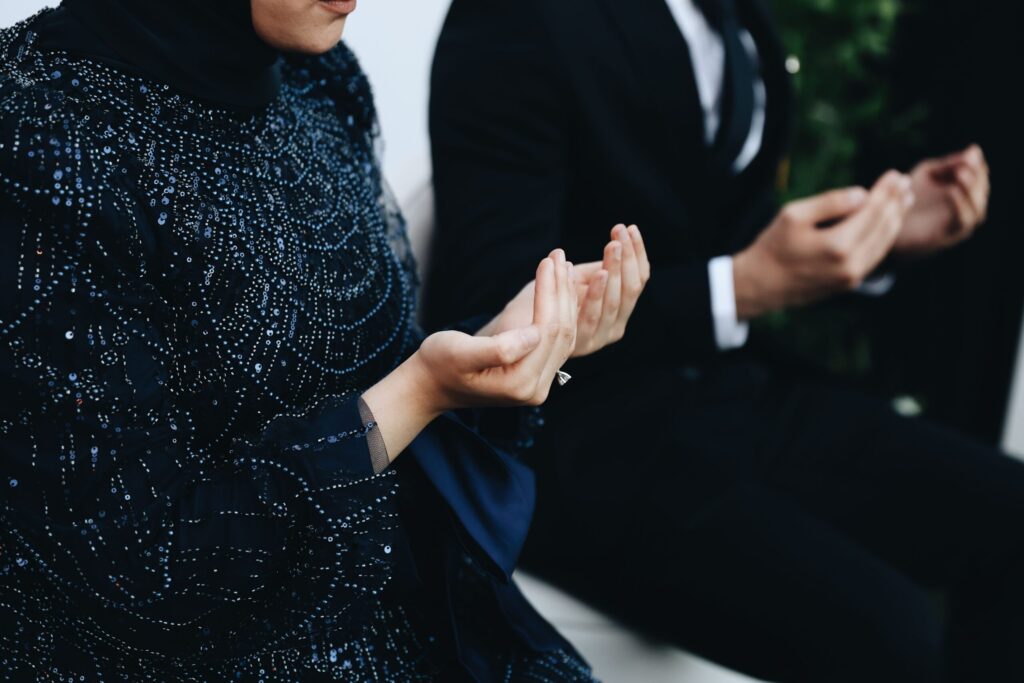
What are the traditions and customs surrounding a Muslim wedding?
The Muslim wedding is surrounded by traditions: the henna ceremony, separation of men and women during the celebration, and a shared meal with family. These customs vary depending on origins, but they give the wedding its festive and communal dimension.
These traditions are not religiously required, but they are essential for passing on values, strengthening bonds, and creating lasting memories. The henna is the time for advice and blessings for the bride. The separation of men and women lets everyone enjoy the celebration in their own way, with respect for all. The meal is a time for sharing, with traditional dishes and a convivial atmosphere. Other customs may join in: songs, outfits, games… Each family has its own recipe. And frankly, a wedding without music or good food would be a bit dull, wouldn’t it?
The henna ceremony
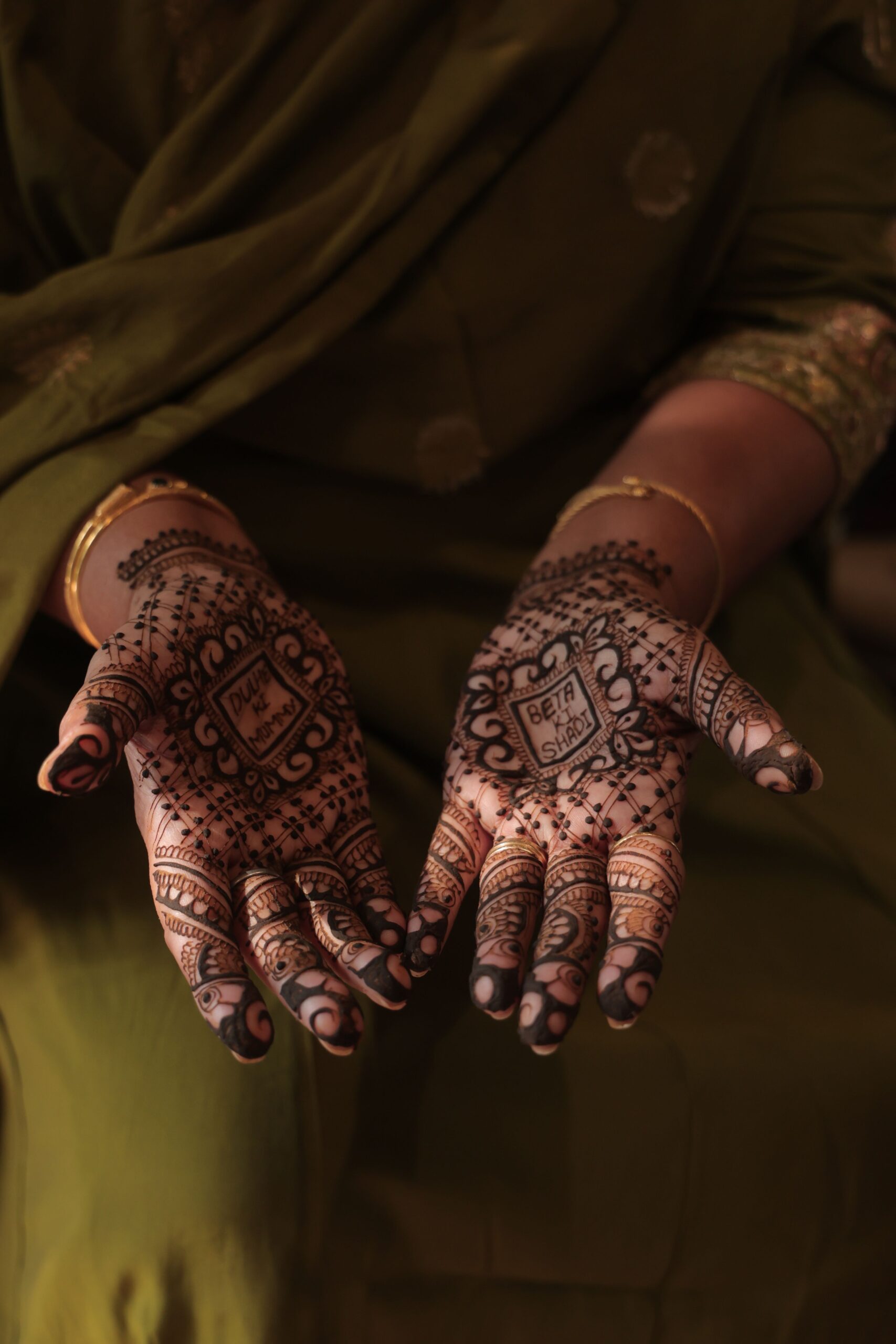
The day before the wedding, it’s time for the henna ceremony. The bride, surrounded by her female relatives, has henna applied to her hands (and sometimes her feet). This ritual symbolizes joy, prosperity and protection from the evil eye.
But it is not only about decoration: the henna ceremony is also about sharing. People sing, dance, swap stories and give advice to the bride-to-be. The henna, with its patterns, is believed to bring happiness. In some cultures, the color obtained is even considered a sign of luck. This moment, full of laughter, allows the bride to prepare herself, surrounded by the women who matter most to her. It is also an opportunity to strengthen ties between generations in a relaxed atmosphere.
Separation of men and women
During the celebration, men and women are often separated, whether for the meal or the dancing. This allows everyone to feel comfortable and respects religious sensitivities. The degree of separation varies from family to family.
The separation can be complete (different rooms, curtains, dedicated tables) or more flexible. The aim: to preserve modesty and allow everyone to enjoy the occasion. Some take the opportunity to let loose on the dance floor, away from prying eyes! What matters is that everyone finds their place and enjoys the celebration at their own pace.
Meals and festivities
The wedding meal is the highlight: families and friends gather around traditional dishes. The celebration may include music, dancing (within the bounds of the rules), and gift exchanges. Everyone adds their own personal touch.
Depending on the region, you will find couscous, tagines, rice, pastries… The festivities are sometimes punctuated by speeches, games, or small performances. The gifts exchanged are a sign of friendship. Music and dancing, adapted to each person, set the rhythm of the evening. Some weddings also include entertainment for children, or moments of reflection. In short, each family shapes the celebration in its own image, for a unique and unforgettable wedding.
Bulleted list of the main traditions
- Henna ceremony for the bride
- Separation of men and women during the festivities
- Family meal or banquet
- Gift exchanges between families
- Traditional music and dancing (depending on sensitivities)
- Blessings and prayers for the couple
The Muslim wedding is a deep commitment, both spiritual and social, with well-defined stages and clear rules. Proposal, dowry, religious ceremony (nikah), then festive traditions: every moment counts. Families add their own customs, but at the center there is always the sincere commitment of the spouses before God and the community. Understanding this journey is the key to experiencing or supporting this big day with peace of mind.
FAQ
To make a Muslim marriage valid, you need: the consent of both spouses, two male witnesses, a set dowry, and the approval of the bride’s guardian.
A Muslim marriage is based on the consent of the spouses, the presence of witnesses, the dowry, the observance of religious prohibitions and the public announcement of the ceremony.
These include the henna ceremony, the separation of men and women during the festivities, and the meal shared with family. Traditions vary depending on origins.
In France, a religious marriage alone is not legally sufficient. You must first go through the town hall for the marriage to be recognized.
Leave a Reply