


Attending a Muslim religious wedding is an opportunity to show respect and elegance while staying true to yourself. Here, the outfit matters as much for how others see you as for the overall atmosphere: favor modesty, avoid extravagance, and think about comfort so you can enjoy the celebration from start to finish. Women and men each have their own guidelines: long dresses or traditional outfits on one side, a sober suit or a qamis on the other. The key is to find the right balance between respecting the codes and the pleasure of being well dressed.
In brief:
- Modesty is the golden rule: arms, legs and chest covered, clothing that is not form-fitting.
- Long dress, abaya or caftan for women; sober suit, qamis or djellaba for men.
- Avoid white (often associated with the bride), overly bright colors, short or sheer outfits.
- Discreet accessories and comfort as a priority depending on the venue and tradition.
Female guest outfit for an Islamic religious wedding
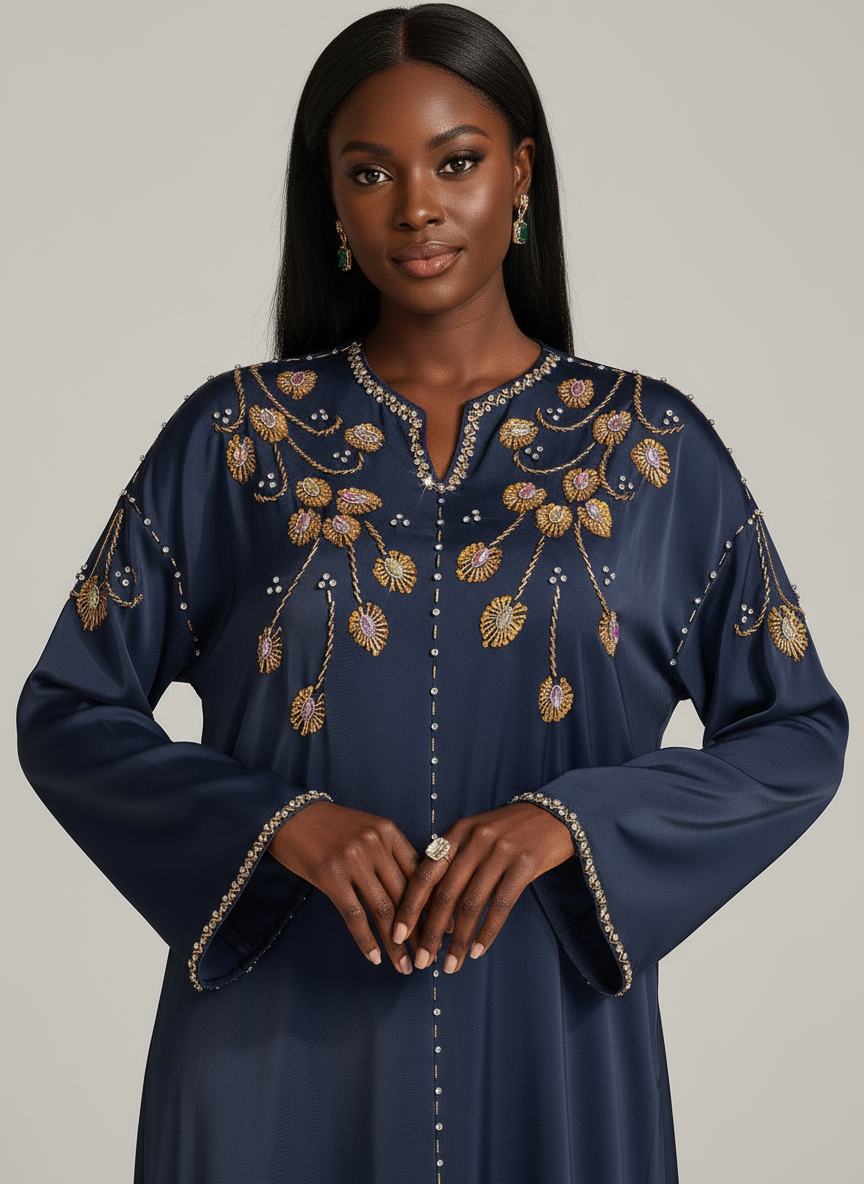
For a female guest at a Muslim religious wedding, the ideal outfit remains a long dress covering arms and legs, in a sober color and an opaque fabric. The headscarf is not always required, but modesty remains essential.
Respecting the dress codes in this context means choosing a covering outfit that is neither form-fitting nor sheer. Long dresses with sleeves, sophisticated abayas or traditional caftans are safe choices. Wearing a headscarf is generally not required of non-Muslim guests, but it may be appreciated, especially during the religious ceremony. Go for soft or deep colors, avoid fabrics that are too shiny or flashy, and keep in mind that comfort will help you enjoy the whole day.
The style of the ceremony and the cultural background of the couple can help refine your choice. For example, in some families, the caftan or the abaya carries real symbolic value. If you are unsure, ask the family or other guests for advice. Also consider bringing a stole or a light scarf, useful for adapting to the atmosphere or the venue, especially if the ceremony is held at the mosque. Finally, keep an eye on the weather and the length of the event to avoid any discomfort and stay at ease all day.
Examples of suitable outfits (long dress, abaya, caftan)
Here is a short comparison of the most common outfits for a female guest at a Muslim religious wedding:
| Outfit | Advantages | Drawbacks | Ideal occasions |
|---|---|---|---|
| Long dress | Elegant, easy to find, versatile | May lack a traditional touch | Ceremony, reception, cocktail |
| Abaya | Very modest, comfortable, sober | Sometimes seen as too simple | Religious ceremony, mosque |
| Caftan | Traditional, refined, flattering | Sometimes heavy or bulky | North African wedding, large reception |
Each option is easy to personalize with accessories suited to the ceremony. The key is to be covered and elegant.
To choose, find the right balance between tradition and modernity. A long dress can be elevated with a belt or a discreet piece of jewelry. The abaya offers maximum comfort and comes in everything from light cotton to chic silk. The caftan, often embroidered, gives a real festive look. Accessories let you add your own touch without ever forgetting modesty.
Colors and fabrics to favor or avoid
For a Muslim religious wedding, go for:
- Pastel, sober or deep colors (midnight blue, emerald green, burgundy).
- Opaque, flowing and breathable fabrics (cotton, silk, lined chiffon).
- Discreet or traditional patterns.
Absolutely avoid:
- White (often associated with the bride).
- All black (associated with mourning in some cultures).
- Flashy colors (neon pink, bright yellow).
- Sheer, form-fitting or overly shiny fabrics.
Choosing soft or deep colors means staying elegant while respecting tradition. Natural fabrics such as cotton or silk are perfect for combining comfort and chic, especially over a long day. Traditional patterns, such as fine embroidery or discreet floral motifs, add an original touch without drawing all eyes. When in doubt, simplicity always wins: it is the guarantee of avoiding missteps and showing your respect for the event. And remember to adapt your choice to the season: cotton and chiffon in summer, warmer fabrics in winter.
Accessories and details not to forget
To complete your outfit:
- Favor discreet accessories: light scarf, fine jewelry, simple clutch.
- Opt for closed shoes or elegant sandals.
- Avoid noisy or overly flashy accessories.
- If the ceremony takes place at the mosque, bring a scarf to cover your hair out of respect, even if it is not required.
Accessories make the difference without stealing the show. A light scarf can be used to cover your shoulders or hair depending on the atmosphere. Fine jewelry, such as small earrings or a discreet bracelet, adds a chic touch without overdoing it. A clutch or a small handbag is practical and elegant. For shoes, prioritize comfort: dressy sandals or elegant flats are ideal, especially if the ceremony is long. Skip bulky or noisy accessories so as not to disturb the ceremony. And one last tip: check the weather, a shawl or a light jacket can save the evening!
Male guest outfit for an Islamic religious wedding
For a male guest at a Muslim religious wedding, a sober suit or a traditional outfit such as the qamis or the djellaba is recommended. It is best to avoid clothing that is too casual or flashy.
Simplicity and respect for tradition guide the choice of men’s attire. A classic suit in neutral tones is always a safe choice. For a more traditional touch, the qamis (long tunic) or the djellaba (loose-fitting garment from North Africa) are very popular, especially for the religious part. Jeans, T-shirts or sneakers should be avoided so you don’t stand out for the wrong reasons.
Think about comfort and practicality, especially if the ceremony runs long or moves between venues (mosque, hall, outdoors). Lightweight, breathable fabrics are your allies, especially in summer or in hot climates. To stay elegant while respecting tradition, you can opt for a suit with a mandarin-collar shirt or a lightweight jacket, without flashy accessories. The essentials: a clean, impeccable outfit, a sign of respect toward the bride and groom and the guests.
Examples of suitable outfits (suit, qamis, djellaba)
- Dark suit (navy, gray, black) with a light shirt, tie optional.
- White or pastel qamis, sometimes embroidered, with simple shoes.
- Traditional djellaba, loose and comfortable, perfect for North African weddings.
Every option should remain elegant, clean and well fitted. Accessories should stay discreet.
The suit is a classic that works everywhere, especially for mixed ceremonies or those held in a hall. The qamis is the traditional, comfortable touch, ideal for the religious part or at the mosque. The djellaba, loose and often embroidered, adds style for North African weddings or big celebrations. As for shoes, choose according to the outfit: simple dress shoes for the suit, traditional babouches for oriental outfits. And above all, adapt to the weather and the style of the ceremony to stay comfortable from start to finish.
Recommended colors, accessories and shoes
- Favor subdued colors: blue, gray, beige, off-white.
- Avoid all-black or colors that are too bright.
- Dress shoes or clean traditional babouches.
- Accessories: classic watch, simple belt, no flashy jewelry.
Quick checklist before you leave:
- Clean, pressed suit or traditional outfit
- Elegant, polished shoes
- No T-shirt or sneakers
- Discreet accessories
- Clothing covering arms and legs
Understated colors ensure elegance and discretion. Accessories should stay very simple: a classic watch or a matching belt is enough. Shoes are essential: they should be clean and comfortable, since you may be standing for a while. And don’t forget to check that everything is well pressed and impeccable: a polished outfit is always appreciated. If you opt for traditional dress, find out about local customs so you don’t make a faux pas.

Modesty rules and dress codes to follow
Rule number one: arms, legs and chest covered, clothing neither tight nor transparent. Colors that are too bright or white (often associated with the bride) should be avoided.
Respecting modesty means choosing clothing that covers the skin and the body’s shape. Fabrics should be opaque, cuts loose, and length sufficient to cover knees and arms. Avoid loud colors or white, so as not to steal the spotlight from the bride or cause offense. These rules apply to everyone, even though how they are applied varies by region or family.
Modesty doesn’t rule out style: there are plenty of ways to be chic while staying discreet. Loose, well-cut clothing flatters subtly. Adapt to the family or regional tradition: some families are stricter about sleeve length or wearing a headscarf. Respecting these codes shows your consideration for the couple and contributes to a harmonious atmosphere.
What to absolutely avoid (short, transparent, tight clothing)
- Skirts or dresses above the knee
- Plunging necklines or backless styles
- Short sleeves or thin straps
- Transparent or overly thin fabrics
- Tight or very fitted clothing
- Colors that are too bright, patterns that are too flashy
- White (unless otherwise indicated), all-black
The miniskirt, even at 40°C, is a no.
Every detail counts: a fabric that is too thin or a cut that is too fitted can quickly become inappropriate, even if the outfit seems fine at first. Short or tight clothing may make other guests uncomfortable and may not fit the spirit of the ceremony. The same goes for accessories that are too flashy or noisy, or shoes that are too casual. When in doubt, discretion remains the best option, or ask the family for advice.
Differences by tradition (North Africa, Middle East, Asia)
| Region | Main no-gos | Possible allowances |
|---|---|---|
| North Africa | Short, tight outfits | Bright colors, caftan, djellaba |
| Middle East | Transparency, short sleeves | Qamis, abaya, gold accessories |
| Asia (Pakistan, India) | Low necklines, thin fabrics | Salwar kameez, deep colors |
Each family may have its own requirements, but modesty remains the common thread.
In North Africa, loose, colorful outfits are preferred, but always covering. Caftan and djellaba are must-haves, while short or tight clothing is to be avoided. In the Middle East, opaque fabrics and long sleeves are the norm, sometimes with gold accessories or embroidery. In South Asia, the salwar kameez or the long dress is the star, in understated fabrics and deep colors. Find out about the local tradition to avoid missteps and show your respect for the diversity of customs.
-

Oversized long-sleeved maxi dress
24,00 €Select options This product has multiple variants. The options may be chosen on the product page -

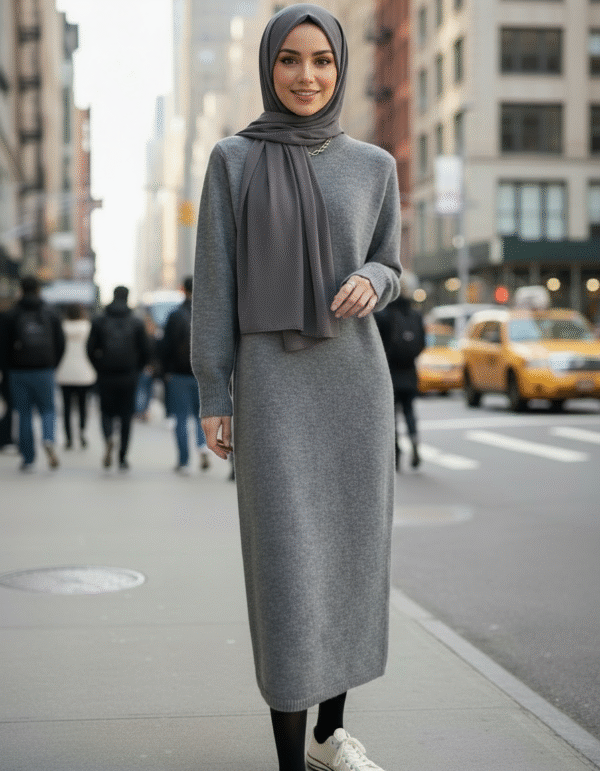
Women's long knitted jumper dress
45,60 €Select options This product has multiple variants. The options may be chosen on the product page -
-18 %

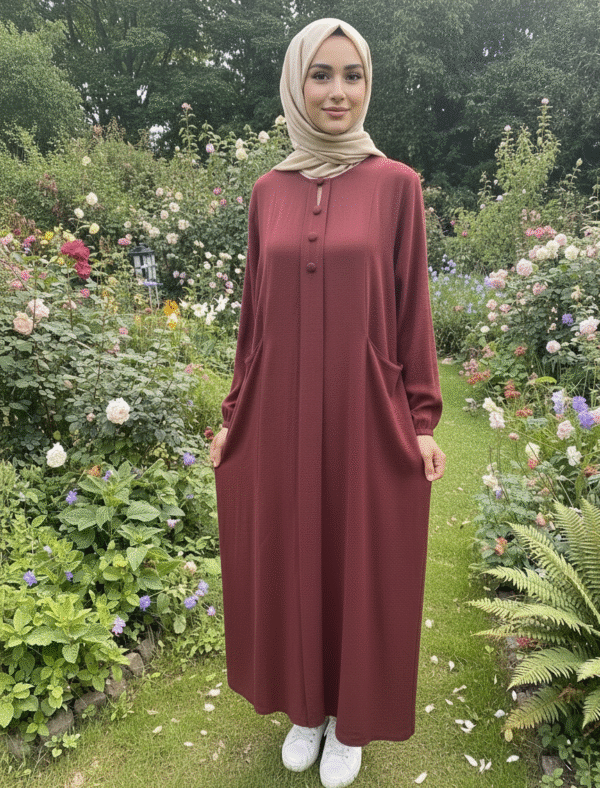
Long Button-Up Dress with Round Neckline
Original price was: 60,00 €.49,20 €Current price is: 49,20 €.Select options This product has multiple variants. The options may be chosen on the product page


Practical tips for choosing your Muslim wedding outfit
Choose an outfit you feel good in, that respects modesty and suits the type of ceremony. Favor breathable fabrics and loose cuts for more comfort.
The venue and the flow of the wedding influence the choice of outfit. For a ceremony at the mosque, simplicity and coverage are the rule. In a hall or outdoors, you can dare a bit more color or accessories, while staying respectful. Think comfort: an outfit that is too tight or too warm can spoil the celebration within the first hour.
If possible, bring a change of outfit or a few extra accessories, especially if the day is long or if several venues are planned (religious ceremony, reception, dance party). Adapt to the weather: a stole or a light jacket can become essential. For women, a scarf or a stole makes it easy to adapt to different settings, especially if the ceremony takes place at the mosque. Don’t hesitate to ask the family or other guests for their advice to avoid any faux pas and meet local expectations.
Adapting your outfit to the venue (mosque, hall, outdoors)
- Mosque: Very modest attire, arms and legs covered, scarf for women.
- Reception hall: More freedom with colors and accessories, but always modest.
- Outdoors: Choose light fabrics, and think of a jacket or shawl for the cooler air.
Adapting your outfit to the venue of the ceremony means avoiding awkward moments and fully enjoying the event. At the mosque, discretion is a must: understated accessories and shoes that are easy to take off are recommended. In a hall, you can add a touch of originality, but always within the limits of respect. Outdoors, focus on thermal comfort: breathable fabrics and light layering are your allies. Always allow a little room for adjustment, as the weather and the atmosphere can change during the day.
Tips for staying elegant and respectful
- Prepare your outfit in advance and try it on to check the comfort.
- Accessorize tastefully, without overdoing it.
- Bring a stole or a scarf just in case.
- Find out, if possible, about the family’s expectations or the regional tradition.
Quick tips to remember:
- Always cover arms, legs and chest
- Choose opaque, breathable fabrics
- Avoid white, all-black and flashy colors
- Bring a scarf or a stole for women
- Focus on comfort and understated elegance
Elegance is often about simplicity and attention to detail. Try on your outfit a few days beforehand to avoid unpleasant surprises. Well-chosen accessories can turn a discreet outfit into a refined ensemble, without ever going overboard. And the best accessory remains a smile: true elegance is the kind that puts everyone at ease.

Conclusion
For a religious wedding in Islam, the perfect outfit combines modesty, elegance and comfort. Whether you are a woman or a man, cover your arms and legs, avoid overly bright colors or white, and choose loose-fitting, opaque clothing. Adapting your outfit to the venue and the local tradition means showing respect for the event… and enjoying the celebration calmly, without stress.
FAQ
For a Maghrebi wedding, opt for a traditional outfit such as the caftan for women or the djellaba for men, making sure to cover the arms and legs. Bright colors are acceptable, but modesty remains essential.
It is advisable to avoid white (often associated with the bride), all-black (a sign of mourning) and overly flashy colors. Opt for subtle, pastel tones or deep colors.
Yes, a modern outfit is acceptable as long as it respects the codes of modesty: long sleeves, a length below the knee, no sheer fabric and no tight-fitting cut.
Wearing a headscarf is generally not mandatory for a non-Muslim female guest, but it is appreciated to cover your hair during the religious ceremony, out of respect.
Opt for discreet accessories: a scarf, delicate jewelry, closed shoes or understated sandals. Avoid accessories that are too flashy or noisy.
Leave a Reply