


The Ramadan 2027 in France is expected to begin on the evening of Sunday, February 7, with the first day of fasting on Monday, February 8, and to end on Monday, March 8. Eid al-Fitr would then be celebrated on Tuesday, March 9. These dates remain provisional: they will be confirmed through moon sighting. To get organized and experience this month with peace of mind, here is what you need to know and plan ahead for.
In brief
- Ramadan 2027 in France is expected to begin on the evening of Sunday, February 7, with the first day of fasting on Monday, February 8.
- The end of Ramadan is expected on Monday, March 8, followed by Eid al-Fitr on Tuesday, March 9.
- All dates are provisional: they depend on the sighting of the moon.
- Fasting times and prayer times vary from one city to another; detailed calendars are available for each region.
Ramadan 2027 dates in France
In 2027, Ramadan in France is expected to begin on the evening of Sunday, February 7, with the first day of fasting on Monday, February 8. The end of the holy month would fall on Monday, March 8, and Eid al-Fitr would be celebrated on Tuesday, March 9. These dates are given for guidance and may be adjusted depending on the sighting of the moon.
The Ramadan calendar is based on the lunar cycle. Each year, the dates are first estimated, then confirmed the day before the start of the month by the religious authorities, after the new moon has been observed. In France, this official announcement generally comes from the Grand Mosque of Paris or other recognized bodies.
Summary table of key dates
| Event | Provisional date 2027 |
|---|---|
| Start of Ramadan | Sunday, February 7 (evening) |
| 1st day of fasting | Monday, February 8 |
| End of Ramadan | Monday, March 8 |
| Eid al-Fitr | Tuesday, March 9 |
Keep in mind that these dates may change depending on the moon sighting. To avoid any surprises, check the official announcements as Ramadan approaches.
From year to year, Ramadan “moves back” by about ten days in the Gregorian calendar. This is because the Islamic calendar, based on the moon, has 354 or 355 days, while the solar calendar (used in France) has 365. As a result, Ramadan can take place in winter or summer, with fasting durations that change depending on the season.
In France, the diversity of Muslim communities means there may be slight variations in the announcement of the dates. Some families wait for confirmation from their local mosque, while others follow national announcements. To avoid confusion, it is advisable to consult several reliable sources, such as the websites of major mosques or community media.
Finally, the official announcement of the Ramadan dates is often a moment of sharing and warmth within families and communities. It is also an opportunity to get into the spirit and prepare for this special month, both spiritually and practically.
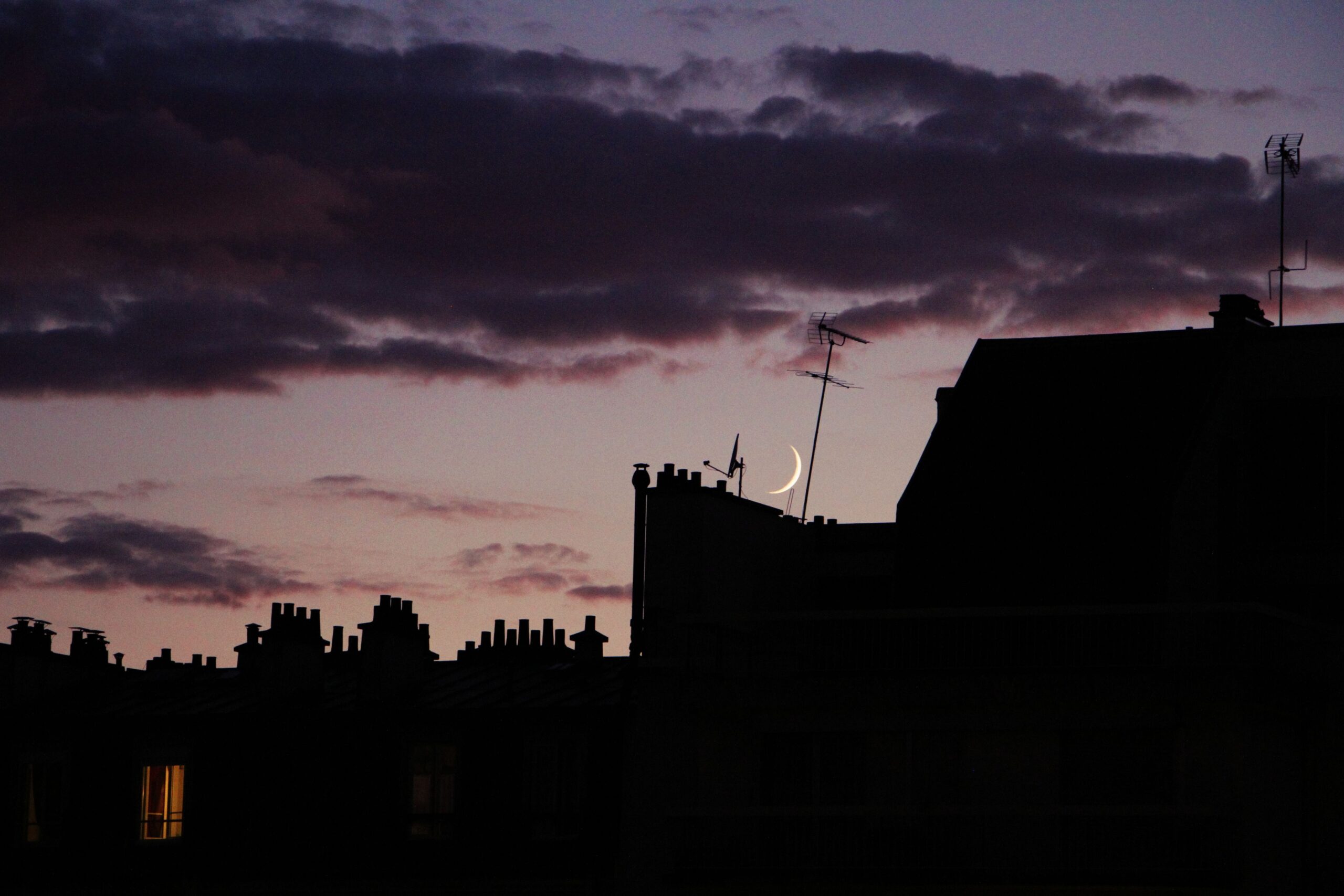
How are the Ramadan dates calculated?
The Ramadan dates are based on the Islamic lunar calendar, by observing the new moon or through astronomical calculations. In France, the dates are first estimated, then confirmed the day before the start of the holy month.
The Islamic calendar follows the moon: each month begins with the appearance of a new crescent. There are two main methods for setting the Ramadan dates:
- Traditional observation: the date is chosen after the crescent moon has been seen with the naked eye, generally the day before Ramadan begins.
- Astronomical calculation: some organizations use precise calculations to anticipate the birth of the new moon and announce the dates in advance.
In France, institutions such as the Grand Mosque of Paris often combine both approaches. This diversity sometimes explains small differences in dates between regions or communities. The best approach is therefore to follow the local official announcements to find out when Ramadan starts and ends.
Traditional observation holds a very symbolic place in many Muslim countries. It often involves committees that scan the sky in search of the first lunar crescent. But sometimes the weather or light pollution makes observation difficult, especially in cities.
For their part, astronomical calculations make it possible to predict the birth of the new moon precisely. This is convenient for schools, businesses, or families who wish to plan ahead. This method is gaining ground because it makes it easier to plan Ramadan-related events.
In practice, most worshippers wait for the official announcement from their mosque or a recognized institution before beginning the fast. There may therefore be a one-day difference between certain countries, or even between two neighboring cities. This flexibility is part of the tradition and does not change the spirit of Ramadan.
Ramadan 2027 calendar: fasting and prayer times
The Ramadan 2027 calendar in France details, day by day, the exact times to begin and end the fast (imsak and iftar), as well as the times of the five prayers. These times depend on the city; it is therefore advisable to consult a calendar suited to your location.
The fasting times (imsak for the start, iftar for breaking the fast) and the prayer times change every day and vary by city. In Paris, for example, here is an overview for the first week of Ramadan 2027:
| Day | Imsak (start of fast) | Fajr | Dhuhr | Asr | Maghrib (iftar) | Isha |
|---|---|---|---|---|---|---|
| February 8 | 06:10 | 06:20 | 13:20 | 16:45 | 18:10 | 19:30 |
| February 9 | 06:08 | 06:18 | 13:20 | 16:46 | 18:12 | 19:32 |
| February 10 | 06:06 | 06:16 | 13:20 | 16:47 | 18:14 | 19:34 |
| February 11 | 06:04 | 06:14 | 13:20 | 16:48 | 18:16 | 19:36 |
| February 12 | 06:02 | 06:12 | 13:20 | 16:49 | 18:18 | 19:38 |
| February 13 | 06:00 | 06:10 | 13:20 | 16:50 | 18:20 | 19:40 |
| February 14 | 05:58 | 06:08 | 13:20 | 16:51 | 18:22 | 19:42 |
*These times are given as a guideline for Paris. For other cities, be sure to check specialized websites, local Muslim associations or dedicated mobile apps.*
The times vary depending on latitude, season and time zone. In France, the north and the south can differ by several minutes. It is therefore important to check the times for your city.
To keep track of the times easily, several tools are available to you:
- Mobile apps dedicated to Ramadan, with alerts for each prayer and for iftar/imsak.
- Specialized websites that offer calendars by city.
- Posted times in mosques or community centers.
The times change every day, because day length gets longer or shorter depending on the time of year. In February-March, the days get longer, which can slightly change the start and end times of the fast over the course of the month.
For those who travel or work in several cities, it can be useful to have a calendar for each location. Finally, following the exact times also means experiencing Ramadan with peace of mind… even if the early wake-up for suhoor, let’s be honest, remains a real challenge!
-
-16 %

Women's set with loose top and long skirt
Original price was: 57,60 €.48,00 €Current price is: 48,00 €.Select options This product has multiple variants. The options may be chosen on the product page -
-25 %

Qamis black for men
Original price was: 33,60 €.25,20 €Current price is: 25,20 €.Select options This product has multiple variants. The options may be chosen on the product page -
-20 %

Qamis men's mandarin collar – Lightweight casual fabric
Original price was: 30,00 €.24,00 €Current price is: 24,00 €.Select options This product has multiple variants. The options may be chosen on the product page


Tips for Preparing for Ramadan in France
Preparing well for Ramadan in France means planning ahead for family organization, work and studies, while taking into account fasting times and prayer times. Planning your meals, informing those around you and adjusting your daily rhythm are key to experiencing this month peacefully.
Practical Checklist for Approaching Ramadan 2027
- Do your shopping in advance (dates, staples, suhoor, iftar).
- Let your colleagues and school contacts know so schedules can be adjusted if needed.
- Organize your schedule to fit in prayer and rest times.
- Prepare balanced menus to limit fatigue.
- Remember to hydrate well between iftar and imsak.
- See a health professional if you have specific needs.
- Set your alarms… and bring a good dose of patience!
To balance work or studies with fasting, here are some useful tips:
- If possible, adjust your work hours.
- Take regular breaks to avoid energy dips.
- Favor calm activities during the day.
For your health, focus on a varied diet, avoid sugary or fatty excess, and take care of your sleep. Ramadan is also a spiritual and convivial time: surround yourself with loved ones and listen to your body.
Planning ahead is truly the key to a successful Ramadan, especially in France where daily obligations pile up quickly. As a family, involving everyone in meal preparation or household organization lightens the mental load. For students, organizing study sessions around fasting times helps maintain focus.
Practical Tips
- Prepare some dishes in advance and freeze them to save time.
- Use shopping lists so you don’t forget anything.
- Plan healthy snacks for iftar, such as fresh fruit or light soups.
- Avoid overly large meals at suhoor so you don’t feel heavy during the day.
On the social side, letting colleagues or teachers know that you are fasting fosters understanding. Simply explaining what Ramadan means often leads to greater mutual respect.
Finally, keep in mind that Ramadan is also a time to be kind to yourself. Give yourself moments of rest, limit stress and use this month to strengthen family and spiritual bonds. And if fatigue sets in, the nap is sometimes the faster’s best ally!

Conclusion
Ramadan 2027 in France is expected to take place from the evening of Sunday, February 7 to Monday, March 8, with Eid al-Fitr on Tuesday, March 9. These dates remain to be confirmed based on the moon sighting. To experience this month in the best possible conditions, plan your organization ahead, check the times for your city and take care of your health. Ramadan Mubarak to all!
FAQ
Ramadan 2027 is expected to begin in France on the evening of Sunday, February 7, with the first day of fasting on Monday, February 8. The final date will be confirmed the day before through moon sighting.
Ramadan 2027 is expected to end on Monday, March 8, with Eid al-Fitr celebrated on Tuesday, March 9. These dates are still provisional and will depend on the sighting of the moon.
The dates of Ramadan are determined according to the Islamic lunar calendar, based on the sighting of the new moon or astronomical calculations. In France, religious institutions announce the official date the day before the start of the month.
You can find the fasting and prayer times for Ramadan 2027 on specialized websites, through local Muslim associations, or via dedicated mobile apps.
To prepare well for Ramadan in France, it is advisable to plan ahead for meal organization, inform your professional and school circles, and adjust your daily rhythm so you can experience this month with peace of mind.
Leave a Reply