


Understanding an expression is never just a matter of words. With “barakallahoufik translation”, we dive into the language, the culture, and even the way of being polite in everyday life. Here is everything you need to use this phrase without mistakes, and to grasp its true meaning.
What does barakallahoufik mean?
Literal translation and meaning in English
“Barakallahoufik” (or “baraka allahou fik”) simply means:
“May Allah bless you”
Quick breakdown:
- Baraka: blessing
- Allah: God
- Fik: in you / upon you
In English, it is like wishing someone the blessing of God. It is a kind phrase, used to thank, to express gratitude, or to show respect with a little extra soul.
It is not just an ordinary thank-you. With “barakallahoufik”, there is a real intention, a wish for happiness or protection. It is used to highlight the value of a gesture or a word, and to add a spiritual touch.
In everyday life, saying “barakallahoufik” also strengthens bonds and reminds us of the importance of gratitude in Muslim culture.
Worth noting: you don’t need to be in a strictly religious context. This phrase fits just as well in conversations between friends or family.
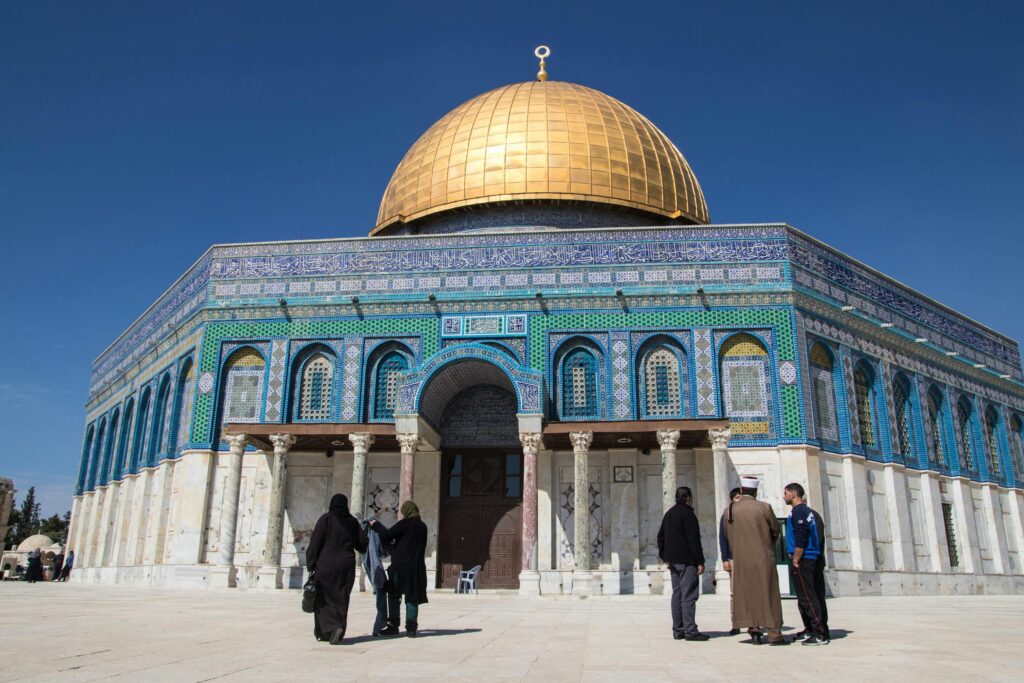
Origin of the expression and how it is written in Arabic
The expression comes straight from the Muslim tradition. It is heard in many Arabic-speaking countries and among Muslim communities all over the world.
In Arabic, it is written: بارك الله فيك
- بارك (baraka): He blessed
- الله (Allah): God
- فيك (fik): in you
This phrase is much more than a thank-you: it is a blessing, a genuine positive wish.
Its origin goes back to everyday customs in Muslim societies, where blessing holds an important place in exchanges. The spelling can change a little depending on whether you are speaking to a man, a woman or a group, but the idea remains the same: wishing the other person the best under divine protection.
In Arabic, this calligraphy is often found on greeting cards, in messages, or even as wall decor.
Nice little detail: the expression is also said during moments of joy or emotion, to show the sincerity of the wish.
How to use barakallahoufik in everyday life?
In which situations to say barakallahoufik
You can say “barakallahoufik” in plenty of contexts, for example:
- When someone does you a favor
- After receiving a gift or a kind gesture
- To express appreciation or respect
- In response to a good deed or a generous gesture
It is a way of showing your gratitude, but also of wishing the other person well. The phrase works just as well spoken or written.
A few everyday examples:
- After a good meal prepared by someone
- When a coworker lends you a hand
- To congratulate a loved one on good news
- As thanks after some help, whether at school or at work
In short, whenever there is sincere appreciation to express, “barakallahoufik” fits well.
A little nod: even if you don’t speak Arabic, using this expression often brings joy, because it carries real human warmth.
Differences from “thank you” and other phrases
“Barakallahoufik” is not just a “thank you.”
- Thank you: neutral, with no religious reference.
- Barakallahoufik: adds a spiritual dimension, wishing a divine blessing.
There are other expressions of the same kind, such as “jazakallahou kheir” (“may Allah reward you with good”), but “barakallahoufik” remains the most common for a thank-you with a spiritual touch.
A little table to make things clear:
| Expression | Literal meaning | Main use | Spiritual dimension |
|---|---|---|---|
| Thank you | Expression of thanks | All contexts | No |
| Barakallahoufik | May Allah bless you | Thanks, blessing | Yes |
| Jazakallahou kheir | May Allah reward you with good | Thanks, reward | Yes |
In summary, “barakallahoufik” goes further than a simple “thank you.” It is not necessarily interchangeable, but it adds real depth to the message.
A touch of humor: imagine a “thank you” boosted with spirituality!
How to reply to barakallahoufik?
Replying to “barakallahoufik” shows that you know the rules of politeness. The reply changes depending on the gender and number of people.
Reply for a man
If a man says “barakallahoufik” to you, you can reply:
- Wa fik barakallah (و فيك بارك الله)
Translation: “And may Allah bless you too”
Simple, clear, and it shows that you share the same kindness. It works in all exchanges, formal or not.
To remember: for a man, we keep “wa fik barakallah”. Easy to use, easy to remember!
Reply for a woman
If it’s a woman, the right phrase is:
- Wa fiki barakallah (و فيكِ بارك الله)
The final “i” is the little feminine touch in Arabic.
A detail that matters for the grammar — and for showing that you pay attention to the person in front of you.
In conversation, this nuance is always appreciated.
Reply for several people (plural)
For a group, you need to say:
- Wa fikoum barakallah (و فيكم بارك الله)
“Fikoum” indicates the plural.
Ideal for thanking several people, whether friends, colleagues or family.
A quick recap in a table:
| To whom? | Phrase to use | Arabic script |
|---|---|---|
| Man | Wa fik barakallah | و فيك بارك الله |
| Woman | Wa fiki barakallah | و فيكِ بارك الله |
| Group | Wa fikoum barakallah | و فيكم بارك الله |
No need to become an Arabic expert, the logic is simple and it always makes a good impression.
In short: replying to “barakallahoufik” is a sign of respect and attentiveness, even in a quick exchange.
Variants and uses depending on gender and number
Barakallahoufik for a woman
For a woman, we use:
Barakallahou fiki (بارك الله فيكِ)
The final “i” (“fiki”) marks the feminine.
It’s important for respecting grammar and courtesy. Using the right ending shows that you pay attention to the person.
This version is used to thank a friend, a colleague, or a family member, whatever the context.
Barakallahoufik for a group
For several people, the phrase becomes:
Barakallahou fikoum (بارك الله فيكم)
“Fikoum” = plural, whether for a group of men, women, or a mixed group.
Perfect for a group message, a speech or a thank-you to several people.
Everyone is included in the blessing, without distinction.
Dialogue examples
Example 1:
Thank you for your help!
Barakallahoufik!
Wa fik barakallah.
Example 2:
Thank you all for your support.
Barakallahou fikoum!
Wa fikoum barakallah.
Example 3:
Thank you, dear friend.
Barakallahou fiki!
Wa fiki barakallah.
These examples show how the phrase adapts to each situation.
In everyday life, it’s easy to adjust the phrase, whether face to face, by message or at an event.
Tip: adapting the ending properly avoids small blunders and always makes an impression!
Barakallahoufik in Arabic: writing and pronunciation
Arabic script (بارك الله فيك)
In Arabic, “barakallahoufik” is written in different ways depending on who you are addressing:
| Recipient | Arabic script |
|---|---|
| Man | بارك الله فيك |
| Woman | بارك الله فيكِ |
| Group | بارك الله فيكم |
This script is found in messages, greeting cards, or on social media.
A little tip: if you’re writing by hand, take the time to place the diacritics properly. It avoids confusion and looks nicer!
Pronunciation and audio version
To pronounce it correctly:
- Ba-ra-ka Allah-ou fik (for a man)
- Ba-ra-ka Allah-ou fi-ki (for a woman)
- Ba-ra-ka Allah-ou fi-koum (for a group)
Audio versions are available online or in Arabic-learning apps. The important thing is to separate the syllables clearly, without forcing the accent.
A few tips for practicing:
- Break down each word: Ba-ra-ka / Al-lah-ou / fik
- For the feminine, add the “i” at the end: fi-ki
- For the plural, end with “koum”: fi-koum
With a little practice and a few listens, the pronunciation quickly becomes natural. Even for beginners, it’s accessible, we promise!
Conclusion
“Barakallahoufik translation”, it’s not just a word. It’s a true sign of respect, gratitude and spirituality. Knowing how to use it, write it and respond to it shows that you care about the culture and the language. Whether spoken or written, this phrase has its place in everyday exchanges.
FAQ
“Barakallahoufik” is used to thank, congratulate, or wish someone a blessing, often after receiving help or a good deed.
This phrase works just as well among family, between friends, or at work. It lets you say thank you with a touch of depth.
A few examples:
- After receiving a gift
- Following a favor
- On a happy occasion
For a man: “wa fik barakallah”.
For a woman: “wa fiki barakallah”.
For a group: “wa fikoum barakallah”.
Choosing the right ending shows respect for the grammar and for the person you are addressing. A small effort that is always appreciated!
The exact translation is: “May Allah bless you”. In Arabic: بارك الله فيك.
It is a genuine wish of goodwill, which goes further than a simple thank you by adding a spiritual dimension.
No, it’s not just a “thank you”. It is a blessing formula that adds a real intention of gratitude and kindness.
“Barakallahoufik” enriches the thanks by wishing the other person well, under divine protection.
So we use it when we really want to make an impression with sincere appreciation.
For a woman, we write: بارك الله فيكِ (barakallahou fiki). The final “i” marks the feminine.
This small grammatical difference is important to address a woman properly, both in speech and in writing.
Keep it in mind, it shows attention and respect.