


The tashahhud is a formula of remembrance and testimony of faith recited in a seated position during prayer in Islam. It is said at the end of certain units of prayer and contains greetings, supplications and the shahada, which affirms the oneness of Allah and the mission of the Prophet ﷺ.
Present in all obligatory and voluntary prayers, the tashahhud is recited in the middle of the prayer and at its end, depending on the number of rak‘at. Knowing its role, its text and when it should be recited allows you to perform the prayer correctly and with full awareness.
In this article, we will look at what the tashahhud is, when it is recited, and why it is essential in the Muslim prayer.

What is the tashahhud?
The tashahhud, often called at-tahiyyat, is the key moment of the Muslim prayer. It is recited while seated, at specific stages, after certain units of prayer. This supplication is much more than a simple passage: it allows the believer to express their faith, and to offer greetings and supplications to Allah and His Prophet. It is not just a formality: it is a true spiritual pause, a moment of calm and connection at the heart of the salat.
Origin and importance of the tashahhud in prayer
The word “tashahhud” comes from “shahada,” which means “to bear witness.” During prayer, it recalls the oneness of Allah and the role of the Prophet Muhammad (peace and blessings be upon him). It is the moment when the worshipper affirms their faith and renews their commitment. In fact, for most schools of thought, the tashahhud is one of the essential pillars of the prayer. It gives rhythm to the salat and brings it its full spiritual strength. Forgetting this part is not trivial: it can call the validity of the prayer into question.
Rachid Eljay – Tashahhud 👇🏻
Difference between tashahhud 1 and 2
In prayers of three or four units (rak‘a), the tashahhud is performed in two stages:
- Tashahhud 1 (partial): after the second rak‘a, only the first part of the formula is recited.
- Tashahhud 2 (complete): during the final sitting, the entire formula is said, along with the prayer upon the Prophet (salat ibrahimiya).
This difference really matters: the first tashahhud marks an intermediate stage, while the second tashahhud concludes the prayer. Following this order means respecting the prophetic tradition and ensuring the validity of the salat. A little tip: keep track of where you are in your prayer, so you don’t lose your place.
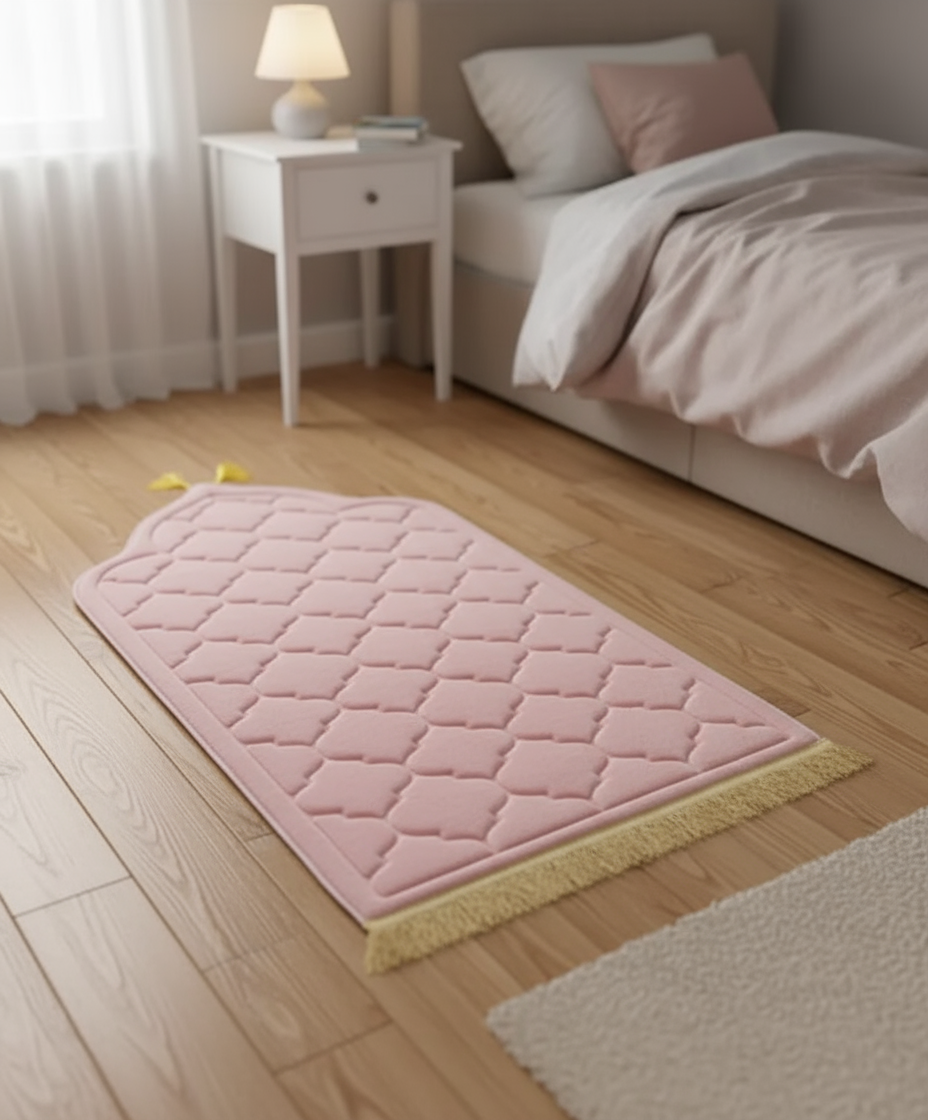
The complete tashahhud formula in Arabic and phonetics
To recite the complete tashahhud properly, you need to know the exact formula: in Arabic and in phonetics. It helps with learning and memorizing, but also with understanding the true meaning of this supplication.
Tashahhud – Arabic text
Here is the complete formula in Arabic, as it is recited during the prayer:
التَّحِيَّاتُ لِلَّهِ، وَالزَّاكِيَاتُ لِلَّهِ، وَالطَّيِّبَاتُ لِلَّهِ، وَالصَّلَوَاتُ لِلَّهِ، السَّلَامُ عَلَيْكَ أَيُّهَا النَّبِيُّ وَرَحْمَةُ اللَّهِ وَبَرَكَاتُهُ، السَّلَامُ عَلَيْنَا وَعَلَى عِبَادِ اللَّهِ الصَّالِحِينَ، أَشْهَدُ أَنْ لَا إِلَهَ إِلَّا اللَّهُ وَأَشْهَدُ أَنَّ مُحَمَّدًا عَبْدُهُ وَرَسُولُهُ
للَّهُمَّ صَلِّ عَلَى مُحَمَّدٍ وَعَلَى آلِ مُحَمَّدٍ، كَمَا صَلَّيْتَ عَلَى إِبْرَاهِيمَ وَعَلَى آلِ إِبْرَاهِيمَ، إِنَّكَ حَمِيدٌ مَجِيدٌ، وَبَارِكْ عَلَى مُحَمَّدٍ وَعَلَى آلِ مُحَمَّدٍ، كَمَا بَارَكْتَ عَلَى إِبْرَاهِيمَ وَعَلَى آلِ إِبْرَاهِيمَ، إِنَّكَ حَمِيدٌ مَجِيدٌ
Tashahhud – Phonetic transcription
For those who want to pronounce it correctly, here is the phonetic version:
At-tahiyyatou lillah, az-zakiyyatou lillah, at-tayyibatou, assalawetou lillah selemu’alayka ayyouha nabiyyou wa rahmatoullahi wa barakatouh, assalamou ‘alayna wa ‘ala ‘ibadillahi assalihin, ashhadou an la ilaha illallah wa ashhadou anna mouhammadan ‘abdouhou wa rasoulouh.
Allouhoumma salli’ala Mouhammadin, wa’ala Alì Mouhammadin, kama sallayta’ala Ibrâhima wa ‘ala Ali Ibrahima, innaka Hamidoun Majid, wa Bârik “ala Mouhammadin wa ‘ala Âli Mouhammadin, kama Bârakta ‘ala Ibrâhima wa ‘ala Âli Ibrâhima, innaka Hamîdoun Majid.
Tashahhud – Translation
To understand each sentence, here is the translation:
Greetings belong to Allah, good deeds belong to Allah, good words belong to Allah, prayers belong to Allah. May peace be upon you, O Prophet, as well as the mercy of Allah and His blessings. May peace be upon us and upon the righteous servants of Allah. I bear witness that there is no deity but Allah, and I bear witness that Mohammed is His servant and His messenger.
O Allah, bless Mohammed and the family of Mohammed, as You blessed Ibrahim and the family of Ibrahim, You are truly Worthy of praise and Glory. And shower Your favors upon Mohammed and the family of Mohammed, as You showered Your favors upon Ibrahim and the family of Ibrahim, You are truly Worthy of praise and Glory.
A little extra: knowing the translation also means reflecting on each word during the prayer.
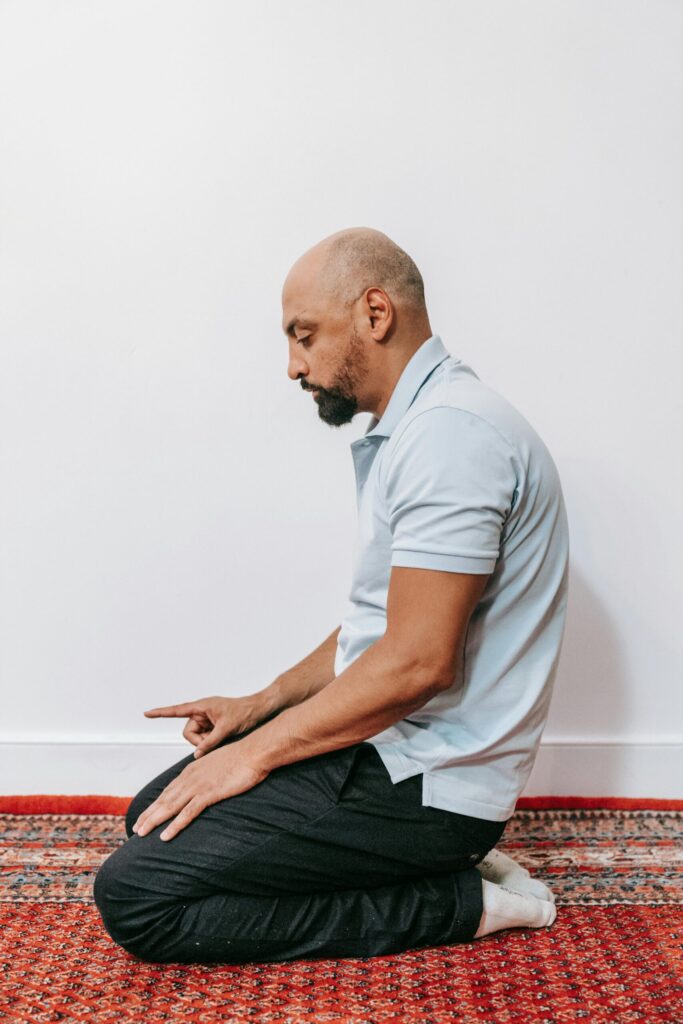
How do you recite the complete tashahhud in prayer?
Reciting the complete tashahhud just requires following a few steps, respecting the right timing, and adopting the right posture. We detail everything, point by point.
Tashahhud: When to recite it (in which rak‘a)
- Two-unit prayer (fajr): you recite the complete tashahhud at the very end, just before finishing.
- Three- or four-unit prayers (maghrib, dhuhr, asr, isha):
- After the 2nd rak‘a: partial tashahhud.
- Final sitting (after the 3rd or 4th rak‘a): complete tashahhud.
To make it clear:
| Prayer | After 2nd rak‘a | Final sitting |
|---|---|---|
| Fajr | Complete | – |
| Maghrib | Partial | Complete |
| Dhuhr/Asr/Isha | Partial | Complete |
Gestures and posture (index finger, gaze)
During the tashahhud, here is what is recommended:
- Sitting position: legs folded, sitting on the left foot, with the right foot upright.
- Right hand: resting on the thigh, index finger pointed or moving at the time of the testimony (“there is no deity but Allah”).
- Gaze: fixed on the index finger or resting just in front of you.
This gesture is for concentration, to mark the oneness of Allah.
Prayer outfit
A comfortable prayer outfit
Comfortable and modest outfits – For women & men

Tips for memorizing the tashahhud
Here are some tips that really work:
- Break the formula down: learning sentence by sentence is easier.
- Repeat in a low voice: repetition is the key.
- Listen to audio recordings: a good recitation is something you listen to and imitate.
- Visual aids: charts, cards, posters, anything that helps you visualize.
- Regular practice: including the tashahhud in every prayer is what anchors it in memory.
With these methods, even beginners can make steady progress.
The different versions of the tashahhud
The tashahhud does not have just one version: there are several, all of them recognized. These variants show the richness of the traditions reported from the Prophet ﷺ and the diversity of the schools.
The formulas recognized according to the schools
- Most common version: that of Ibn Mas‘ud, the reference in the majority of schools.
- Ibn ‘Abbas’s version: the word order changes slightly, but the meaning stays the same.
- Omar’s version: shorter, used in some cases for its simplicity.
The Hanafi, Maliki, Shafi’i and Hanbali schools all accept these variants. What matters is keeping the general meaning, especially the declaration of faith. The differences are in form, not in substance. In short: sincerity comes first, whichever version is chosen.
Tashahhud: Comparison table of the variants
| School / Tradition | Main formula | Particularities |
|---|---|---|
| Ibn Mas‘ud (majority) | At-tahiyyatu lillah… | Full formula, the most widely used |
| Ibn ‘Abbas | At-tahiyyatu mubarakatu salawatu tayyibatu lillah… | Different word order |
| Omar ibn al-Khattab | At-tahiyyatu lillah… | Short version, without the Ibrahimiyya salat |
All of these versions are valid. Everyone can choose according to their school, their habit or whatever seems easiest to remember. A little diversity never hurts!
Islamic items
Items to decorate your home
Islamic items carefully selected
Conclusion
The complete tashahhud is truly the heart of the Muslim prayer. Knowing how to recite it, understanding its meaning and adopting the right posture all matter for a well-performed prayer. There are several variants, all recognized. With a little practice and the right tools, everyone can learn it with peace of mind.
At Anaaz, we have selected for you prayer mat, outfits and Islamic items to support you daily in your practice. View the prayer mat | View prayer outfits | View all Islamic items
FAQ
التَّحِيَّاتُ لِلَّهِ، وَالزَّاكِيَاتُ لِلَّهِ، وَالطَّيِّبَاتُ لِلَّهِ، وَالصَّلَوَاتُ لِلَّهِ، السَّلَامُ عَلَيْكَ أَيُّهَا النَّبِيُّ وَرَحْمَةُ اللَّهِ وَبَرَكَاتُهُ، السَّلَامُ عَلَيْنَا وَعَلَى عِبَادِ اللَّهِ الصَّالِحِينَ، أَشْهَدُ أَنْ لَا إِلَهَ إِلَّا اللَّهُ وَأَشْهَدُ أَنَّ مُحَمَّدًا عَبْدُهُ وَرَسُولُهُ
Then the Salat Ibrahimiyya:
للَّهُمَّ صَلِّ عَلَى مُحَمَّدٍ وَعَلَى آلِ مُحَمَّدٍ، كَمَا صَلَّيْتَ عَلَى إِبْرَاهِيمَ وَعَلَى آلِ إِبْرَاهِيمَ، إِنَّكَ حَمِيدٌ مَجِيدٌ، وَبَارِكْ عَلَى مُحَمَّدٍ وَعَلَى آلِ مُحَمَّدٍ، كَمَا بَارَكْتَ عَلَى إِبْرَاهِيمَ وَعَلَى آلِ إِبْرَاهِيمَ، إِنَّكَ حَمِيدٌ مَجِيدٌ
At-tahiyyatou lillah, az-zakiyyatou lillah, at-tayyibatou, assalawetou lillah selemu’alayka ayyouha nabiyyou wa rahmatoullahi wa barakatouh, assalamou ‘alayna wa ‘ala ‘ibadillahi assalihin, ashhadou an la ilaha illallah wa ashhadou anna mouhammadan ‘abdouhou wa rasoulouh.
Then the Salat Ibrahimiyya:
Allouhoumma salli’ala Mouhammadin, wa’ala Ali Mouhammadin, kama sallayta’ala Ibrahima wa ‘ala Ali Ibrahima, innaka Hamidoun Majid, wa Barik “ala Mouhammadin wa ‘ala Ali Mouhammadin, kama Barakta ‘ala Ibrahima wa ‘ala Ali Ibrahima, innaka Hamidoun Majid.
The complete tashahhud is recited during the final sitting, by sitting properly, pointing the right index finger, and keeping your gaze fixed in front of you or on your index finger.
The wording of the complete tashahhud includes the greetings, the testimony of faith, and the prayer upon the Prophet Muhammad ﷺ and his family (salat ibrahimiya).
Yes, the complete tashahhud is obligatory during the final sitting of the prayer. According to most schools, it is one of the pillars or obligations of the salat. Forgetting it can invalidate the prayer, unless it is an unintentional omission: in that case, a prostration of correction is recommended. It is therefore better to know it well and to recite it attentively.
In theory, the tashahhud is recited in Arabic, because the prayer is codified in that language. But for beginners or those who do not yet master Arabic, it is possible to say it in English, temporarily. The idea is to learn Arabic little by little and move closer to the tradition. Understanding the meaning also helps, but the Arabic version remains the priority in the long run.
To listen to the recitation of the complete tashahhud, there are several options:
- Search on YouTube for “complete tashahhud audio”.
- Use mobile apps dedicated to prayer (Muslim Pro, Salat Learning…).
- Visit websites specialized in learning how to pray.
Listening to a reliable audio recording really helps you pronounce and memorize the phrase better.