


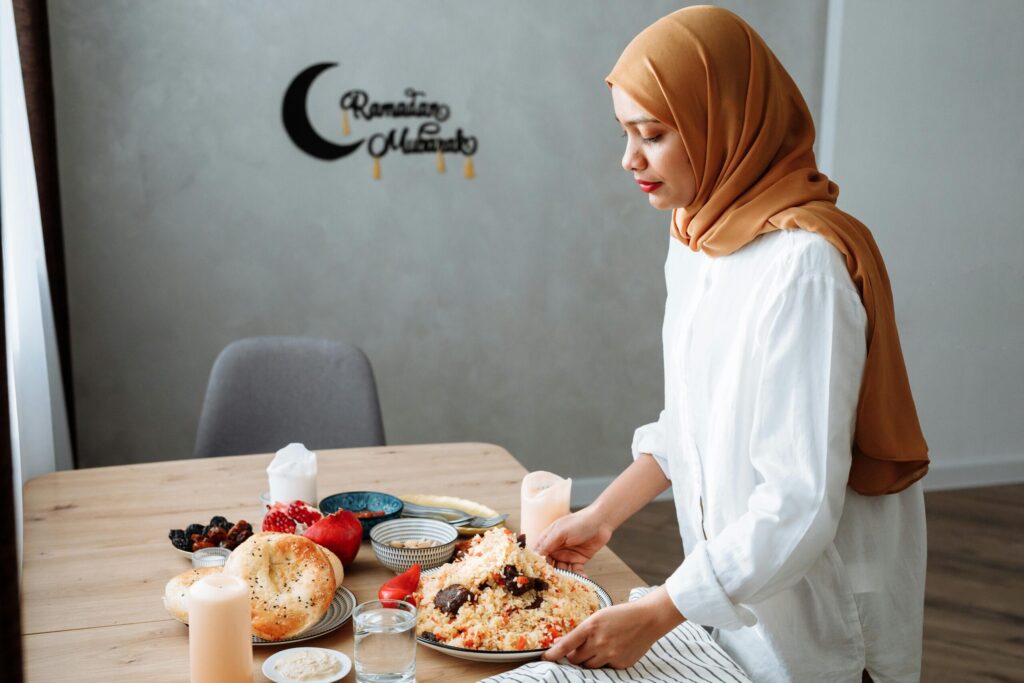
“Ramadan Mubarak” simply means “blessed Ramadan.” It is the expression used to wish loved ones a good month of Ramadan. You hear it a lot at the beginning of the holy month, but also throughout Ramadan, to share a message of peace, blessing and spirituality. Saying “Ramadan Mubarak” is a simple and sincere way to wish the very best during such a special month.
Meaning of Ramadan Mubarak
Origin and translation
“Ramadan Mubarak” is an Arabic expression that means, word for word, “blessed Ramadan.” The word “Mubarak” translates as “blessed” or “happy.” It is used at the beginning of or during the month of Ramadan to wish someone a month full of blessings and peace.
A quick reminder of the context:
- Ramadan: the ninth month of the Islamic calendar, marked by fasting from sunrise to sunset.
- Mubarak: an adjective meaning “blessed,” used for both celebrations and religious occasions.
When you say “Ramadan Mubarak,” you send positive vibes in a spirit of respect and kindness. The phrase is used everywhere: with family, among friends, at work. It brings people together and creates a bond, whatever their background. In short, it is a simple way to acknowledge the importance of this month.
Islamic gift
Give a meaningful gift this Ramadan
Carefully selected Islamic items
Difference between Ramadan Mubarak and Ramadan Kareem
You have surely heard “Ramadan Kareem” too. The two are similar, but there is a nuance. “Ramadan Kareem” means “generous Ramadan.” The wish is for the month to be marked by sharing and generosity.
To sum up:
- Ramadan Mubarak: you wish for Ramadan to be blessed and peaceful.
- Ramadan Kareem: you wish for Ramadan to be generous.
Each has its own special touch:
- “Ramadan Mubarak” highlights blessing and peace.
- “Ramadan Kareem” emphasizes generosity and openness.
In some countries, you hear one more than the other. For example, in the Gulf, “Ramadan Kareem” is everywhere, whereas in North Africa, “Ramadan Mubarak” dominates. But honestly, there is no strict rule: what matters is the intention. Both work, and if you like variety, alternating between them is always well received.
How to wish someone a happy Ramadan
Examples of messages and phrases
Looking for a simple phrase that works well? Here are a few examples to use freely:
- “Ramadan Mubarak to you and your family.”
- “I wish you a peaceful and blessed Ramadan.”
- “Ramadan Kareem, may this month bring you serenity and joy.”
- “Happy Ramadan!”
Even when short, it is always appreciated.
To personalize it a little, consider:
- Including the person’s first name.
- Adding a specific wish: peace, health, success…
- Adapting the tone: more professional for a colleague, warmer for a loved one.
A few variations to mix things up:
- “May this holy month bring you light and comfort.”
- “Blessed Ramadan to your whole team.”
- “May you experience a Ramadan filled with peace and sharing.”
In person, by text, by email, on Insta… the medium hardly matters. What counts is sincerity. And if you want to add a touch of humor, always stay respectful: a wink, yes, but tradition first.
Abaya
Give a meaningful gift this Ramadan
Abayas carefully selected
When to say Ramadan Mubarak?
You can say “Ramadan Mubarak” as soon as Ramadan begins, and throughout the month. Whether in person, by message, on WhatsApp or in a comment on social media, there’s no real bad timing.
A few moments when it fits well:
- At the very start of Ramadan, to mark the occasion.
- During an iftar (the meal that breaks the fast).
- In reply to a message you received.
- During an informal conversation, just to show you’re thinking of the other person.
In short:
- The day before, after the official announcement? Yes.
- In the middle of the month? Always fine.
What matters is to be spontaneous and kind. Even if you forget on the first day, don’t panic: better late than never!
Ramadan Mubarak in Arabic and other languages
Writing and pronunciation in Arabic
In Arabic, “Ramadan Mubarak” is written:
رمضان مبارك
And it’s pronounced, quite simply:
[ra-ma-dan mou-ba-rak]
A few tips if you want to write or say the phrase correctly:
- Turn on the Arabic keyboard on your phone for an authentic message.
- Otherwise, the “Ramadan Mubarak” version in Latin letters works everywhere.
- When speaking, just take the time to pronounce each syllable.
You don’t need a perfect accent: the effort already counts for a lot. If you’d like to practice, there are plenty of audio recordings online. No pressure, it’s the gesture that brings joy.
Common translations (French, English…)
Here’s a handy table showing how to wish someone a good Ramadan in different languages:
| Language | Classic phrase | Literal translation |
|---|---|---|
| French | Ramadan Moubarak | Blessed Ramadan |
| Arabic | رمضان مبارك | Blessed Ramadan |
| English | Ramadan Mubarak | Blessed Ramadan |
| French | Ramadan Karim | Generous Ramadan |
| Arabic | رمضان كريم | Generous Ramadan |
| English | Ramadan Kareem | Generous Ramadan |
A few pointers:
- In English, “Ramadan Mubarak” is the most widely shared phrase, especially internationally.
- In French, a simple “Bon Ramadan” works very well, especially if you’d rather avoid Arabic words.
- In other languages, there are variants, but the Arabic phrases are understood everywhere in Muslim communities.
Choosing the right phrase for the language is a small gesture that shows you care. And that always makes a difference.
Ramadan Mubarak message and image ideas
Messages for family
- “Ramadan Mubarak to the whole family. May this month bring you peace and happiness.”
- “I’m thinking of you at the start of Ramadan. May blessings be with you.”
For family, go for warmth and personalization:
- “May this Ramadan strengthen our bonds and bring us serenity.”
- “Blessed Ramadan to each of you, with a special thought for the youngest and the elders.”
- “May the light of this holy month illuminate our home.”
A little humor is possible, along the lines of: “Good luck with the early suhoor wake-ups!” What matters is showing that you’re there, even from a distance.
Messages for friends/colleagues
- “Happy Ramadan to you and your loved ones.”
- “Ramadan Mubarak, may this month be gentle and peaceful.”
- “Ramadan Kareem to the whole team!”
The tone depends on the relationship, but a simple, sincere phrase always makes an impact.
For colleagues or friends, you can also try:
- “Blessed Ramadan, may this period be favorable to the success of your projects.”
- “Ramadan Kareem, hoping that coffee breaks turn into tea breaks!”
- “Happy Ramadan, with all my wishes for health and happiness.”
A touch of discreet humor is possible, as long as it stays respectful. Even at work, a well-chosen little note can bring people closer.
Where to find images and cards to share
To go with your wishes, here are a few sites where you can find free images:
- Unsplash
- Pixabay
- Freepik (be careful to choose royalty-free images)
- Canva (for customizable templates)
Ideal for WhatsApp, Insta, or by email. A well-chosen visual, and the message takes on another dimension.
Little tips:
- Prefer simple images with traditional motifs: crescent moons, lanterns, calligraphy…
- On Canva, add the first name or a personal message to make the card unique.
- Always check the usage rights, especially if you post on a public account.
Want to go the extra mile? Create your own card. It’s simple, and it always makes a nice impression.
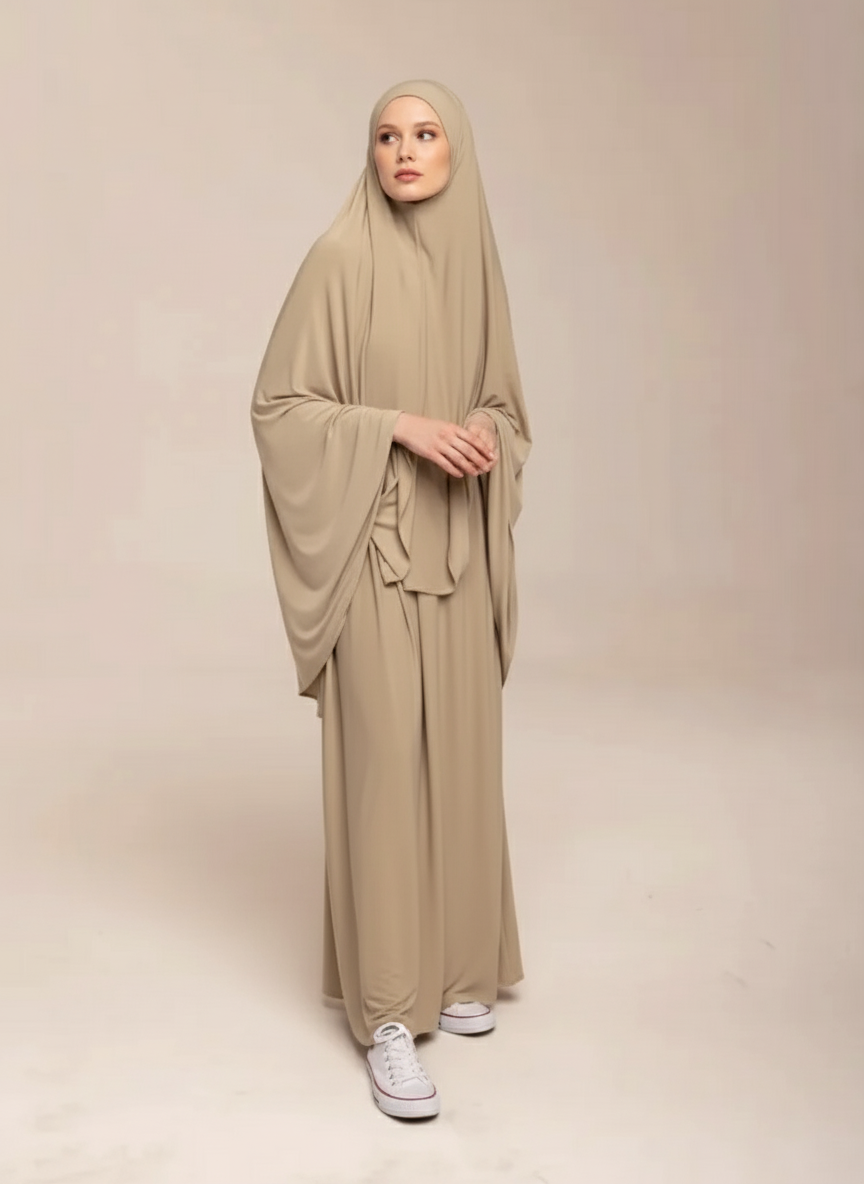
Prayer outfit
Pray in comfort and serenity
Comfortable and modest outfits – For women & men
Conclusion
Saying “Ramadan Mubarak” is above all a mark of thoughtfulness. Whether you observe Ramadan or simply want to support your loved ones, what matters most is sincerity. A word, an image, a message: everything counts as long as the intention is there.
Key takeaways:
- “Ramadan Mubarak” conveys a genuine message of peace and kindness.
- There is no fixed rule; the important thing is to be respectful.
- A personalized message, even a short one, always leaves a mark.
- Online resources make it easier to send cards or images.
Ramadan is a time of sharing and unity. A simple wish can truly brighten someone’s day. And if you hesitate, keep in mind: the intention is what matters most.
FAQ
Yes, you can absolutely say “Ramadan Mubarak.” It is a very common greeting, with no negative connotation whatsoever.
It is accepted by all Muslim communities. There is no religious or cultural issue. Whether you are Muslim or not, go ahead, it is always appreciated.
You can also wish someone “Ramadan Kareem,” “Happy Ramadan,” or even “May this month bring you peace and serenity.” Adapt it to your own style and to the person in front of you.
A few alternatives:
- “Blessed Ramadan to you and your loved ones.”
- “May this holy month be a source of happiness and light.”
- “Ramadan Mubarak, with all my wishes for good health.”
Adjust it to your relationship and the language. The most important thing is sincerity.
Both are good! “Ramadan Mubarak” emphasizes blessing, while “Ramadan Kareem” emphasizes generosity. It’s up to you to choose the one that speaks to you most.
You can also alternate depending on the occasion or the person. Either way, your message will be understood and well received. And for variety, pick from the other phrases listed above.
“Ramadan Mubarak” means “blessed Ramadan.” It is simply a wish for peace and goodness during this month.
It is used to express respect, kindness, and the hope that the month passes in harmony.
From the very start of Ramadan, and throughout the month. There is no specific moment. The intention is what matters.
You can say it when the start of the month is announced, during a conversation, or even in the middle of Ramadan. As long as the wish is sincere, it’s perfectly fine.
In French: “Bon Ramadan,” “Ramadan Moubarak,” “Blessed Ramadan to you.”
In Arabic: “رمضان مبارك” (Ramadan Mubarak), “رمضان كريم” (Ramadan Kareem).
The Latin transcription works too if Arabic script is a barrier for you. What matters is the intention and sincerity, whatever the language.
You now have everything you need to wish someone a happy Ramadan, simply and without making a mistake.