


What Is an Islamic Headscarf?
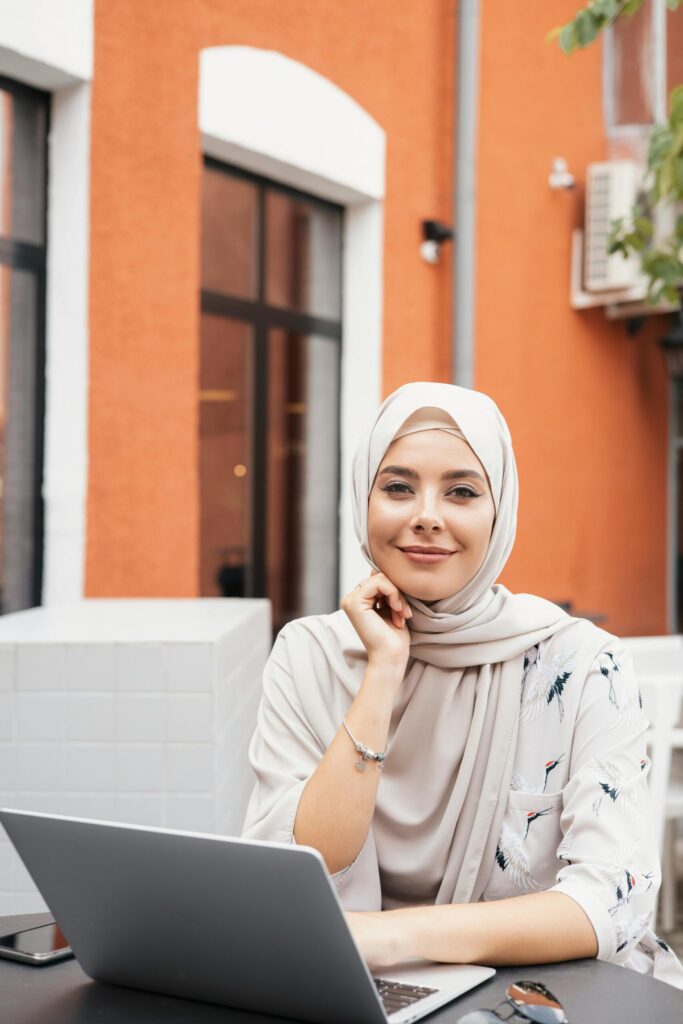
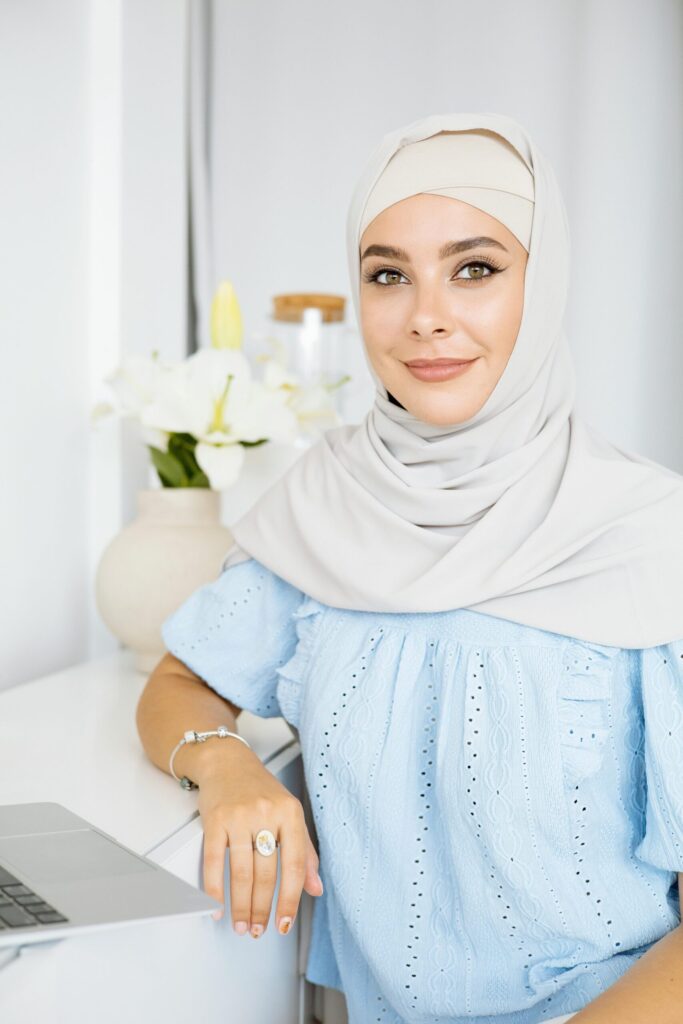
The Islamic headscarf is an accessory worn mostly by Muslim women. It is a piece of fabric that covers the hair, the neck, and sometimes even the shoulders, while leaving the face fully visible. In many countries it is also called a hijab, but its style and fabric vary enormously depending on the region and personal taste. You can find simple cotton, shiny silk, stretchy jersey, or lightweight viscose, so each woman can adapt it to the weather and to her own comfort.
Wearing an Islamic headscarf is not only a matter of religion. There are also cultural and identity reasons, or simply aesthetic ones. Sometimes it is a family habit, and sometimes it is a sign of belonging to a community. It is rarer among men, but some wear a scarf or a turban during special ceremonies, depending on the traditions of their branch of Islam.
What makes the Islamic headscarf unique is the variety of styles and ways of wearing it. Every region and every person has their own way of tying or draping it. In the end, this garment is both practical and symbolic, and it belongs to a history full of nuances.
Difference Between an Islamic Headscarf, a Hijab, and a Veil
It’s easy to get lost with all these words, so let’s lay out the basics:
- Islamic headscarf: it covers the head and neck, but the face remains visible.
- Hijab: often used to refer to the Islamic headscarf, but sometimes it also covers all garments that respect modesty in Islam.
- Veil: this is the broad term, which includes hijab, niqab, chador, burqa, khimar, and so on.
To sum it up simply: all hijabs are veils, but not all veils are hijabs. It’s like rectangles and quadrilaterals: every rectangle is a quadrilateral, but the reverse is not true. This distinction helps you understand discussions better and avoid confusion.
The Different Types of Islamic Headscarves and Veils
Hijab, Niqab, Chador, Burqa…: Overview and Characteristics
The diversity of Islamic veils truly reflects the cultural richness of the Muslim world. Here are the main types and what sets them apart:
- Hijab: the most common. It covers the hair, the neck, and sometimes the shoulders, but the face remains completely uncovered. It comes in every color and style imaginable.
- Niqab: here, the veil covers the head and face, and only the eyes remain visible. It is often worn with a long dress called an abaya, especially on the Arabian Peninsula.
- Chador: a large semicircular piece of fabric that wraps the whole body except the face. Traditionally black, and worn mainly in Iran.
- Burqa: the full-body veil. It covers everything, including the face, with a mesh panel over the eyes to see through. It is found mostly in Afghanistan.
- Khimar: a long cape that covers the head, neck, and shoulders, but leaves the face free. Very common in the Middle East and North Africa.
- Shayla: a long, lightweight scarf wrapped around the head and shoulders, very popular in the Gulf countries.
- Men’s Islamic headscarf: this is rare, but it exists, often in the form of a turban or keffiyeh, worn for ceremonies or to assert a cultural identity.
Each type has its own use, context, and traditions. Some are worn every day, while others are worn only for special occasions or in specific regions. In short, there is plenty to explore.
Comparison Table of Islamic Veils
| Type of veil | Area covered | Face visible | Main use | Region/common practice |
|---|---|---|---|---|
| Hijab | Hair, neck, shoulders | Yes | Everyday | Muslim world |
| Niqab | Hair, face, neck | No (eyes yes) | Religious practice | Arabian Peninsula |
| Chador | Body except face | Yes | Traditional | Iran |
| Burqa | Body, face, eyes | No | Traditional | Afghanistan |
| Khimar | Head, neck, shoulders | Yes | Everyday | Middle East, North Africa |
| Shayla | Head, shoulders | Yes | Everyday | Gulf countries |
This table gives a clear overview of the differences. The main thing to remember: what changes from one veil to another is the part of the face that remains visible. Once you understand that, everything becomes much simpler.
Meaning and Origin of the Islamic Headscarf
Religious and Cultural Meaning
The Islamic headscarf is anything but a simple piece of fabric. On a religious level, it symbolizes modesty, a value encouraged in Islam to preserve privacy and dignity. Religious texts address it, but each school of thought or society has its own way of interpreting it.
But it isn’t only about religion. The headscarf is also:
- A marker of belonging to a community
- A sign of regional or family identity
- A symbol of respect for local values
- Sometimes, an important element during key moments (such as a wedding or the pilgrimage)
In short, the motivations are many:
- Spiritual choice
- Family transmission
- Affirmation of identity
- Respect for a specific dress code
There is no single universal meaning. For some, it is a gesture of faith; for others, a cultural heritage or simply respect for traditions. Which goes to show that every scarf has its own story.
History and evolution of wearing the Islamic scarf
The Islamic scarf has a long history behind it. Since the early days of Islam in the 7th century, there has been talk of modesty in dress, but the form of the veil has never been fixed. Over the centuries, the way of wearing the scarf has changed depending on societies, eras and political contexts.
At times, the scarf has served as a symbol of emancipation, allowing women to go out while remaining faithful to the codes of modesty. At other times, it has been seen as a tradition to preserve or a way of resisting outside influences.
Since the end of the 20th century, the Islamic scarf has been at the heart of debates, especially in Europe. In France, the Creil affair in 1989 sparked major discussions about secularism and the place of religion in schools. Several laws then regulated its wearing, while leaving the freedom to wear it in public spaces.
Today, the scarf continues to evolve, between affirmation of identity, personal choice and adaptation to trends. Its history is not fixed; it is still being written, shaped by contexts and debates.
Why wear an Islamic scarf?
Religious and social reasons
There are many reasons for wearing an Islamic scarf, and they can change over time:
- Religious: following a recommendation of Islam on modesty and privacy.
- Identity-related: showing one’s belonging to a religious or cultural community.
- Cultural: following a family or regional tradition, sometimes passed down from generation to generation.
- Personal: looking for a style of dress that you like, comfort, or everyday discretion.
Depending on the country, wearing the scarf can be mandatory, recommended or completely free. Sometimes it is an official rule; elsewhere, it is an individual decision.
What matters is that the choice to wear the scarf or not can evolve: convictions, experiences, life circumstances… nothing is fixed. For some, it is a spiritual commitment; for others, an expression of identity or simply a matter of style. There are as many reasons as there are people concerned.
The Islamic scarf in France: a historical focus
In France, the Islamic scarf is at the center of many debates. It all began with the Creil scarf affair in 1989, which launched a reflection on religion in schools and in society. Since then, several laws have been passed, such as the one in 2004 that bans visible religious symbols in public schools.
Today, wearing the Islamic scarf is allowed in public spaces, but there are rules in certain places such as schools or government offices. The idea is to find a balance between religious freedom, secularism and equality.
The debate in France touches on sensitive questions: integration, respect for everyone’s convictions, social cohesion. The discussions come back regularly, but at its core, wearing the scarf remains first and foremost a matter of personal choice, as long as the law is respected.
Tips for choosing and wearing an Islamic scarf
Selection criteria (fabric, shape, style)
Finding the right Islamic scarf is mostly a matter of comfort, style and practicality. Here is what to look at:
- Fabric:
- Cotton: soft, breathable, easy to live with
- Silk: chic, lightweight, perfect for special occasions
- Jersey: stretchy, easy to care for, stays well in place
- Synthetic: durable, but watch out for heat
- Shape:
- Square, rectangle, long scarf… to be chosen according to how you tie it and the style you want
- Style:
- Solid or patterned, understated or bold colors, to be adapted to the occasion (everyday, work, ceremony)
- Season:
- Lightweight (cotton, viscose) in summer, thicker (wool, cashmere) in winter
- Care:
- The easier it is to wash and iron, the more time you save
A few useful tips:
- Try several fabrics to find the one that suits you best
- Favor fabrics that don’t slip, especially if you move around a lot
- Think about matching the scarf to your outfits to vary your styles
- Don’t hesitate to ask for advice or to try on different models
A well-chosen scarf is already half the battle for comfort. And if you’re hesitating, rest assured: there is surely a model made for you.
Practical tips for wearing it well
To wear an Islamic scarf with comfort and style, a few tips make all the difference:
- Use discreet pins or magnets to keep it in place if you’re active
- Wear an under-scarf cap or a light bonnet under the scarf to keep it from slipping and to protect your hair
- Change up your tying style whenever you like: wrapped around the neck, draped over the shoulders, tied at the back… there are plenty of tutorials for variety
- Choose the length of the scarf to suit your body shape: too short, and it feels tight; too long, and it gets in the way
- Wash and care for your scarf regularly: gentle wash, dry flat, light ironing
Little extras:
- Always keep a spare scarf in your bag, just in case
- Avoid fabrics that irritate, especially in summer
- For special occasions, go for beautiful materials or careful finishes
A well-worn scarf means comfort and style every day. Sometimes, all it takes is a different fold or color to change everything.
Conclusion
The Islamic scarf is not just an accessory. It tells stories of choices, traditions and convictions. With all the diversity of its styles, materials and meanings, it sits between the intimate and the collective. Whether you are looking to understand, to wear or simply to learn more, the essential thing is to respect every journey and every story. Behind every scarf, there is a whole world to discover.
FAQ
The veil refers to any garment that covers the head or body for religious or cultural reasons. The Islamic headscarf, on the other hand, is a specific form of veil: it covers the head and neck but leaves the face visible. This distinction helps in better understanding the discussions and practices surrounding these garments.
There are several types of Muslim veils: hijab, niqab, chador, burqa, khimar, shayla… Each one is distinguished by its shape, the area of the body it covers, and how it is worn. The choice depends on traditions, regions and, of course, each woman’s preferences.
Wearing the headscarf in Islam follows a religious recommendation for modesty. But there are also cultural, identity-related or personal reasons. Depending on the context, it can be a spiritual choice, a family tradition or simply a matter of style.
The hijab covers the hair, neck and sometimes the shoulders, but leaves the face visible. The niqab, on the other hand, covers the head and face, with only the eyes remaining visible. This difference is essential to understanding the practices and debates surrounding the wearing of the veil.
To choose an Islamic scarf that suits your style, consider the fabric (cotton, silk, jersey), the shape (square, rectangle), and the style (color, pattern). Also think about comfort, the season and ease of care. What matters is finding the style that suits you, for both practicality and aesthetics.