


Every year, Ramadan brings millions of people together around strong values: spirituality, sharing, solidarity. You want to send your wishes for this period, but you’re wondering what the best way to do it is? Whether out of respect, friendship or simply to mark the occasion, there are suitable messages for every situation. Let’s go over the ways to wish someone a blessed Ramadan naturally, simply and respectfully.
1. Traditional phrases for wishing someone a blessed Ramadan
Sending your Ramadan wishes is above all a way of showing that you are thinking of the other person, with respect. There are several phrases, in both French and Arabic, each with its own little nuance. The choice depends mostly on your relationship with the person and the context (work, family, friends).
Ramadan Mubarak, Ramadan Kareem: meaning and usage
Here are the two most commonly used expressions during Ramadan:
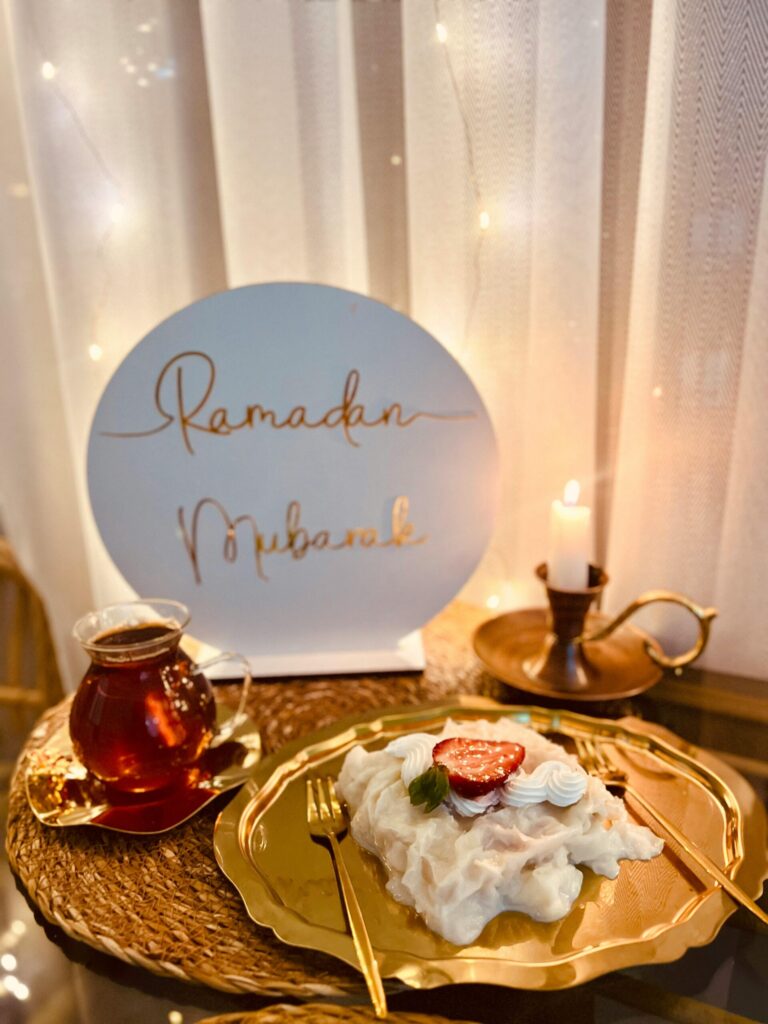
- Ramadan Mubarak (رمضان مبارك): means “Blessed Ramadan.” It is the most classic phrase. It works everywhere, whether for a colleague, a neighbor, a family member or even in a work email. Simple, effective, impossible to get wrong.
- Ramadan Kareem (رمضان كريم): means “Generous Ramadan.” This expression emphasizes generosity, a core value of Ramadan. It is often used in a warmer setting, among friends or loved ones, but it is suitable for plenty of situations.
Both phrases are heard everywhere and can be used pretty much however you like. Don’t stress: even if your accent leaves something to be desired, it’s the intention that makes the difference.
Message examples
To mix things up a bit, here are a few examples to adapt depending on the situation:
- “I wish you a very blessed Ramadan.”
- “May this holy month bring you peace and serenity.”
- “Ramadan Mubarak to you and your loved ones.”
- “Lots of strength and kind thoughts for this Ramadan.”
- “Happy Ramadan!”
You can use them aloud or in writing, whether for a formal message or a more relaxed one. Personalize them according to your relationship with the person, of course.

Message examples in Arabic (with transliteration)
Want to try a phrase in Arabic? Here are the most common ones, with transliteration to get by even without being an expert:
- رمضان مبارك (Ramadan Mubarak)
- رمضان كريم (Ramadan Kareem)
- كل عام وأنتم بخير (Kul ‘am wa antum bikhayr): “May every year find you in good health.”
You don’t need to speak Arabic fluently to bring a smile. A “Ramadan Mubarak” with your own accent is already a lot. What matters is the gesture.
Summary table of phrases
| Phrase | Language | Context | Translation / Meaning |
|---|---|---|---|
| Ramadan Mubarak | Arabic | All (work, personal) | Blessed Ramadan |
| Ramadan Kareem | Arabic | All (work, personal) | Generous Ramadan |
| Happy Ramadan | French | All | – |
| Blessed Ramadan | French | All | – |
| Kul ‘am wa antum bikhayr | Arabic | Family, friends | May every year find you well |
This table serves as a quick reference to choose the right phrase depending on the person and the context. If you’re unsure, stick to the simplest expressions: you can’t go wrong.
2. Message ideas for wishing someone a blessed Ramadan depending on the context
The right message changes depending on your relationship with the person. Adapting it simply shows thoughtfulness. Here are examples for each situation.
To a colleague or in a professional setting
At work, you get straight to the point, with respect and restraint. A few suggestions:
- “I wish you a blessed Ramadan, may this month be beneficial for you.”
- “Ramadan Mubarak to you and your family.”
- “Blessed Ramadan, hoping this month brings you serenity and energy.”
The tone stays neutral and kind, without overdoing it. A short message, but one that makes an impression. A smile slipped into the text always goes over well (even in writing, promise).
To a friend or family
With loved ones, you can allow yourself a more personalized message, sometimes with a touch of humor if the context allows:
- “Ramadan Kareem! Enjoy this month with your loved ones.”
- “I’m thinking of you this Ramadan, lots of good things to come.”
- “May this Ramadan bring you peace, health and happiness.”
It’s also an opportunity to recall a memory, offer encouragement or show that you are thinking of the person. What matters is being there, in your own way.
By text message, social media or card
For a quick message, on your phone or social media, keep to the essentials:
- “Ramadan Mubarak 🌙”
- “Blessed Ramadan to everyone who celebrates it!”
- “Lots of strength for this holy month. Ramadan Kareem!”
A well-chosen emoji, a simple word: sometimes that’s all it takes to convey your thoughtfulness. Just adapt it to the platform and the person.
3. Tips for wishing someone a good Ramadan when you’re not Muslim
Do you want to wish someone a good Ramadan without being part of the tradition yourself? It’s a great idea, as long as you avoid awkward missteps. Here are a few pointers.
What it’s best not to say
Some phrases, even when well-intentioned, can miss the mark. Best avoided, for example:
- “Good luck with the fast, it must be hard!” (it focuses on the difficulty, not on the meaning of Ramadan)
- “Are you even allowed to eat?” (it can come across as intrusive)
- “Happy Ramadan, you’re going to lose weight!” (off-topic, even inappropriate)
- Jokes about food or fasting
To stay respectful, opt for positive messages, without dwelling on the “deprivation” side. Also avoid stereotypes and overly personal questions. Ramadan is above all about spirituality, sharing and reflection.
Also avoid:
- Generalizations
- Remarks that may make someone uncomfortable
In short, keep it simple and kind. If humor is part of the conversation, skip the jokes about food: there are better ways to lighten the mood.
Why it’s appreciated, even if you’re not observing it yourself
Wishing someone a good Ramadan, even when you don’t observe it, is often seen as a sign of openness and respect. You show that you take an interest in the other person, their traditions and their culture. This kind of attention, even a small one, strengthens relationships, at work as well as in everyday life.
For many people, this gesture is warmly received because it shows a real desire for dialogue and understanding. There’s no need to overdo it: a sincere word is more than enough. Simply put, sometimes a simple message has more impact than you’d imagine.
Conclusion
Wishing someone a good Ramadan is above all a way to show your thoughtfulness and respect. There’s no need to look for the perfect phrase: a simple word suited to the context is always appreciated. Whether you’re a colleague, friend, neighbor or manager, sincerity and kindness always come through. Sometimes, a short message is worth far more than a long speech.
FAQ
Of course. There is no rule reserving this gesture for those directly concerned. It’s a sign of openness and respect, and it’s usually very much appreciated. You’re under no obligation to do it, but it helps create an atmosphere of goodwill and understanding.
Both expressions are widely used. “Ramadan Mubarak” emphasizes blessing, while “Ramadan Kareem” emphasizes generosity. Both are correct and interchangeable depending on the context. It’s up to you to choose the one that speaks to you most, or to alternate as you like.
There is no magic or universal formula. What matters is sincerity. A simple “Ramadan Mubarak” or “May this month bring you peace and serenity” is already perfect. You can adapt it depending on your relationship with the person, but simplicity is often the best option.
You can reply simply and warmly: “Thank you, Ramadan Mubarak to you too!” or “Thank you, that’s kind of you.” In Arabic, you can say “Allah yebarek fik” (الله يبارك فيك), which means “May God bless you”. An exchange of wishes, even a quick one, is enough to set a good atmosphere.