


Islamic reminders are messages, advice or teachings drawn from the Quran and the Sunnah, meant to strengthen faith, bring one closer to the Creator and help in living one’s religion day to day. They recall the importance of prayer, patience, sincerity and gratitude, as well as good deeds and good conduct. Whether through hadiths, verses, the words of scholars or spiritual reflections, Islamic reminders help you refocus, correct your habits and move forward with greater awareness in your relationship with Allah.
A simple definition of a reminder in Islam
An Islamic reminder, or “dhikr” in Arabic, is anything that helps you think of Allah and keep His presence in mind. It can take the form of a quote, a verse of the Quran, a hadith, a scholar’s advice or simply a small everyday gesture. The idea is not to get swept away by everything that distracts us and to stay focused on what matters most. Sometimes the reminder is silent, like an inner meditation. Other times it is spoken aloud, for example when reciting phrases of praise. You can bring reminders in anywhere: during prayer, at work, with family. In short, the Islamic reminder is a simple tool open to everyone, helping you stay conscious of Allah at every moment.
Origins and foundations in the Quran and the Sunnah
The Islamic reminder has solid foundations in the sacred texts of Islam. In the Quran, there are many calls to remember Allah often, to multiply supplications and to reflect. Verse 33:41, for example, clearly encourages remembering Allah abundantly. It is not just advised, it is a real recommendation. In the Sunnah, that is, the words and actions of the Prophet Muhammad (peace and blessings be upon him), we find the same dynamic. The Prophet encouraged his companions to increase their reminders, whether through words, supplications or positive actions. In short, the Islamic reminder is a serious matter: it is rooted in the Quran and the prophetic tradition, with a single aim, anchoring faith in everyday life.

Why are Islamic reminders important?
Spiritual and psychological benefits of Islamic reminders
Islamic reminders are a real boost for inner balance. On the spiritual level, they help strengthen faith, stay on course and remain conscious of Allah. They are there to fight forgetfulness, negligence and temptation. On the psychological side, Islamic reminders are like a natural calmer: they soothe, reduce stress and anxiety, and bring a real feeling of peace. The Quran says as much: “Verily, in the remembrance of Allah do hearts find rest” (13:28). Taking a few seconds to remember Allah can truly change the mood of a day or give meaning to what we are going through. In short, a well-timed reminder is like an inner compass: it helps you stay calm even when everything is shaking. A bit like a spiritual umbrella, but without the risk of it flipping inside out at the first gust of wind.
Impact on the believer’s daily life
In daily life, Islamic reminders have a real effect on attitude and behavior. They encourage you to be patient, grateful, kind and to keep self-control. For example, thinking of Allah before an important decision helps you act with wisdom and fairness. Even small gestures take on another dimension: smiling, speaking kindly, lending a hand… all of it becomes a way of drawing closer to Allah. Islamic reminders serve as landmarks in moments of doubt or hardship and make you want to keep going on the right path. In short, building them into your routine gives meaning to every action and lets you move forward, step by step, toward a more balanced life that is consistent with your values.
Examples of Islamic reminders from the Quran and hadiths
Key verses on the Islamic reminder
The Quran often places the reminder at its center. Here are a few verses that stand out:
- “And remember your Lord within yourself, humbly and with fear…” (Quran, 7:205): here, it speaks of a discreet, sincere reminder, without seeking to be noticed.
- “And remind, for the reminder benefits the believers.” (Quran, 51:55): the reminder is useful to everyone, not just to oneself.
- “Those who have believed and whose hearts find rest in the remembrance of Allah…” (Quran, 13:28): this verse highlights the soothing effect of dhikr.
These verses show that the Islamic reminder is not limited to a personal practice: it also strengthens the community and brings serenity.
Authentic hadiths to reflect on
The Prophet Muhammad (peace and blessings be upon him) also shared striking reminders:
- “There is no deity worthy of worship but Allah” (La ilaha illa Allah): the foundation of faith, to keep in mind and repeat.
- “Patience is at the first strike.” (Bukhari and Muslim): this hadith encourages keeping your composure from the very first hardship.
- “He who remembers Allah among the heedless is like a light in the midst of darkness.”: a powerful image showing the effect of a reminder in a world that forgets.
These hadiths are worth keeping in mind and sharing: they inspire and refocus.
Inspiring quotes to share
Some phrases, drawn from Islamic wisdom, are perfect for everyday reminders:
- “The remembrance of Allah is the light of the heart.”
- “A heart empty of remembrance is like an abandoned house.”
- “To remind is to love: for yourself and for others.”
Easy to remember, these quotes are ideal to display at home or to send to someone to spark a little reflection and spirituality.
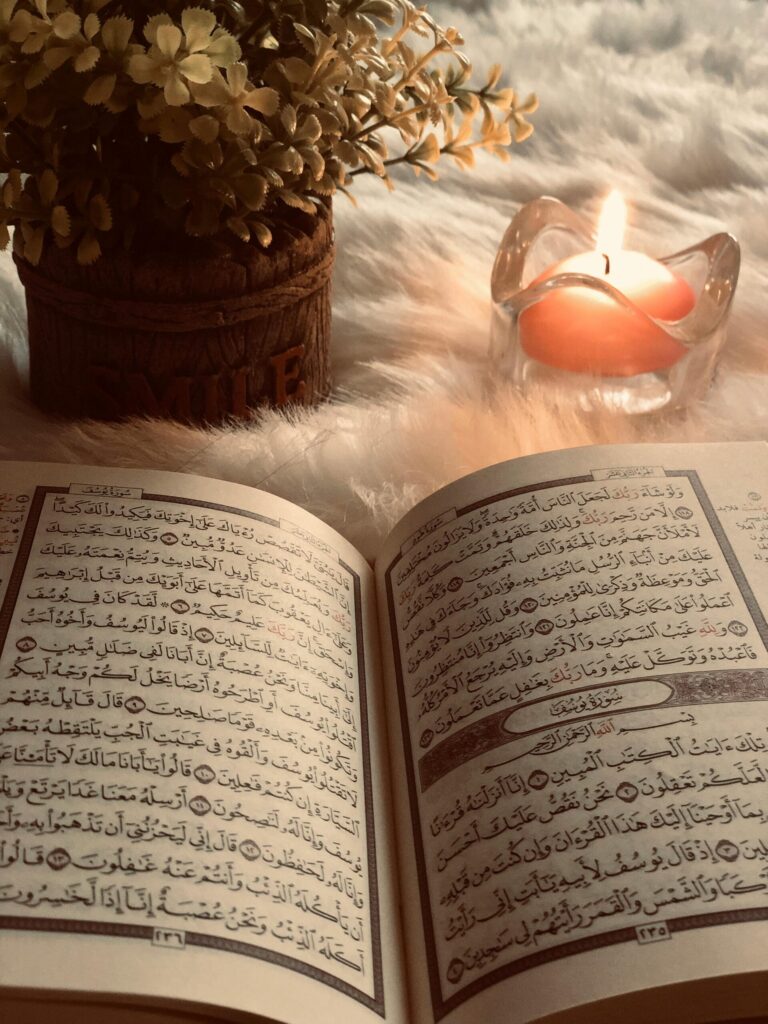
Islamic reminders on essential themes
Islamic reminder on patience
Patience, or sabr, comes up often in Islam. It is an essential quality for getting through hardships. The Quran advises: “O you who believe! Seek help through patience and prayer.” (2:153). Here, patience doesn’t mean sitting idle; it means moving forward with prayer and constant effort. The Prophet ﷺ also said: “Patience is at the first strike.” That means keeping your calm as soon as a problem arises, not afterward. A few ideas to work on patience:
- Take a deep breath before reacting.
- Keep in mind that every difficulty comes to an end.
- Draw inspiration from the prophets and righteous people.
Patience is like a muscle: the more you use it, the stronger it gets.
Islamic reminder on death
Death is an unavoidable reminder in the Islamic tradition. The Quran states: “Every soul will taste death.” (3:185). Thinking about death isn’t being negative; it puts things back in perspective and helps you act wisely. This reminder encourages us to enjoy the present, correct our mistakes and prepare for the hereafter. A few ways to take this reminder to heart:
- Take time to reflect on the fragility of life.
- Take care of your relationships with others.
- Multiply acts of kindness, because every moment counts.
Remembering death also gives more meaning to life.
Islamic reminder on good conduct
Good conduct, or akhlaq, is at the heart of Islamic teaching. The Prophet said: “The best among you is the one with the best conduct.” It shows through:
- A sincere smile.
- A kind word.
- A favor done discreetly.
Every small gesture counts. Working on your conduct means strengthening your faith and building solid bonds around you.
Islamic reminder on love
In Islam, love begins with love of Allah and extends to all of His creation. The Prophet ﷺ taught: “None of you will truly believe until he loves for his brother what he loves for himself. ” This love is expressed through:
- Respect for others.
- Generosity.
- Forgiveness.
Sincere love brings people together and creates a true community. A reminder about love is a reminder about what connects us all.
Islamic reminder on life
Life is a precious gift and a real responsibility. The Quran says: “And do not waste, for Allah does not love the wasteful. ” (7:31). Living with awareness means:
- Enjoying every moment.
- Taking care of yourself and others.
- Using your resources wisely.
This reminder invites us to give meaning to what we do and to live fully, without excess or negligence.
How to incorporate Islamic reminders into your daily life?
Practical tips for remembering Allah
There’s no need to change everything to bring Islamic reminders into your routine. Here are some simple ideas:
- Choose set times for reminders : after prayer, while walking, before sleeping.
- Display quotes or verses where you pass by often (office, kitchen, mirror).
- Set alerts or use apps to receive regular reminders.
- Take a few minutes each morning to reflect on a verse or a hadith.
- Write down your favorite Islamic reminders in a notebook or on your phone.
With these tips, the reminder becomes automatic, without any particular effort. And rest assured, there’s no quota limit!
Audio and visual Islamic reminders to use
Today’s tools make Islamic reminders even more accessible. Worth trying:
- Listen to audio reminders (podcasts, lectures, religious chants) during your commutes or breaks.
- Watch short videos on spiritual themes to feed your reflection.
- Share inspiring images or quotes on social media.
- Create a reminder board on your phone or computer, with your favorite verses and hadiths.
- Set wallpapers or widgets with reminders to keep inspiration in front of your eyes.
Thanks to these tools, the reminder stays present even on the busiest days.
Tips for sharing Islamic reminders with those around you
Sharing a reminder means offering a little goodness to those we love. Here is how to do it simply:
- Send a quote or a verse to a loved one, without pushing.
- Offer a reminder at the start of a meeting or at the table, naturally.
- Share your favorite reminders on WhatsApp, Insta or Pinterest, in the format you like (text, image, video).
- Give a book or a card with a reminder on a special occasion.
- Pose an open question on a spiritual theme to invite reflection.
The important thing is to share with kindness, without pressure, simply to inspire and support.
Conclusion
Islamic reminders are there for everyone, every day, with no need to be an expert or to set aside a special time slot. They bring real value to daily life: staying on course, giving meaning to every action and strengthening faith. Taking a moment to remember Allah, reflect on a verse or share an inspiring word is already moving forward on the spiritual path. Simple, practical, essential. Sometimes, a single reminder is enough to brighten a day.
FAQ
The best reminder is the phrase: “There is no deity worthy of worship except Allah” (La ilaha illa Allah). It is the heart of dhikr, recommended by the Prophet. It sums up the essence of the Islamic faith and can be repeated at any time to keep the awareness of Allah alive.
The Prophet said: “Patience is at the first shock.” (Bukhari and Muslim). This reminder encourages us to stay calm and respond wisely at the very first difficulty, instead of giving in to panic or anger.
To give thanks after a beneficial reminder, simply say “Alhamdulillah” (All praise and thanks are due to Allah). It is a short phrase to acknowledge the good received and thank Allah for His guidance.
A simple and effective supplication:
“O Allah, help me to remember You, to thank You and to worship You in the best way.”
(“Allahumma a’inni ‘ala dhikrika wa shukrika wa husni ‘ibadatik”). The Prophet taught it to ask Allah to make remembrance easier in daily life.
For trustworthy Islamic reminders, turn to the Quran, authentic hadiths and sites recognized by the Muslim community. Always check the source before sharing, to preserve the authenticity of the message.
You now have all the keys to bring Islamic reminders into your daily life, with ease.