


The women’s veil is part of the daily life of many Muslim women. It combines modesty, style and practicality, while adapting to every pace of life. This guide gets straight to the point: it helps you understand the types of veils, their materials, their uses, and the key points for choosing the one that will truly suit you.
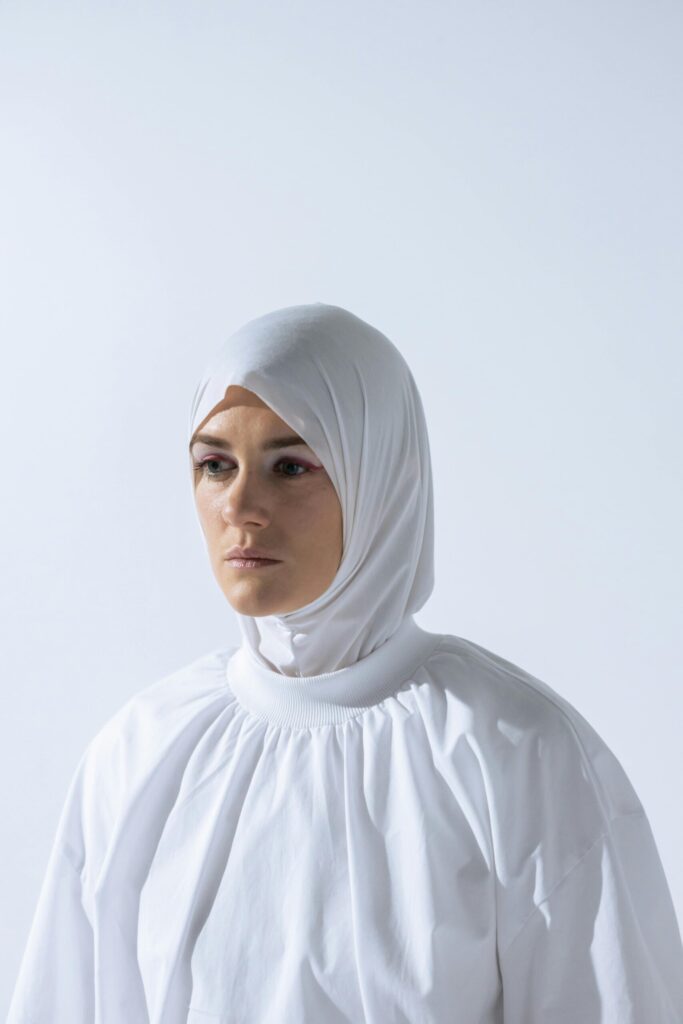
The different types of women’s veils
There is a whole palette of veils for women, with very varied styles, cuts and materials. This diversity allows everyone to find the version that matches her tastes, her habits or her style. You can easily go from classic to more modern. To get a clearer picture, here is a quick overview:
- Hijab: the basic one, it covers the hair, the neck and sometimes the shoulders.
- Scarf: square or rectangular format, to be tied however you like.
- Turban: a modern version, for a current look.
- Pashmina: long and versatile, perfect for playing with drapes.
- Square: a classic that is easy to personalize.
- Slip-on veil: ultra-practical, it goes on in the blink of an eye.
Each shape and each fabric meets a specific need: comfort, ease, style… With so many choices, you can vary depending on your mood or the day’s schedule. A bit like choosing between sneakers or heels depending on the day.
Hijab, scarf, turban: what are the differences?
The hijab is the most classic. It covers hair, neck, and sometimes the shoulders, but always leaves the face visible. It comes in a minimalist or an elaborate version, to suit every taste.
The scarf, on the other hand, is a square or a rectangle of fabric. You tie it around the head in a thousand different ways. It’s up to you to adjust the coverage depending on the style or the occasion.
The turban stands out for the way it wraps all around the head. The neck is often left uncovered. It brings a modern, sometimes bold touch. Practical and quick to put on, it appeals to those who like to change things up or who don’t have time to linger in front of the mirror in the morning.
Materials: Medina silk, jersey, chiffon, satin…
The material really makes a difference, for comfort as well as for looks. Here is a quick overview of the most common fabrics:
| Material | Strengths | Best times to wear it |
|---|---|---|
| Medina silk | Softness, flowing drape, slight sheen | Every day, special occasions |
| Jersey | Stretch, softness, easy to put on | Busy days, winter |
| Chiffon | Lightness, elegance, breathable | Summer, dressy outings |
| Satin | Shine, smooth feel | Ceremonies, weddings |
- Medina silk: ultra-soft, drapes perfectly.
- Jersey: the king of comfort, perfect for moving around all day.
- Chiffon: airy, ideal when it’s hot or for a chic look.
- Satin: shines brilliantly, perfect for big occasions.
Choosing the material is a bit like choosing your shoes according to the weather: it changes everything in daily life.
Shapes and styles (slip-on, pashmina, square, long, etc.)
- Slip-on veils: simplicity itself. You put them on in two seconds, and they stay firmly in place. Handy for rushed mornings.
- The pashmina: long and rectangular, it offers plenty of possibilities for playing with volume or layering.
- The square: timeless, it can be worn in a thousand and one ways. You can tie it in a retro or a more modern style.
- Long styles: perfect for full coverage or for creating layering effects. You can even add accessories (brooches, headbands) to personalize.
In short, each style has its advantages. It’s up to you to see what best suits your daily life.
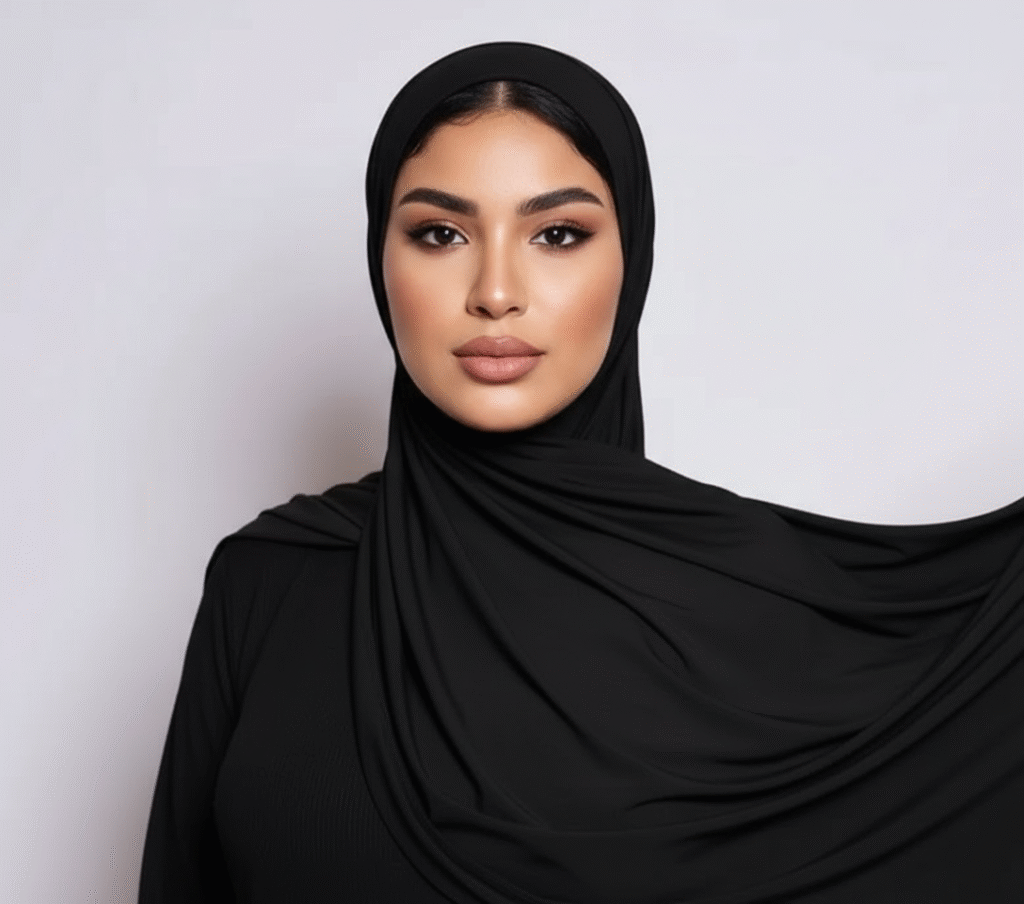
How to choose your women’s veil?
Finding the right veil is first of all about knowing what you expect from it. A few simple criteria are enough to sort through the options, depending on the occasion, the season and above all your comfort.
Depending on the occasion (everyday, work, wedding, prayer)
The occasion is often the starting point. For everyday wear or work, go for easy-to-live-with materials like jersey or Medina silk. Slip-on styles and rectangular hijabs are quickly adopted for their practicality.
For weddings or parties, bring out the chiffon, the satin or embellished veils. Pastel colors or subtle patterns often make the difference at these special moments.
For prayer, the simplest option remains a roomy veil that is easy to adjust. The idea is to be comfortable so you can focus on what matters most.
Quick recap:
- Everyday / work: comfort, easy care.
- Wedding / special occasion: elegance, refined details.
- Prayer: roominess, simplicity.
A veil suited to the event is like a well-chosen outfit: you feel good, whatever happens.
Depending on the season and comfort
The weather also influences the choice of veil. In summer, favor chiffon, lightweight cotton or viscose to avoid overheating. In winter, opt for thick jersey or viscose, to stay nice and warm.
Key takeaways:
- Summer: lightweight fabrics, light colors, breathable.
- Winter: thicker fabrics, dark shades, guaranteed warmth.
Comfort should always come first. A well-fitted scarf doesn’t feel tight, doesn’t slip, and stays pleasant all day long. Also think about care: some fabrics can be washed or ironed in no time. A comfortable scarf means peace of mind (and no battles with pins).
Tips for matching your scarf with your outfit
For a balanced look, play with contrasts or color echoes. A solid scarf pairs easily with a patterned outfit, while a printed scarf adds some pep to a more understated outfit.
Little tips:
- Light scarf with a dark outfit (and vice versa).
- Accessorize with brooches, pins and headbands to personalize it.
- Adapt the fabric: satin for an evening out, jersey for every day.
What matters is feeling comfortable and staying true to your style. A well-chosen scarf completes the outfit without ever overwhelming it.
Women’s scarf: meaning and motivations
Wearing the veil is above all a personal decision. The reasons are many: beliefs, culture, a desire for discretion… Understanding these motivations helps us better welcome the diversity of choices.
Why wear the veil?
For many, the veil is a marker of faith, a choice tied to Islamic values. It symbolizes modesty, humility, and sometimes attachment to an identity.
But there is also an aesthetic side: some women wear it because they find it elegant, or simply because they feel good that way. The veil then becomes a fashion accessory, like a hat or a scarf.
Finally, the veil can also bring a sense of security or self-confidence. It allows you to control your image and choose what you want to show. A bit like an umbrella: it protects and reassures, without ever weighing you down.
Is it mandatory to wear the veil?
The obligation to wear the veil depends on religious interpretations, family habits or cultural contexts. In France, wearing the veil remains a free choice, as long as certain rules are respected (notably at school or in some government offices).
What to remember: every woman decides for herself. Whether or not to wear the veil is a matter of conviction, environment and personal feeling. This choice always deserves respect, in an open society.
The veil and the expression of modesty
The veil is often associated with modesty, but it is not the only way to express it. Each woman adapts her wardrobe to her own vision of discretion, choosing loose-fitting clothing, neutral colors or opaque fabrics.
The veil fits into this approach, but the essential thing is to be in tune with yourself, without outside pressure.
Where to buy a quality women’s scarf?
To find a quality veil, you need to choose the right place. You can choose between physical stores and e-shops, each with its own strengths. Here is some help to shop without stress.
Specialty stores and e-shops
Specialty stores for the hijab and the veil offer a wide choice of styles, colors and fabrics. There you often get personalized advice and can feel the fabrics.
E-shops, on the other hand, make it easy to compare collections, prices and customer reviews. Filters let you target the fabric, color or shape you want right away.
Physical stores:
- Personalized advice
- Trying on in store
- Discovering fabrics
E-shops:
- Wide selection
- Quick comparison
- Access to customer reviews
Tip: alternating between the two lets you enjoy the best of both worlds.
Criteria for choosing well (delivery, returns, customer reviews)
Before confirming your cart, check a few essential points:
- Delivery: timeframes, fees, tracking
- Returns: ease of exchanging or returning a product
- Customer service: responsiveness, availability
- Customer reviews: feedback on quality, comfort, size
A reliable site displays this information clearly and offers accessible after-sales service. Customer reviews are valuable for getting real-world feedback.
Tips for buying online with confidence
To avoid unpleasant surprises, choose well-known sites with good ratings. Look closely at the descriptions, photos and size guides.
Keep in mind:
- Use the size guides to avoid mistakes.
- Read the fabric and care descriptions.
- Contact customer service if you have questions.
- Start with one or two styles to try them out.
A thoughtful purchase guarantees a scarf that ticks all the boxes, with no unpleasant surprises on delivery.
Conclusion
The women’s veil is more than just an accessory. It accompanies every moment, adapts to every mood and reflects the personality of the woman who wears it. Taking the time to choose the right fabric, the right shape and the style that suits you means investing in comfort, elegance and peace of mind, every day.
FAQ
The “veil” refers to any fabric that covers the head. The “hijab” is a specific type of veil that covers the hair and neck, but not the face.
Wearing the veil depends on beliefs, traditions and the religious or cultural context. In France, it is not imposed: it is a personal choice.
The veil is worn for religious, cultural or personal reasons. It is often linked to modesty and identity.
You’ll find the hijab, the scarf, the turban, the shawl, the pashmina, and more covering styles such as the khimar or the jilbab.
The fabric depends on the season, the occasion and the level of comfort you want. Medina silk for elegance, jersey for comfort, chiffon for lightness, satin for special occasions.