


The shahada is the declaration of faith in Islam: “Ashhadu an la ilaha illa Allah, wa ashhadu anna Muhammadan rasul Allah,” which means “I bear witness that there is no deity worthy of worship except Allah, and I bear witness that Muhammad is the Messenger of Allah.” It is the first pillar of Islam, and saying the shahada with conviction is how one officially enters Islam. In this article, you will simply understand what it means, how to pronounce it correctly and when to say it.
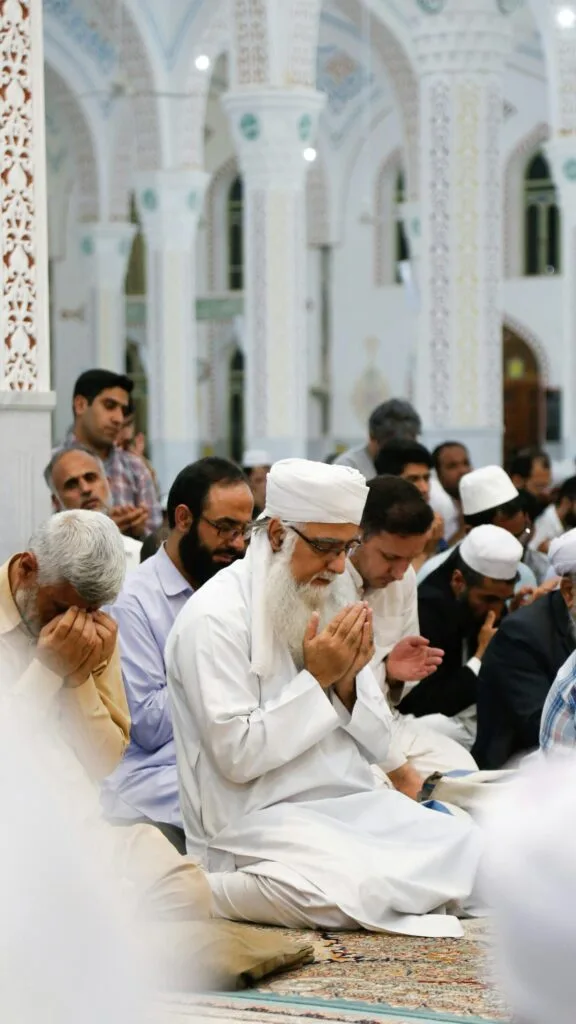
Shahada – Definition and meaning
The shahada is not just a phrase you learn by heart. It is the strongest spiritual commitment for a Muslim. When someone declares the shahada, they acknowledge two essential things:
- God (Allah) is one
- Muhammad (peace and blessings be upon him) is his prophet
This declaration is the starting point of faith. It is not reserved for a specific moment: it accompanies the believer at every stage, from childhood to the final moments. The shahada is also an act of awareness. It is not just words, it is a deep conviction. It highlights the simplicity of the Islamic message, open to everyone, regardless of origin or culture. In short: the shahada is the testimony of faith that connects the Muslim to God and to His Prophet.
“Shahada” – Origin of the word
The word “shahada” comes from the Arabic root “ ش-ه-د” (sh-h-d), which means “to witness” or “to attest.” In Arabic, “شهادة” (shahada) is the act of publicly affirming something, of bearing witness. In a religious context, it goes further than a simple declaration: it is a commitment, before God and before oneself. The idea of testimony is central in Islam, because it involves both what one feels inside and what one shows outwardly. The origin of the word is a reminder that sincerity and awareness are at the heart of the shahada.
The shahada, a fundamental pillar of Islam
The shahada is the first of the five pillars of Islam. Without it, nothing really stands firm when it comes to religious practice. It is the key to entering the Muslim community. By reciting the shahada, one publicly affirms one’s faith in God and in Muhammad (peace and blessings be upon him). There is no set moment: it accompanies the significant moments, but also everyday life, from prayers to important events such as birth or death. What is also powerful is that everyone shares this declaration, wherever they are in the world. No complicated ritual or intermediary is needed. Simply put, the shahada is the foundation of Muslim spirituality. Without it, the other pillars (prayer, fasting, almsgiving, pilgrimage) have no place.
Text of the shahada: Arabic, phonetic and English translation
To remember the shahada well, nothing beats a clear table:
| Version | Text |
|---|---|
| Shahada in written Arabic | أَشْهَدُ أَنْ لَا إِلٰهَ إِلَّا اللهُ وَأَشْهَدُ أَنَّ مُحَمَّدًا رَسُولُ اللهِ |
| Shahada in phonetics | Ash-hadu an la ilaha illa Allah wa ash-hadu anna Muhammadan rasul Allah |
| Translation of the shahada | I bear witness that there is no deity other than God, and I bear witness that Muhammad (peace and blessings be upon him) is the messenger of God |
Shahada in written Arabic
The Arabic version of the shahada is:
أَشْهَدُ أَنْ لَا إِلٰهَ إِلَّا اللهُ وَأَشْهَدُ أَنَّ مُحَمَّدًا رَسُولُ اللهِ
The shahada can be found everywhere: on mosques, in religious books, sometimes even on flags. It is made up of two parts, separated by “wa” (and). You don’t need to know how to write the shahada to say it, but it helps to grasp the structure of the original text. For those who are learning Arabic, the shahada is often the first phrase to learn. It also shows the beauty and simplicity of the language.
Shahada in phonetics
For pronunciation, here is the phonetic version:
Ash-hadu an la ilaha illa Allah wa ash-hadu anna Muhammadan rasul Allah
The phonetic version is very useful if you don’t read Arabic. It is best to practice articulating each word well, especially if you are in the process of converting. Don’t worry if your pronunciation isn’t perfect: what matters is the intention behind it. To improve, repeat the phrase out loud, listen to how it sounds, and draw inspiration from audio recitations.
Shahada – Translation
The translation of the shahada gives:
I bear witness that there is no deity other than God, and I bear witness that Muhammad (peace and blessings be upon him) is the messenger of God.
This translation highlights the two key points: God is one, Muhammad (peace and blessings be upon him) is his messenger. It allows everyone to understand, even without knowing Arabic. And it is a reminder of one thing: what matters is conviction, not the language.
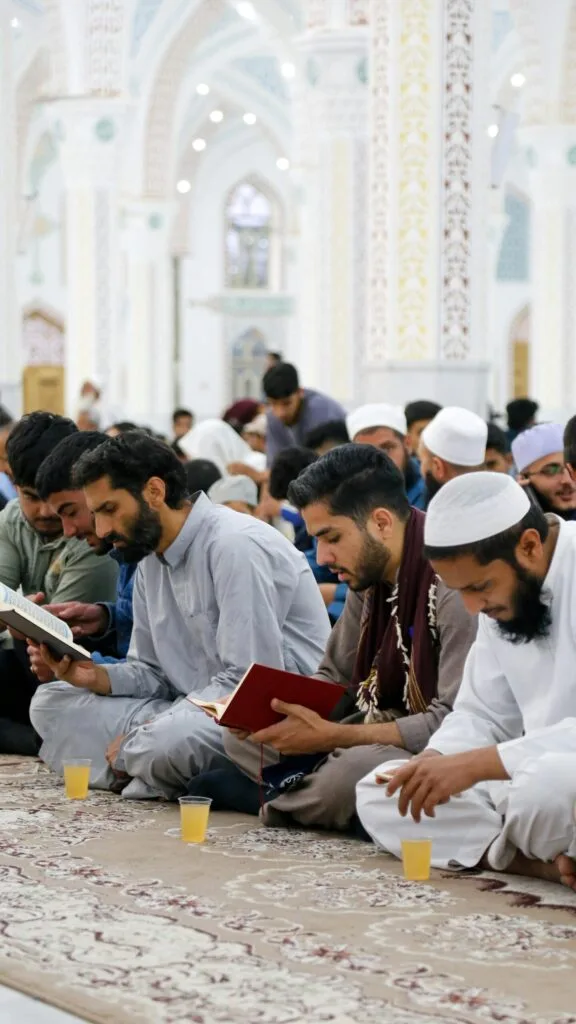
How to recite the shahada?
Steps to pronounce the shahada
Reciting the shahada is simple, but there are a few points to observe so that it is truly authentic:
1. Understand the meaning: it is not just about repeating the words, but about grasping what you are declaring.
2. Pronounce the complete formula, ideally in Arabic, but French works too if needed.
3. Say the shahada out loud, with the clear intention of joining the Muslim faith.
No complicated ceremony and no test to pass. What matters is honesty with yourself and a firm intention. For a conversion, it can be done at the mosque or in a small gathering, depending on each person’s choice. And no stress: sincerity comes before perfect pronunciation.
Conditions for the shahada to be valid
For the shahada to be recognized, it is enough to meet a few conditions:
- Pronounce it with full awareness, without outside pressure.
- Understand what you are declaring: God is One, Muhammad (peace and blessings be upon him) is a prophet.
- Be sincere, quite simply.
No paperwork, no need for a degree in theology. What matters is not doing it on impulse or under pressure. The shahada is a true spiritual commitment. No magic formula: just a thoughtful conviction.
The shahada and conversion to Islam
Saying the shahada means officially entering Islam. Traditionally, it is done with witnesses, often at the mosque, but this is not mandatory. What matters is sincerity. Witnesses are mostly practical for being recognized within the community or obtaining an official document, but even alone, the conversion is valid. After the shahada, it is advisable to become familiar with the basics of practice, but everyone moves at their own pace. The key point: the shahada is the gateway, and the rest is built afterward, step by step.
The importance and role of the shahada in a Muslim’s life
The shahada in daily life
The shahada accompanies the believer at every moment. It is recited during the five daily prayers, but also at key moments:
- at birth (whispered in the newborn’s ear)
- as death approaches
The shahada serves as a landmark, a reminder of what is essential. It reassures and guides, especially in times of doubt or difficulty. For many, the shahada is like an inner anchor. It shows that Islam is above all a faith lived every day, without anything superfluous. And let’s be honest: it is easy to remember, which doesn’t hurt.
The shahada and the five pillars of Islam
The shahada is the foundation on which all the other pillars rest. Without it, nothing stands. It structures all religious practice. A quick reminder of its link with the other pillars:
- Prayer (salat): the shahada is included in every prayer.
- Fasting (sawm): fasting during Ramadan only makes sense if faith is affirmed.
- Almsgiving (zakat): giving takes on its full meaning from the perspective of faith.
- Pilgrimage (hajj): the pilgrimage begins and ends with the shahada.
The shahada is the common thread of Muslim spirituality. Without it, it is like a house without a foundation.
Differences among the branches of Islam
The shahada is universal, but there are a few variations depending on the branch. The basic phrase does not change: the oneness of God and the mission of Muhammad (peace and blessings be upon him). Among Shia Muslims, a phrase is sometimes added: “Ali is the wali (friend or successor) of God.” This phrase highlights the importance of Ali, but the heart of the message remains the same. On the Sunni side, the shahada does not change. Despite these nuances, it is the common ground of all Muslims. It brings people together widely, and frankly, that is already quite something.
Conclusion
The shahada is not just a formula. It is the center of the Muslim faith, a declaration of intent, a bond of belonging. Whether you want to learn it, pass it on or simply understand it, the important thing is to grasp its significance and its simplicity. The shahada is what connects every Muslim to their belief, every day.
FAQ
- Shahada in Arabic : أَشْهَدُ أَنْ لَا إِلٰهَ إِلَّا اللهُ وَأَشْهَدُ أَنَّ مُحَمَّدًا رَسُولُ اللهِ
- Shahada in phonetics : Ash-hadu an la ilaha illa Allah wa ash-hadu anna Muhammadan rasul Allah
- Shahada translation : I testify that there is no deity other than God and I testify that Muhammad (peace and blessings be upon him) is the messenger of God.
You simply say it out loud, understanding what you are saying and with sincerity. Witnesses are recommended, but not essential.
You can recite the shahada alone. Witnesses make it easier to make the conversion official, but they are not a mandatory requirement.
The shahada does not appear word for word in the Quran, but its two main declarations are found in several places.
The foundation remains the same for everyone. Some branches, such as Shia Islam, sometimes add a phrase to the shahada, but the core of the message does not change.
Leave a Reply