


The Quran mentions the veil in several verses, but never clearly imposes it on all women. The obligation to wear the veil has been debated for centuries, depending on scholars, religious schools and eras. Here, we take stock of what the texts really say, the different readings, and how wearing the veil has evolved in Islam.
In brief:
- The Quran speaks of modesty and modest dress, especially in suras 24:31 and 33:59.
- There is no explicit obligation to wear the veil in the Quranic text.
- Opinions vary depending on the schools and historical contexts.
- Wearing the veil has changed over time and is still debated today.
The Quran mentions the veil in several verses, but the strict obligation remains debated. Opinions differ depending on religious schools and contexts. For some, it is a prescription; for others, a recommendation. This guide reviews the texts, the opinions and the evolution of veil-wearing.
What do the Quran’s verses say about wearing the veil?
The Quran speaks of modesty and modest dress for women, notably in suras 24:31 and 33:59. However, it gives no precise rule on the form or exact obligation of the veil, which leaves room for several readings.
On a careful reading, we see that the Quran prefers to give general principles on modesty, without imposing a specific garment on all women. The words used in the verses, such as “khimar” or “jalabib”, refer to garments known at the time, but their exact meaning is debated. Some see a simple scarf covering the chest, while others imagine a larger veil covering the whole body.
Scholars point out that the text insists above all on an attitude of modesty, inviting women not to show their adornment. This idea of modesty is set in a context where clothing also served to distinguish believing women and ensure their safety. The result: the text leaves a margin of interpretation, which explains the diversity of practices across the Muslim world.
In short, the Quran gives advice on dress and conduct, but does not impose any single dress code. Differences in interpretation come from the richness of the Arabic language, the customs of the time and historical developments. This explains the variety of practices, from strict obligation to a simple call for modesty.
The verses concerned (sura 24:31, 33:59)
| Verse | Text (translation) | Key word | Common interpretation |
|---|---|---|---|
| Sura 24:31 | “And tell the believing women to lower their gaze, guard their chastity and not display their adornment except what is apparent, and to draw their veils over their chests…” | Khimar (veil/scarf) | A call to modesty, covering the chest, no precise description of the veil |
| Sura 33:59 | “O Prophet! Tell your wives, your daughters and the women of the believers to draw their cloaks over themselves…” | Jalabib (loose cloak) | Recommendation to cover up in order to be recognized and avoid harassment, a security context |
This table clearly shows the diversity of interpretations around the words “khimar” and “jalabib”. The “khimar” originally referred to a scarf covering the head and chest, but its form changed depending on regions and eras. The “jalabib” is a loose garment, often seen as a coat or cloak to protect the body.
Many scholars agree on one point: these verses above all encourage discretion and dignity in public. But whether these are religious obligations or merely moral guidelines remains an open question. Differences in translation and in the understanding of Arabic contribute to the variety of practices we see today.
It should also be remembered that these verses are part of a broader set of recommendations on dress, which apply to both men and women. Modesty is central, but how it is applied depends greatly on the cultural and social context.
Translation and historical context
The verses on the veil emerged in a specific social context, where modesty was an important value and women’s clothing distinguished believing women. At the time, the “khimar” was already a commonly worn scarf, and the Quran asks that it be used to cover the chest. The “jalabib” refers to a loose garment, worn for protection in public. These rules responded to needs of security and social respect, but their universal value is debated.
To understand these verses properly, they must be placed in 7th-century Arabia. At that time, women already wore different types of veils, for social or cultural reasons or simply because of the climate. The Quran therefore addresses people who were already familiar with these practices, and adapts its advice to the reality of the moment.
The “khimar” covered the head and sometimes the chest, but its use varied. The verse in sura 24:31 invites women to draw this scarf over the chest, emphasizing modesty rather than introducing a new garment. The “jalabib” was a loose cloak, practical for shielding oneself from stares or assaults in public, as sura 33:59 recalls.
This historical context explains why the Quran’s prescriptions have been understood differently across eras and societies. Over time, the meaning of the veil has evolved, moving from a simple protective measure to a religious or identity symbol in some circles. Today, the diversity of practices reflects this complex history, where tradition, culture and religion intertwine.
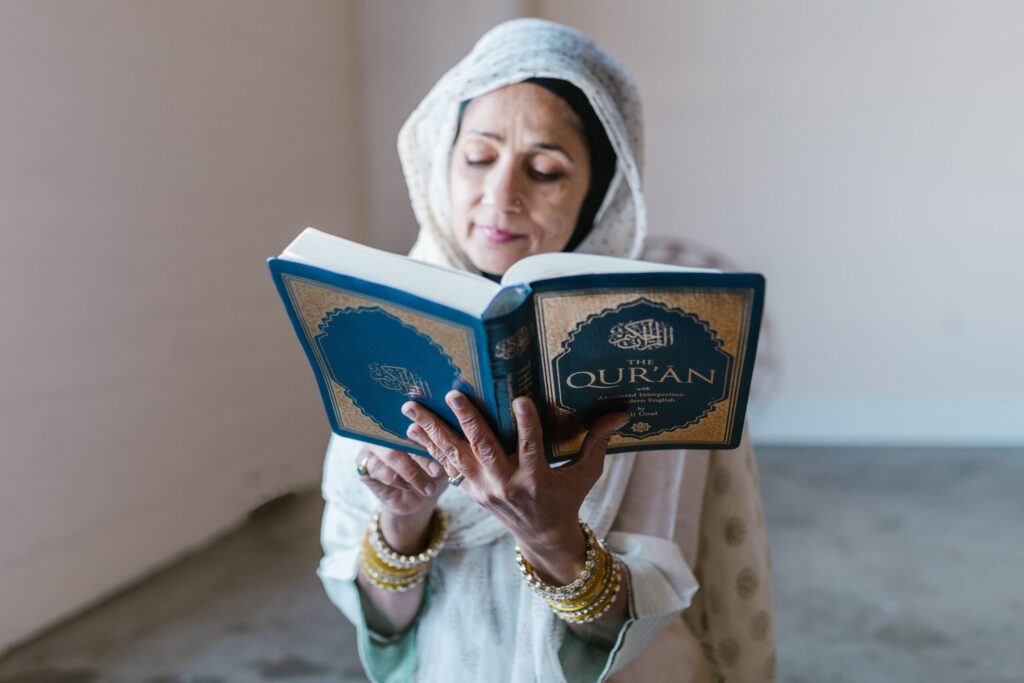
Is the veil a religious obligation according to the Quran?
The Quran does not clearly establish wearing the veil as a strict obligation for all women, but certain verses are interpreted as prescriptions. Everything therefore depends on the reading and the school of thought.
It should be noted that in Islam, a religious obligation (fard) rests on clear and explicit texts. For the veil, the Quran mainly offers general recommendations on modesty, without detailing a specific garment that is mandatory for all. This lack of precision has opened a wide debate among scholars, legal schools and communities.
The classical legal schools (Hanafi, Maliki, Shafi’i, Hanbali) often rely on a literal reading of the verses to defend the obligation of the veil, but other voices, especially today, stress the historical context and individual freedom. The distinction between moral recommendation and strict religious obligation is therefore at the heart of the debate.
The arguments of each camp rest on the analysis of words, the context of revelation and the evolution of Muslim societies. Some believe that modesty can be expressed differently depending on the era and culture. Others defend the idea of a timeless religious norm.
In the end, the question of the obligation of the veil according to the Quran remains open, and each religious or intellectual current offers its own reading. The debate continues, driven by social changes, individual choices and questions of identity.
The arguments for the obligation
- The expressions “draw their veils over” and “bring their outer garments closer around them” are seen by some as religious prescriptions.
- Many classical scholars state that modesty implies covering the hair and body, except the face and hands.
- The majority schools of law (Hanafi, Maliki, Shafi’i, Hanbali) defend the obligation of the veil.
These arguments are based on a literal reading of the verses and on the practices of the first Muslim generations. For many scholars, the modesty required by the Quran translates concretely into covering the hair and body, except the face and hands. This position was taken up in Islamic jurisprudence, giving rise to fairly precise dress codes in many Muslim countries.
To support their view, advocates of the obligation also cite hadiths (sayings attributed to the Prophet) that encourage modesty in dress. For them, following these prescriptions demonstrates religious obedience and respect for Islamic values. This approach aims to preserve the dignity and safety of women in public spaces, while affirming a religious identity.
But there are nuances depending on cultural and historical contexts. Some societies developed specific veil styles, while others adopted more flexible forms. Even among defenders of the obligation, the discussion remains open.
Arguments for the recommendation
- The verses do not clearly set out a single garment or a specific form of veil.
- Several exegetes point to the historical context: the veil was meant to protect women in a given society.
- Contemporary currents emphasize individual freedom and the diversity of cultural practices.
Those who defend the idea of a simple recommendation stress the absence of a clear rule in the Quranic text. For them, the Quran values modesty as a moral value, without imposing a particular garment on all women, everywhere and at all times. Their reading relies on the context of revelation, in which wearing the veil met specific needs for safety and social distinction.
Many thinkers today insist on the importance of the freedom to choose one’s attire. According to them, faith and modesty can be expressed in different ways, adapted to each society and each era. This approach values the diversity of practices and rejects any standardization.
Finally, some Muslim feminist currents see the veil as more of a cultural symbol than a religious one, and defend each woman’s right to freely choose her attire. They point out that spirituality is not measured by appearance, but by intention and sincerity. After all, you can’t judge a book by its cover… nor a believer by her scarf.
-
Bestseller

Soft Cotton Hijab Underscarf
7,20 €Select options This product has multiple variants. The options may be chosen on the product page -
Bestseller
Hijab Underscarf – Soft and Lightweight
4,80 €Select options This product has multiple variants. The options may be chosen on the product page -

Écharpe en Coton et Lin – Épaisse et Douce
13,20 €Select options This product has multiple variants. The options may be chosen on the product page


What are the different interpretations of the veil in Islam?
Readings on wearing the veil vary widely: some scholars see it as a religious obligation, others as a simple recommendation tied to the historical context. Today, the debate continues between tradition, social change and individual freedom.
This diversity stems from the richness of Islamic sources and the contexts in which they have been studied. Schools of law, exegetes, modern thinkers and Muslim communities have all shaped different readings of the veil. There are not just two camps, “for” or “against”: many intermediate views exist, taking into account the complexity of the texts and social realities.
Interpretations also evolve with contemporary issues: the place of women, religious identity, social pressure… Some see the veil as a sign of piety, others as a personal choice, and still others as a political or cultural symbol. This plurality reflects the vitality of the Islamic debate on the subject.
Finally, it should be remembered that wearing the veil is not only a religious rule: it is also a history, marked by developments, debates and adaptations. The diversity of current practices shows this richness and calls for nuance.
The views of classical scholars
- The majority of medieval scholars consider the veil a religious obligation, based on a literal reading.
- Some jurists distinguish between the private sphere (where a woman does not need to cover) and the public sphere.
- Others, fewer in number, believe the prescription is above all about modesty, not a specific garment.
Classical scholars played a major role in defining Islamic dress norms. Their analysis of the texts often relied on tradition and the consensus of their time. For many, the veil was synonymous with respect for Islamic values and social protection.
Some jurists nuanced this position by distinguishing obligations according to context: at home, in the presence of relatives, or in the public sphere. This distinction allowed for a certain flexibility in applying the rules, even though the dominant trend remained the obligation of the veil in public.
A few scholars, in the minority, proposed a reading focused on the purpose of the prescriptions: modesty and dignity, rather than the imposition of a specific garment. This approach, less widespread, paved the way for greater diversity and adaptation of norms according to societies.
Contemporary views and current debates
- Modern thinkers question the strict obligation, pointing out that the social context has changed.
- Some Muslim feminist currents defend freedom of choice and see the veil as a cultural symbol.
- The debate remains lively in Muslim societies as well as in diaspora communities, where practices are very varied.
Today, the debate on the veil reflects the changes in Muslim societies and the diversity of individual experiences. Many contemporary intellectuals and theologians insist on the need to reread the texts in light of the modern world. They point out that the prescriptions of the past met specific needs, which are not always relevant today.
Muslim feminist movements, above all, defend freedom of choice and women’s autonomy in their relationship with religion. For them, the veil can be a symbol of emancipation, spirituality or identity, but it must never be imposed. This view highlights the plurality of experiences and respect for personal choices.
In Muslim societies and diaspora communities, the practice of wearing the veil is very diverse. Some women wear it out of religious conviction, others out of tradition, and still others choose not to wear it. The debate remains alive, and it is not unusual for discussions about the veil to be more heated… than those about the weather.
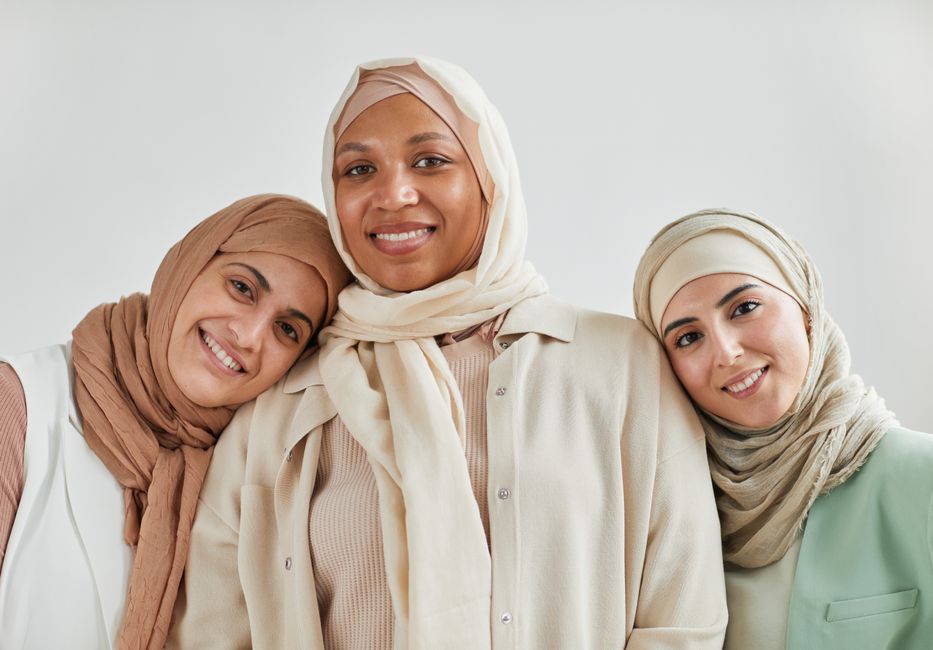
History and evolution of wearing the veil among Muslim women
Over the centuries, wearing the veil has gone from a context-based prescription to a practice that varies widely across Muslim societies. Today, there is a great variety of practices and meanings surrounding the veil.
The history of the veil is a series of adaptations and reinterpretations. As early as antiquity, forms of veiling already existed in the Near East, long before the arrival of Islam. With the Quran, these practices were integrated and adapted, according to social needs and religious values.
Over the centuries, the veil has taken on several meanings: a marker of social status, a symbol of respectability, or a sign of religious belonging. Dynasties, empires and Muslim societies have all developed their own dress codes, influenced by local traditions, cultural exchanges and political developments.
Today, the diversity of practices surrounding the veil reflects this rich history. Some societies have kept traditional forms, while others have adopted more modern or hybrid styles. The meaning of the veil changes depending on the context: personal faith, collective identity, or simply a dress habit.
The veil in Muslim societies through time
- Before Islam, different forms of veiling already existed in the Arabian Peninsula.
- Under the first caliphates, wearing the veil became institutionalized, but practices varied from region to region.
- Over the centuries, the veil has taken on multiple meanings: social marker, religious symbol, or simply a dress habit.
The history of the veil does not begin with Islam. In antiquity, many civilizations of the Near East and the Mediterranean already used veils for modesty, status or climate. With Islam, these uses were adapted to new social and religious norms.
Under the first caliphates, wearing the veil was gradually institutionalized, but it was never uniform. Practices varied according to region, social class and local customs. In some societies, the veil was reserved for women of high rank, while in others it was more widespread.
Over time, the veil took on different meanings: it could symbolize piety, respectability, or simply follow the fashion of the moment. Muslim dynasties and empires each left their mark on clothing styles, giving rise to a great variety of shapes and colors. Just goes to show that fashion and religion have always been a matter of style.
Wearing the veil today: a diversity of practices
- In some countries, the veil is required by law, while in others it is left to individual choice.
- Veil styles vary: hijab, niqab, chador, simple scarf, or no veil at all.
- For some women, the veil is a spiritual choice; for others, it is a tradition or a social constraint.
- There are many debates, but the verses remain the same!
Today, the question of the veil arises in very different contexts. In some countries, the law requires wearing the veil, while elsewhere it is a personal choice. This diversity reflects the plurality of Muslim societies and the variety of religious interpretations.
Veil styles are also very diverse: from the hijab that covers the hair, to the niqab that covers the face, including the chador or the simple scarf, each region and each woman adapts her practice to her convictions, her culture and her environment. Some women wear it out of faith, others to respect family tradition, and still others under social or legal pressure.
The debate over the veil remains lively, in Muslim societies as well as in diaspora communities. It raises questions of identity, freedom, women’s rights and secularism. While opinions differ, one thing is certain: wearing the veil continues to fuel discussions, sometimes more than soccer or politics!
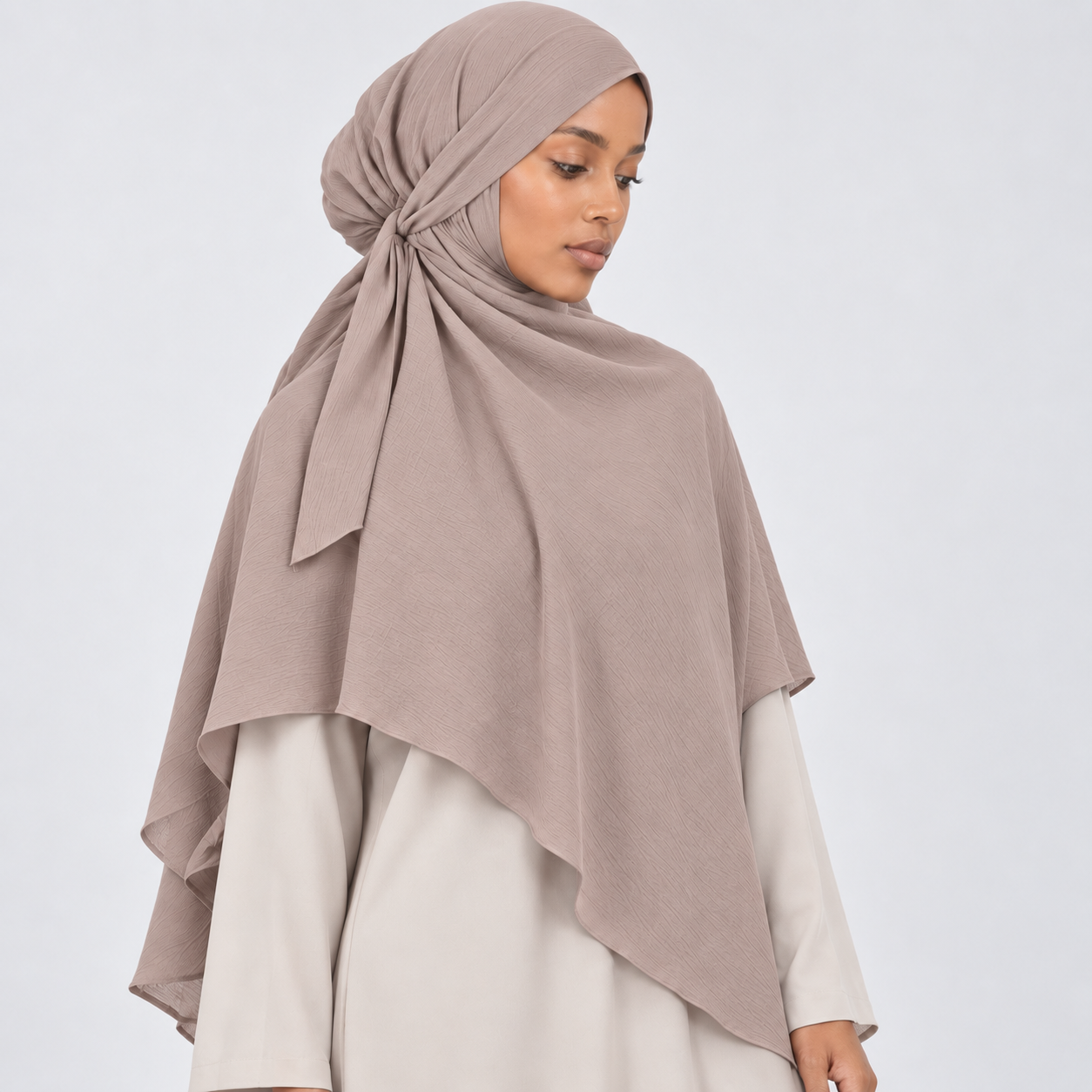
Conclusion
The Quran addresses the wearing of the veil through verses on modesty and decency, but without stating an explicit and universal obligation. The debates over whether the veil is obligatory reflect the diversity of religious readings, historical contexts and cultural practices. Today, wearing the veil remains above all a personal, social or religious choice, according to each woman’s convictions.
FAQ
The Quran mentions wearing the veil in certain verses, but whether it is strictly required is debated among scholars. Interpretations vary depending on the school of thought and the era.
The verses most often cited are Surah 24:31 and Surah 33:59. They speak of modesty in dress, but do not specify a particular type of veil as mandatory.
For some schools of thought, not wearing the hijab is discouraged, or even prohibited; for others, it is not a major religious fault. The subject remains debated.
The answer depends on interpretations: some believe it is a religious obligation, others a recommendation or a cultural practice.
Leave a Reply