


Is the qamis banned in France?
The qamis is not banned in public spaces in France. However, there are places where wearing it may be restricted, such as at school or in government offices, because of the laws on secularism and neutrality. Here is an overview of what French law says, and of the situations where restrictions exist.
In short:
- The qamis remains permitted in the street and in public places in France.
- It may be prohibited at school or in government offices, under the law on secularism.
- Penalties vary depending on the setting: school exclusion, a formal warning, but no specific fine in the street.
- The law does not mention the qamis, but any conspicuous religious attire may be affected.
Is the qamis banned in France under the law?
In France, there is no legal ban on the qamis in public spaces. That said, this garment may be subject to restrictions in certain places, such as schools or public services, because of the rules on secularism and neutrality.
The qamis is a traditional tunic worn by some Muslim men. French law never targets it directly. But there are rules on signs or garments that show a religious affiliation in certain settings. The main restrictions mostly concern public schools and public services, where religious neutrality is the standard. In the street or in places open to everyone, you can wear a qamis without any problem, except in exceptional cases related to public order.
In summary, everyone is free to wear a qamis in daily life, whether for religious or cultural reasons or simply for style. But there are contexts where special rules apply. In public schools, the law on secularism aims to guarantee a neutral space, free of visible religious signs. This rule also applies to public service employees, who must remain religiously neutral while at work. Outside of these cases, freedom of dress applies, and no specific ban targets the qamis.
Definition of the qamis and how it is perceived in France
The qamis is a long tunic worn by Muslim men, usually reaching down to the ankles. In France, it is sometimes seen as a religious garment, even though it is mostly cultural and traditional. This perception varies a lot depending on the person or the situation, which can create confusion with other garments such as the abaya or the djellaba.
The line between religious and traditional clothing is not always clear in France. For some, the qamis evokes a religious identity; for others, it is simply an everyday garment or one worn for special occasions. This ambiguity explains why it is sometimes debated, especially in schools and government offices. It is therefore worth remembering that the qamis, like other traditional garments, does not carry a single religious meaning and can be worn for many different reasons.

What does French law say about religious clothing?
French law does not ban religious clothing in public spaces. But since March 15, 2004, signs or garments that clearly display a religious affiliation have been prohibited in public schools. For public service employees, neutrality also applies. Outside of these contexts, wearing religious clothing, including the qamis, remains permitted.
The idea is to preserve neutrality in schools and government offices. But in the street, in shops and on public transportation, everyone remains free to choose what to wear. The law does not provide a precise list of the garments concerned. This leaves some room for interpretation by each institution or employer. If in doubt, it is best to check the internal rules or ask a manager directly.
Difference between the qamis and other religious garments (abaya, hijab, etc.)
The qamis is different from the abaya (a long dress for women) or the hijab (a scarf covering the hair). The law does not mention the qamis in particular, but any garment considered conspicuous may be affected at school or in government offices. The distinction rests mostly on the interpretation of those in charge.
In practice, this nuance can cause confusion. The abaya recently sparked debate at school, while the qamis has received less media attention. The hijab, on the other hand, is clearly prohibited in public schools. The kippah and the Sikh turban are also subject to the neutrality rules. In short, it often depends on the context and on how the garment is perceived within the institution.
Summary table: religious garments and the legal framework
| Garment | Gender concerned | Banned at school? | Banned in government offices? | Banned in the street? |
|---|---|---|---|---|
| Qamis | Men | Yes (if conspicuous) | Yes (for public employees) | No |
| Abaya | Women | Yes | Yes (for public employees) | No |
| Hijab | Women | Yes | Yes (for public employees) | No |
| Kippah | Men | Yes | Yes (for public employees) | No |
| Sikh turban | Men | Yes | Yes (for public employees) | No |
Where can wearing the qamis be banned in France?
The qamis may be prohibited in public schools, government offices and certain workplaces where religious neutrality is required. But in public spaces, it remains permitted, except in very specific cases.
The restrictions really depend on the context. In public schools, any garment clearly showing a religious affiliation may be prohibited. In government offices, public employees must remain neutral. In the street, on public transportation and in shops, the qamis is permitted, except in cases related to public order (safety, demonstrations, etc.).
In most places open to the public, no restrictions apply to the qamis. But there are environments where religious neutrality is mandatory. For example, public schools strictly apply the 2004 law, and government offices require neutrality from their staff. In the private sector, everything depends on the internal regulations: some employers may set rules, but they must be justified (safety, image, etc.). Occasionally, during special events (large demonstrations, security checks), temporary restrictions exist, but this remains rare.
-
-14 %

Qamis Men's Hooded Sweatshirt
Original price was: 34,80 €.29,88 €Current price is: 29,88 €.Select options This product has multiple variants. The options may be chosen on the product page -

Men's Qamis with embroidery and hood
30,00 €Select options This product has multiple variants. The options may be chosen on the product page -
-28 %

Qamis men's hooded – Long casual sweatshirt
Original price was: 42,00 €.29,88 €Current price is: 29,88 €.Select options This product has multiple variants. The options may be chosen on the product page


Qamis at school: what the Ministry of National Education says
In public schools, the law prohibits signs or clothing that clearly show a religious affiliation. If the qamis is considered as such, it can therefore be prohibited. Everything depends on the opinion of the school principal and the context.
In practice, each school may have its own interpretation. Some principals see the qamis as a traditional garment and accept it, while others consider it conspicuous and ban it. It is therefore best to check with the school concerned to avoid surprises. In case of disagreement, dialogue with the administration remains the first step. This flexibility of interpretation can sometimes be confusing, but it also allows adaptation to each situation.
Qamis in government offices and at work
In government offices, public employees must respect neutrality and not wear outfits with a religious connotation, including the qamis if it is perceived as such. In the private sector, the internal regulations may provide for restrictions, but they must be justified and proportionate.
For public employees, the rule is clear: no religious clothing or signs during work. In the private sector, it is more nuanced. An employer may limit the wearing of the qamis for specific reasons (safety, customer contact, etc.), but must explain the decision and respect religious freedom. The courts verify that these restrictions are neither arbitrary nor discriminatory. If in doubt, consult the internal regulations or ask HR for advice.
Qamis in public spaces (street, public transport, etc.)
On the street, on public transport or in public places, wearing a qamis is completely free. There is no general ban, except in very rare cases related to safety or public order.
In short, you can wear a qamis to go to work, do your shopping or take public transport. The only limits are those of public safety, for example during large gatherings where special measures may be taken. But in everyday life, freedom of dress prevails. If a restriction seems unjustified to you, do not hesitate to ask for explanations or to contact a rights advocacy association.
Places where wearing the qamis may be restricted:
- Public schools (students)
- Government offices (public employees)
- Certain private workplaces (if the internal regulations provide for it)
- Places subject to safety or public order rules (rare)

What are the possible penalties or consequences?
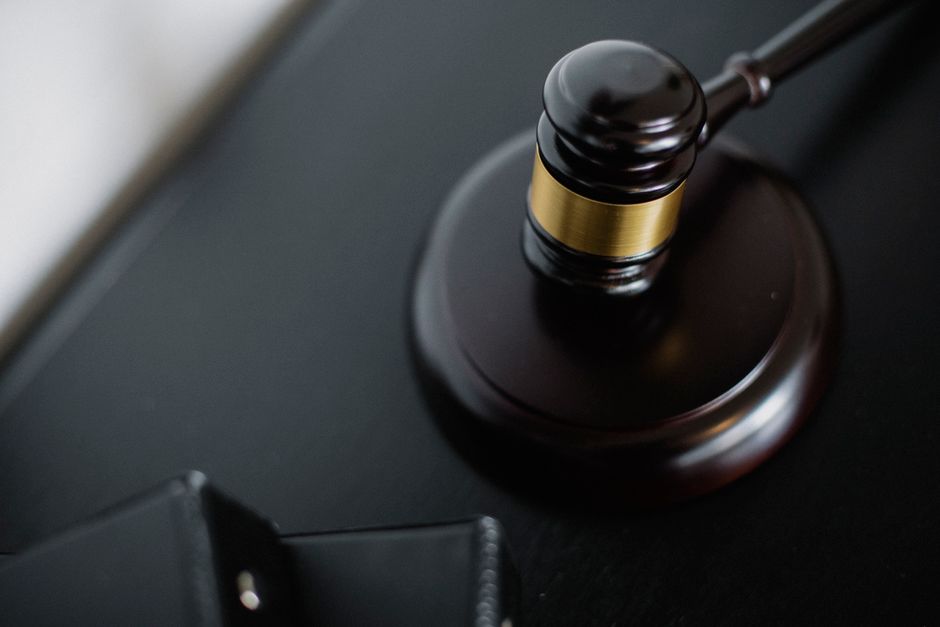
The penalties depend on the context: they can range from a simple warning at school or in a government office, up to a temporary exclusion. On the street, there is no specific fine or penalty for wearing the qamis.
If the rules are not followed in the places concerned, the consequences vary: at school, it often starts with a warning, then a temporary exclusion in case of refusal. In government offices, the public employee may receive a reminder of the rule, or even a request to change outfits. On the street, nothing is provided for, except in exceptional circumstances.
Penalties are never automatic. Everything depends on the opinion of the person in charge of the place (school principal, supervisor, etc.). In general, dialogue is preferred before any penalty. Measures must always be proportionate and respectful of rights. In the private sector, a penalty must be justified by the internal regulations and must not be discriminatory. Finally, in public spaces, the absence of penalties clearly shows that freedom of dress is guaranteed.
Penalties at school or university
At school, if a student wears a qamis deemed conspicuous, they may be asked to change, then penalized (warning, temporary exclusion) in case of repeated refusal. At university, secularism does not apply in the same way, and wearing the qamis is generally allowed.
In practice, the procedure at school begins with a conversation with the student and their family to explain the rule. If dialogue is not enough, a penalty such as temporary exclusion may be decided. At university, freedom of dress applies, with some exceptions (exams, internships, etc.). Students can therefore wear a qamis unless the internal regulations say otherwise.
Penalties in the public or private sector
In government offices, a public employee must respect neutrality and may be asked to remove their outfit. In the private sector, penalties depend on the internal regulations, but must respect religious freedom, unless there is valid justification.
In the public sector, penalties are progressive: a reminder of the rule, a request to change outfits, then a disciplinary warning if needed. In the private sector, the employer must prove that the restriction is necessary and proportionate. Any penalty must follow a specific procedure. In case of disagreement, the employee can bring the matter before the labor court. It is therefore important to know your rights well and to talk with your employer if needed.
Special cases and recent case law
There are a few cases in court, but no major case law on the qamis. Decisions are based on the conspicuous nature of the outfit and respect for neutrality.
French case law mostly focuses on the hijab, the kippah or the abaya. For the qamis, the few cases are examined on a case-by-case basis: the courts look at whether the outfit is seen as a conspicuous religious symbol, as well as the context and the person’s intent. Without a specific text, the assessment remains broad. If you are affected by a complicated situation, it is best to consult a lawyer or a specialized association.
Table: possible penalties by location
| Location | Possible penalty |
|---|---|
| Public school | Warning, expulsion |
| Government offices | Reminder of neutrality, request to change outfit |
| Private sector | According to internal rules |
| Public space | None, unless there is a disturbance of public order |
Conclusion
The qamis is not banned in France in public spaces, but it may be subject to restrictions in certain places, such as public schools or government offices, in order to respect secularism and neutrality. Penalties vary depending on the context, and there is no specific fine for wearing the qamis in the street. To be on the safe side, it is best to know the rules specific to each place and stay up to date on changes in the law.
Leave a Reply