


A dua is a personal invocation addressed to Allah, in which each person freely expresses their requests, thanks or needs.
The dua is one of the most sincere acts in Muslim practice. No set posture, no set time, no imposed text: just a person turning to Allah to speak to Him the way we speak to the One who already knows everything about us. A request, a gratitude, a weakness, a need… Anything can become an invocation. And that is why duas hold such a precious place: they connect the heart to God, in ease as well as in hardship.
What is a dua?
The dua is a special moment in Muslim practice. It is not a formal prayer, but rather an invocation, a direct way of sharing with God what we feel: needs, worries, wishes, gratitude… There is no strict rule here. No set time, no imposed language. The dua simply fits into everyday life. It is a personal, intimate space where everyone can speak with the divine, whether in good times or in more difficult moments.
Etymology and spellings of the word dua
The word “dua ” comes from the Arabic du‘ā’ (دُعَاء), which means “call” or “request.” In English, there are several ways to write it: dua, dou’a, du’a, duaa… These variants simply try to get as close as possible to the Arabic pronunciation. Whatever the spelling, we are always talking about the same act: asking God, whether with memorized phrases or with your own words. This flexibility makes the dua accessible to everyone, even without speaking Arabic.
Difference between dua and ritual prayer
The ritual prayer (salat) is highly structured: specific movements, precise texts, set times to observe. It is performed in Arabic and follows a well-defined sequence. The dua, on the other hand, is much freer. You can make it whenever you want, however you want, in any language. It complements the salat: you can slip in your personal requests, ask for forgiveness or simply give thanks, without worrying about the time or place. In short, the salat sets a framework, while the dua adds a personal and spontaneous touch.
Why make duas?
Duas are, in a way, the heart of inner balance for many believers. They are not just for asking for something: they also allow us to say thank you, express our trust, or hold on to hope. Taking time for a dua means giving yourself a pause, refocusing, and strengthening your bond with God.
Spiritual and psychological benefits
Making a dua brings quite a few positive things to daily life:
Calm the mind: taking a moment to supplicate really helps put things in perspective.
Develop gratitude: giving thanks for what we have makes life more positive.
Strengthen faith: remembering that we are never alone in the face of worries matters.
Create a real connection: it is a direct link with God, with no filter.
Manage stress: putting words to your fears or needs brings relief.
Practiced well, the dua becomes a real tool for staying strong and serene, even when everything around you is shifting.
Duas in the Quran and the hadiths
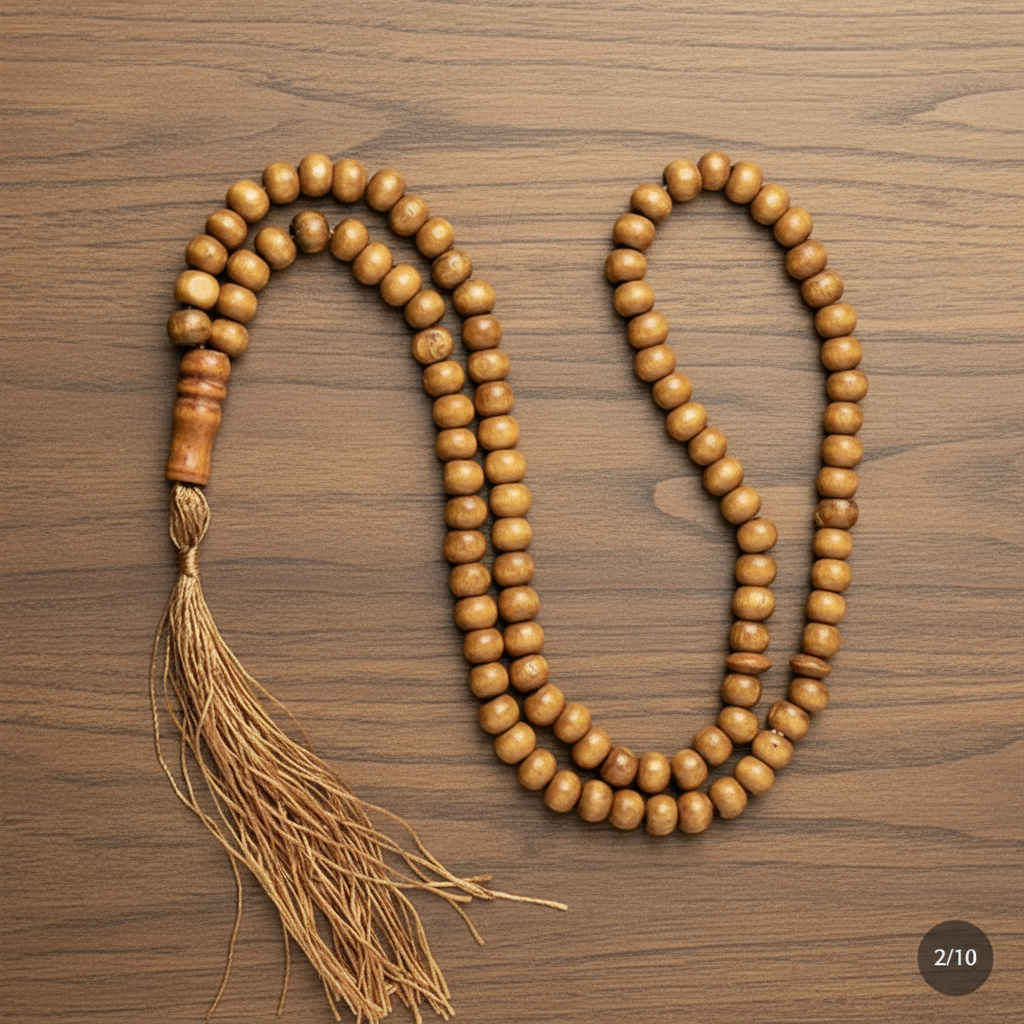
In the Quran and the hadiths, dua holds a place of honor. Many verses encourage turning to God at any time. For example, “Call upon Me, I will respond to you” (Surah 40, verse 60) shows just how accessible God remains. Accounts report that the Prophet Muhammad (peace and blessings be upon him) and his companions were in the habit of making duas in all kinds of situations: before traveling, in times of illness, to ask for help or for protection. In short, dua is a living practice, firmly rooted in tradition and everyday life.
How to make a dua?
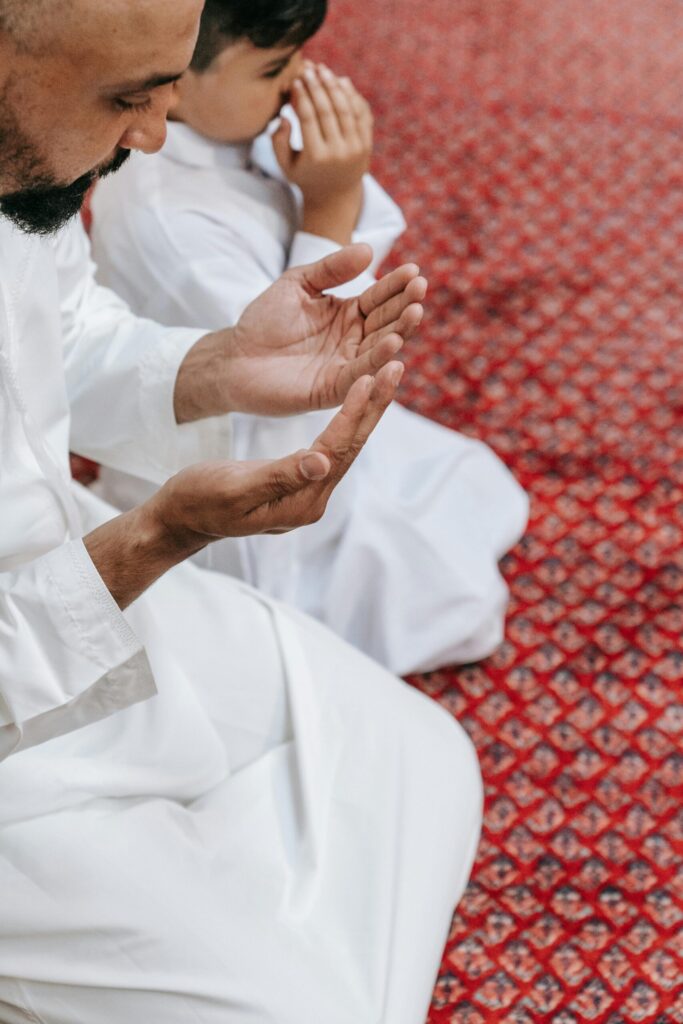
Making a dua is within everyone’s reach. A few simple tips can help make this moment even stronger. What matters most is sincerity. But following a few steps can help you focus better and truly experience the moment.
Steps to recite a dua
Here is a short guide to a meaningful dua:
- Turn to God: find a quiet corner and adopt a humble posture.
- Begin by praising God and sending blessings upon the Prophet, to start with respect.
- Express what you feel: be clear and specific, and speak from the heart, without rushing.
- Finish with praise or thanks, to close the invocation.
You don’t absolutely need to speak Arabic (although it is recommended for the classic formulas). What matters is that you understand what you are saying.
Recommended times to make a dua
Some moments are known to be especially favorable:
- After the ritual prayer (salat)
- During the last third of the night
- Between the call to prayer (adhan) and the iqama
- During Ramadan, especially the Night of Decree (Laylat al-Qadr)
- During a journey or in a difficult period
Taking advantage of these moments often makes it easier to truly focus.
Common mistakes to avoid
A few pitfalls to avoid to keep your dua authentic:
- Reciting without understanding: it is better to understand every word, even if the formula is in Arabic.
- Going too fast: take your time, breathe, be present.
- Doubting the answer: keep your trust, even if it takes time.
- Limiting your requests: dare to ask, nothing is too big or too small.
A little wink: there is no monthly quota of duas, so make as many as you like!
Examples of duas for different situations
Duas can accompany every moment of life. Here are concrete examples, organized by situation, to help you find the right formula for your need.
Duas for protection
- Against harm:
Arabic: اللَّهُمَّ إِنِّي أَعُوذُ بِكَ مِنَ الْهَمِّ وَالْحَزَنِ
English: “O Allah, I seek refuge in You from anxiety and sadness.“
Phonetic: Allahoumma inni a‘oudhou bika mina al-hammi wa al-hazan - For safety:
Arabic: بِسْمِ اللَّهِ الَّذِي لَا يَضُرُّ مَعَ اسْمِهِ شَيْءٌ
English: “In the name of Allah, with whose name nothing can cause harm.“
Phonetic: Bismillah alladhi la yadurru ma‘a ismihi shay’un
Duas for success (exams, work…)
- Before an exam:
Arabic: رَبِّ زِدْنِي عِلْمًا
Translation: “My Lord, increase me in knowledge.“
Phonetic: Rabbi zidni ‘ilma - For ease:
Arabic: رَبِّ يَسِّرْ وَلَا تُعَسِّرْ
Translation: “My Lord, make it easy and do not make it difficult. “
Phonetic: Rabbi yassir wa la tu‘assir
Morning and evening duas
- Upon waking (Morning invocation) :
Arabic: الْحَمْدُ لِلَّهِ الَّذِي أَحْيَانَا
Translation: “Praise be to Allah who has given us life again. “
Phonetic: Alhamdou lillahi alladhi ahyana - Before sleeping:
Arabic: بِاسْمِكَ اللَّهُمَّ أَمُوتُ وَأَحْيَا
Translation: “In Your name, O Allah, I die and I live.“
Phonetic: Bismika Allahoumma amoutu wa ahya
Duas in times of hardship or illness
- For healing:
Arabic: اللَّهُمَّ اشْفِ مَرْضَانَا
Translation: “O Allah, heal our sick. “
Phonetic: Allahoumma ishfi mardana - In times of hardship:
Arabic: حَسْبُنَا اللَّهُ وَنِعْمَ الْوَكِيلُ
Translation: “Allah is sufficient for us, and He is the best disposer of affairs.”
Phonetics: Hasbouna Allah wa ni‘ma al-wakil
Duas for Ramadan and special days
- Night of Decree (Laylat al-Qadr):
Arabic: اللَّهُمَّ إِنَّكَ عَفُوٌّ تُحِبُّ الْعَفْوَ فَاعْفُ عَنِّي
Translation: “O Allah, You are Forgiving, You love forgiveness, so forgive me. ”
Phonetics: Allahoumma innaka ‘afouwoun touhibbou al-‘afwa fa‘fou ‘anni - For fasting (Ramadan):
Arabic: اللَّهُمَّ تَقَبَّلْ صِيَامِي
Translation: “O Allah, accept my fast.”
Phonetics: Allahoumma taqabbal siyami
Tip: keep these examples close at hand, on paper or in an app, so you can find them in the blink of an eye whenever you need them.
Duas in Arabic, translation and phonetics
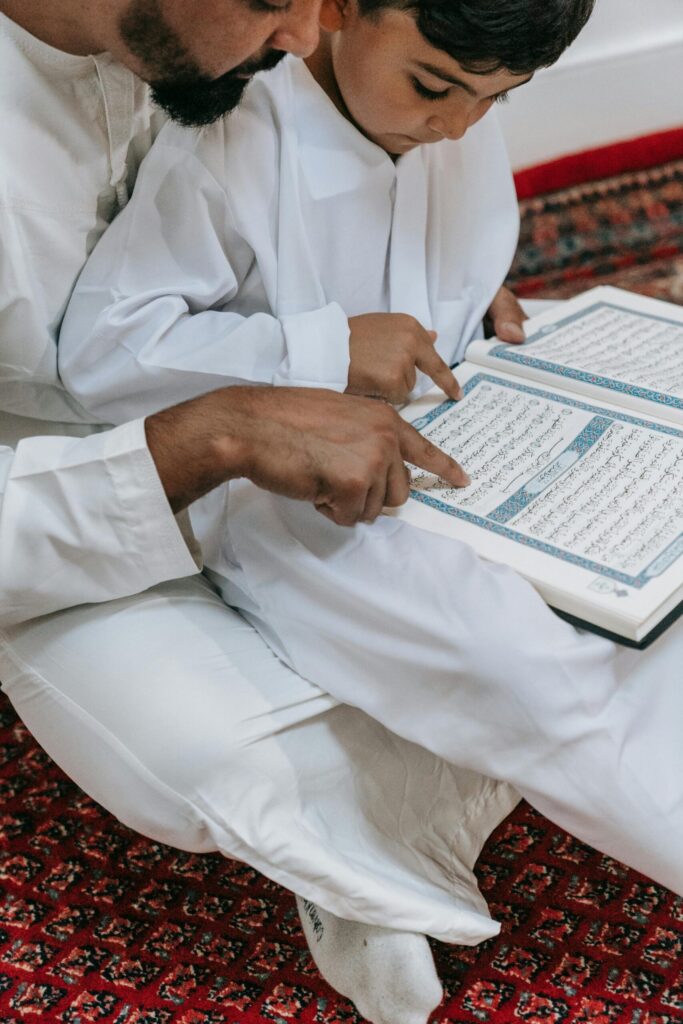
To learn more easily, nothing beats a table that brings everything together: Arabic, translation, phonetics. It helps you pronounce correctly while understanding what you are saying.
Correspondence table for each dua
| Situation | Arabic | Translation | Phonetics |
|---|---|---|---|
| Protection | اللَّهُمَّ إِنِّي أَعُوذُ بِكَ مِنَ الْهَمِّ وَالْحَزَنِ | O Allah, I seek refuge in You from anxiety | Allahoumma inni a‘oudhou bika mina al-hammi wa al-hazan |
| Success (exam) | رَبِّ زِدْنِي عِلْمًا | My Lord, increase me in knowledge | Rabbi zidni ‘ilma |
| Morning | الْحَمْدُ لِلَّهِ الَّذِي أَحْيَانَا | Praise be to Allah who gave us life again | Alhamdou lillahi alladhi ahyana |
| Hardship | حَسْبُنَا اللَّهُ وَنِعْمَ الْوَكِيلُ | Allah is sufficient for us, and He is the best disposer of affairs | Hasbouna Allah wa ni‘ma al-wakil |
| Ramadan | اللَّهُمَّ إِنَّكَ عَفُوٌّ تُحِبُّ الْعَفْوَ فَاعْفُ عَنِّي | O Allah, You are Forgiving, so forgive me | Allahoumma innaka ‘afouwoun touhibbou al-‘afwa fa‘fou ‘anni |
With this table, you can:
- Read the dua in Arabic, for those who want to practice in the original language.
- Understand every word thanks to the translation.
- Practice your pronunciation without knowing the Arabic alphabet.
Audio for correct pronunciation
To make progress, nothing beats listening to the correct pronunciation. Many websites and apps offer free audio. A few ideas to help you move forward:
- Listen to each dua several times to really grasp the rhythm.
- Repeat out loud, trying to match the intonation.
- Practice a little every day, even just 5 minutes.
- Record yourself to compare, it helps you improve.
Don’t worry if a syllable escapes you: what matters is making the effort. Regular practice does the rest!
Practical resources for learning duas
Today, there are plenty of accessible tools to learn, memorize and understand the duas, whether online or on mobile. A great way to progress at your own pace, wherever you are.
Mobile apps and downloadable PDFs
Mobile apps:
- “Duas in Islam”: simple interface, lists by theme, built-in audio.
- “99 Duas”: sorted by situation, with translations and phonetics.
- “Muslim Pro”: also includes prayer times and the Quran.
Downloadable PDFs:
- Collections available on specialized websites.
- Organized by theme: protection, success, health, etc.
- Convenient: you can print them or read them offline.
Books and reference websites
Books:
- “The Muslim’s Invocations”: a classic, easy to read.
- “The 99 duas”: practical, often illustrated and annotated.
Reference websites:
- Muslim educational platforms: clear explanations, reliable sources.
- Specialized forums: advice, personal experiences, discussions.
A little tip: always choose resources that cite their sources and give precise explanations. It’s the best way to learn the right formulas.
Conclusion
The duas are discreet but essential moments in Muslim spiritual life. They allow everyone to express their needs, their thanks or their fears, simply, at any time. Easy to learn, they adapt to every situation, from everyday life to special occasions. Whether you are a beginner or already comfortable, what matters most remains sincerity and understanding. Today’s tools (apps, books, websites) make it all very accessible, wherever you are, whenever you want. Taking a few minutes for a dua is an investment in your inner balance.
FAQ
The most powerful duas are those taken from the Quran and the hadiths. They are authentic and have always been recommended. For example, “Rabbi zidni ‘ilma” (My Lord, increase me in knowledge) or “Allahumma innaka ‘afuwwun tuhibbu al-‘afwa fa‘fu ‘anni” (O Allah, You are Forgiving, so forgive me) are often cited for their simplicity and strength.
The most recommended times are:
- After the ritual prayer (salat)
- The last third of the night
- During Ramadan, especially the Night of Decree (Laylat al-Qadr)
- While traveling or in times of hardship
But in reality, you can make a dua at any time, without restriction.
- While traveling or in times of hardship
To learn to recite a dua in Arabic:
- Use correspondence tables (Arabic, English, phonetic).
- Listen to audio recordings to get used to the intonation.
- Practice regularly, even just a few minutes a day.