


The morning supplications (adhkar as-sabah) are prayers and spiritual phrases recited at daybreak to ask Allah for protection, peace and blessing.
Starting the day with these supplications is like taking a deep breath of fresh air for the mind. These words, rooted in Islamic tradition, are the morning ritual of millions of Muslims.
They bring protection, calm and a dose of positivity for everything that lies ahead.
Let’s look together at how to adopt them, simply.
What are the morning supplications? (morning dhikr)
Definition and origin of the morning supplications
The morning supplications, also called adhkar or morning dhikr, are words of remembrance and prayer recommended from the start of the day. Their source? The Quran and the Sunna, the tradition of the Prophet Muhammad (peace and blessings be upon him), who recited them every morning. The idea: to begin the day under Allah’s protection and kindness.
They bring together simple words: thanks, requests for forgiveness, protection, gratitude… Their authenticity is ensured by texts passed down from generation to generation.
Difference between dhikr and duas
In practice, there are two ways of expressing yourself:
- The dhikr : these are short phrases that are repeated, such as “SubhanAllah” (Glory be to God) or “Alhamdulillah” (Praise be to God).
- The dua : it is more personal, you speak to God, you share what you feel and what you need.
The morning supplications blend the two styles a little. Some are fixed, others more personalized. The most important thing is to put your heart into it.
Why recite the morning supplications? (benefits of the morning supplications)
The merits according to Islamic tradition
Reciting the morning supplications is not just about checking a box. In Islamic tradition, they serve as a true spiritual shield. The Prophet Muhammad (peace and blessings be upon him) stressed their power: they protect from harm, calm the mind, and attract blessing.
The result:
- Whoever recites them with conviction places themselves under Allah’s protection, which soothes the heart and helps face trials.
(To be clear: they do not guarantee the total absence of difficulties, but Allah protects, soothes and eases according to His wisdom.) - It is also a way of giving thanks for life, health, and everything that is going well.
Spiritual and everyday benefits
The morning supplications don’t stop at the religious dimension. They also have a real impact on everyday life:
- They clarify your intention for the day.
- They help calm stress and anxiety.
- They give your self-confidence a boost.
- They establish a positive routine based on gratitude.
Getting up very early isn’t mandatory, but let’s be honest… it helps you start off on the right foot!
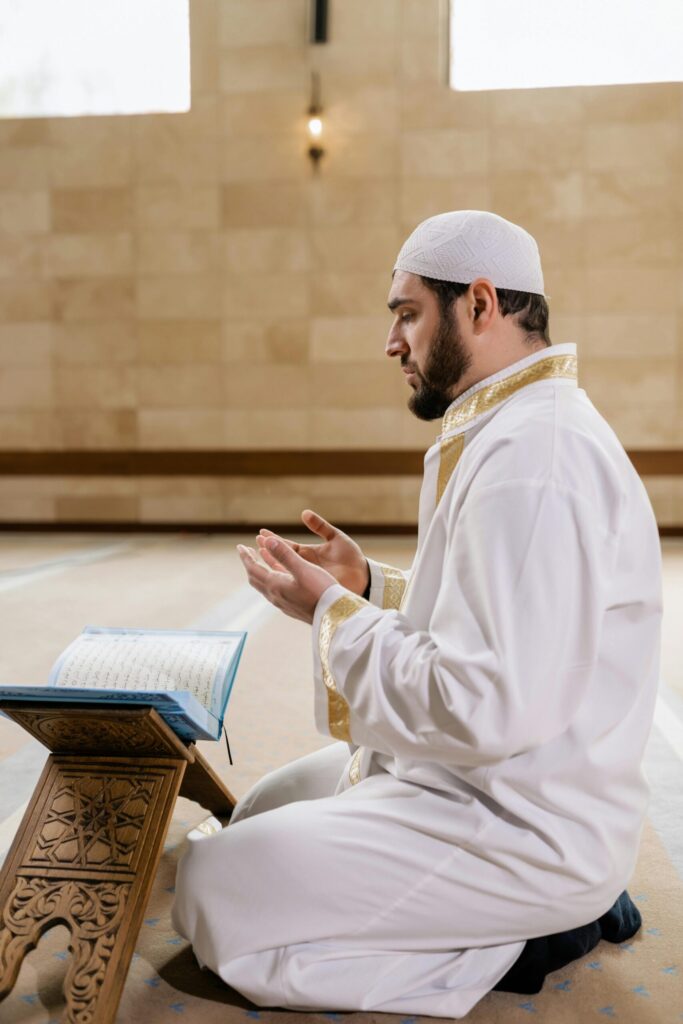
List of the morning supplications in Arabic and English
Tables of supplications (Arabic, phonetics, translation)
Here is a selection of the best-known morning supplications, with the Arabic text, the phonetics and the English translation. You are free to choose the order; what matters is being present in what you say.
| Arabic | Phonetics | Translation |
|---|---|---|
| أَصْبَحْنَا وَأَصْبَحَ الْمُلْكُ لِلَّهِ | Asbahna wa asbaha al-mulku lillah | “We have entered the morning, and sovereignty belongs to Allah.” |
| اللّهُمَّ أَنْتَ رَبِّي لا إِلَهَ إِلا أَنْتَ | Allahumma anta rabbi la ilaha illa anta | “O Allah, You are my Lord, none but You is worthy of worship.” |
| سُبْحَانَ اللَّهِ وَبِحَمْدِهِ | Subhanallahi wa bihamdihi | “Glory and praise be to Allah.” |
| اللّهُمَّ إِنِّي أَسْأَلُكَ خَيْرَ هَذَا الْيَوْمِ | Allahumma inni as’aluka khayra hadha al-yawm | “O Allah, I ask You for the good of this day.” |
| اللّهُمَّ عَافِنِي فِي بَدَنِي | Allahumma ‘afini fi badani | “O Allah, grant me health in my body.” |
| اللّهُمَّ اكْفِنِي شَرَّ مَا خَلَقْتَ | Allahumma ikfini sharra ma khalaqt | “O Allah, protect me from the evil of what You have created.” |
| رَضِيتُ بِاللَّهِ رَبًّا | Radītu billāhi rabban | “I am content with Allah as my Lord.” |
⭐ Important supplications to add (from the authentic morning adhkar)
- The Throne Verse (Ayat al-Kursi)
- The surahs Al-Ikhlas, Al-Falaq and An-Nas (3 times each)
- The supplication: “Hasbiyallahu la ilaha illa huwa…”
- The supplication: “Allahumma bika asbahna…”
Audio and PDF to download
To learn more easily, nothing beats audio. Listening to the morning supplications helps you master the pronunciation and feel the meaning. Many websites offer clear audio files, at an accessible pace.
Want to have these supplications at hand? There are ready-made PDFs, often free, with the Arabic, the phonetics and the translation. Handy: keep them on your phone or print them out.
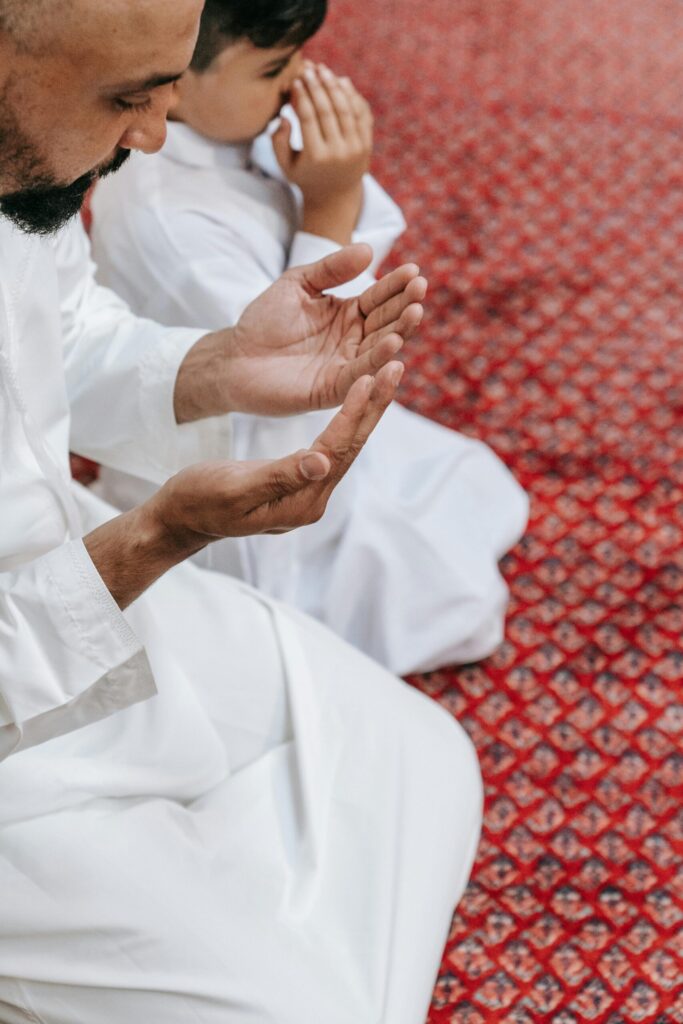
Tips for reciting the morning supplications well (how to recite the morning supplications)
When should you recite them?
The best time: between dawn (Fajr) and sunrise. This is what tradition recommends.
But if you miss this window, nothing prevents you from saying them a little later in the morning. What matters is to stay consistent and sincere.
To do it well:
- Find a quiet place.
- Give yourself a few minutes.
- Breathe, and focus on the meaning of the words.
There’s no need to rush: quality matters more than quantity.
Tips for memorizing easily
Memorizing the morning supplications can seem complicated at first. But with a few tips, it quickly gets easier:
- Listen to an audio recording of the supplications every morning.
- Repeat them out loud, phrase by phrase.
- Use a visual aid: a card, a PDF, an app.
- Learn one supplication at a time.
- Link each phrase to a gesture or a specific moment in your routine.
With repetition, it comes naturally.
Conclusion
The morning supplications are a discreet but essential landmark in Muslim spiritual life. They set a framework, offer protection, and bring a real positive energy to the day. Whether you are a beginner or already practice regularly, there is no perfect moment to start. A few minutes each morning is enough to feel the effect. Get started, at your own pace, and let these words become part of your daily life.
FAQ
The ones listed above are the main ones: “Asbahna wa asbaha al-mulku lillah”, “Allahumma anta rabbi la ilaha illa anta”, “Subhanallahi wa bihamdihi”, etc. You can add more depending on your routine and the time you have, as well as the essential Quranic and prophetic supplications such as Ayat al-Kursi and the last three surahs.
The ideal time is between dawn and sunrise. But reciting them later is still beneficial if needed.
It is recommended to say them in Arabic to preserve the original meaning, but understanding what you recite is essential. You can start with the translation, then gradually learn the Arabic version.
Many specialized websites offer downloadable PDFs and audio files to listen to. Always favor reliable sources to ensure the authenticity of the texts.
They offer protection, serenity, gratitude and blessings. They also help calm the mind and strengthen self-confidence.