


Understanding how many rakats to count for each prayer is truly the foundation for living your practice well every day. Whether you are learning or want to pass on your knowledge, it is natural to want to avoid mistakes and pray with confidence. This guide is here for you: everything is clear, organized and easy to remember. You will find the details for each prayer, practical tips, and answers to questions people often ask.
What is a rakat?
A simple definition of a rakat
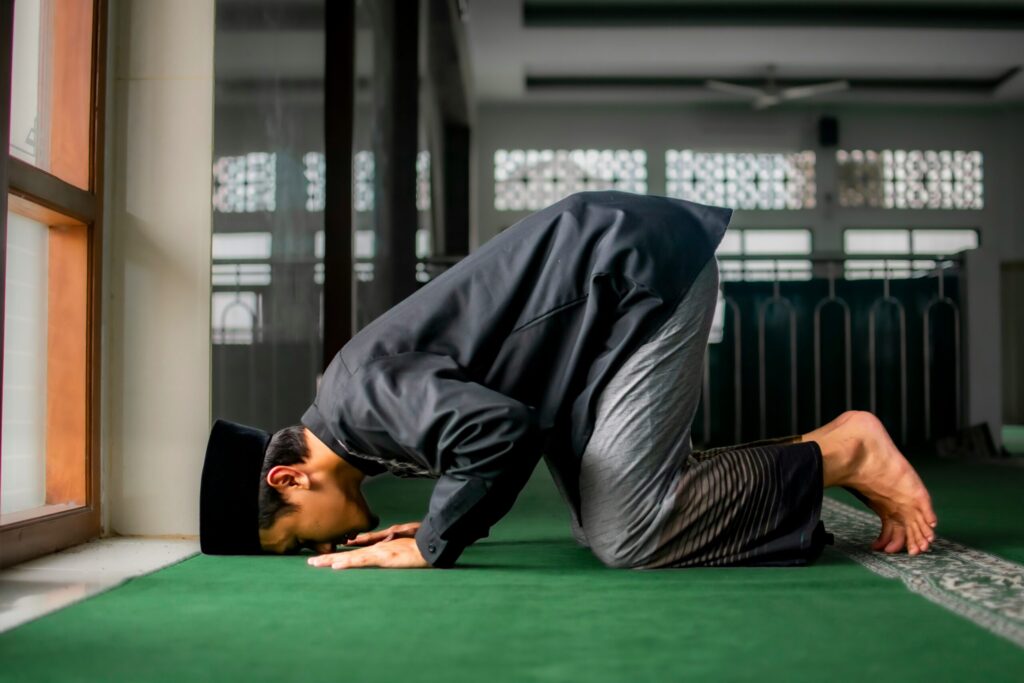
A rakat is simply a unit of prayer in Islam. Each rakat follows a series of movements and recitations in a specific order:
- Standing (qiyam), you recite the Fatiha and then a surah.
- You bow (ruku’) while glorifying God.
- You rise back up (qiyam).
- First prostration (sujud).
- Sitting position (jalsa).
- Second prostration (sujud).
Each prayer is made up of a certain number of rakats, which follow one another according to this pattern. This structure makes learning gradual, even if you are a beginner. Once you understand the principle, everything becomes smoother and more reassuring.
Why is the rakat important in prayer?
The rakat is the heart of the prayer. It sets the rhythm of each salat and gives it its structure. Observing the right number of rakats means following the example of the Prophet (peace and blessings be upon him) and ensuring the validity of your prayer. If you make a mistake, the prayer may be incomplete or incorrect. That is why it is important to know the exact count.
Here is why the right number of rakats truly matters:
- You remain faithful to the prophetic tradition (Sunnah).
- You avoid mistakes that could invalidate the prayer.
- You keep your concentration from beginning to end.
- You strengthen your spiritual consistency.
In short, every rakat makes a difference. If you forget one or add one by mistake, there are ways to make up for it, but it is better to be attentive from the start. A touch of rigor, plenty of serenity.

Number of rakats for each obligatory prayer
Each obligatory prayer has its own well-defined number of rakats. Here are the details, prayer by prayer.
Fajr: how many rakats?
The Fajr prayer (at dawn) has 2 obligatory rakats. It is the shortest prayer of the day.
- To be performed just before sunrise.
- The 2 rakats are recited aloud.
- Fajr marks the start of the day, perfect for getting off on the right foot.
It is often the prayer that helps establish a routine. Its brevity makes it accessible even if you are in a hurry.
Dhuhr: how many rakats?
The Dhuhr prayer (midday) has 4 obligatory rakats.
- Dhuhr is the spiritual pause in the middle of the day.
- The 4 rakats are recited silently.
- Ideal for refocusing before resuming your activities.
It is a moment of calm, perfect for recharging before the afternoon.
Asr: how many rakats?
The Asr prayer (afternoon) has 4 obligatory rakats. It falls between the end of Dhuhr and sunset.
- 4 rakats, all recited silently.
- Asr helps you stay on course at the end of the day.
Even when the day speeds up, these 4 rakats maintain your balance.
Maghrib: how many rakats?
The Maghrib prayer (sunset) has 3 obligatory rakats. It is the only prayer with an odd number.
- Right after sunset.
- The first 2 rakats aloud, the last one silently (for men; for women, all rakats are recited silently).
- Maghrib marks the transition from day to evening.
This odd format makes it unique: it is the landmark of the end of the day.
Isha: how many rakats?
The Isha prayer (night) has 4 obligatory rakats. It is performed once night has fallen.
- Isha completes the spiritual day.
- The first 2 rakats aloud, the next 2 silently.
- Perfect for preparing for a peaceful night.
Isha is the moment of calm before rest.
Summary table of obligatory rakats
| Prayer | Time of day | Obligatory rakats |
|---|---|---|
| Fajr | Dawn | 2 |
| Dhuhr | Noon | 4 |
| Asr | Afternoon | 4 |
| Maghrib | Sunset | 3 |
| Isha | Night | 4 |
Keep this table handy or display it near your prayer space: one glance and you can’t forget.
Rakats of the voluntary prayers (sunan)
What are the voluntary prayers?
The voluntary prayers (sunan) are not obligatory, but they are highly recommended. They surround the obligatory prayers and bring additional rewards. They complement, but never replace, the main prayers.
There are mainly two kinds:
- Sunnah mu’akkadah: strongly recommended, performed regularly by the Prophet (peace and blessings be upon him) .
- Sunnah ghayr mu’akkadah: recommended but less emphasized.
These prayers strengthen spirituality, earn additional rewards and help make up for any shortcomings in the obligatory prayers. They are also a way to deepen your connection with prayer, without pressure.
Number of rakats for each voluntary prayer
Here are the most common voluntary rakats alongside the obligatory prayers:
- Fajr: 2 rakats before the obligatory prayer (sunnah mu’akkadah)
- Dhuhr: 4 rakats before, 2 after (sunnah mu’akkadah)
- Asr: 4 rakats before (sunnah ghayr mu’akkadah, so less emphasized)
- Maghrib: 2 rakats after (sunnah mu’akkadah)
- Isha: 2 rakats after (sunnah mu’akkadah)
Please note:
- The rakats performed before Dhuhr and Asr, as well as those after Maghrib and Isha, are prayed in a low voice.
- For women, the recitation is always done in a low voice, including in the prayers where the recitation is normally audible for men.
- These voluntary prayers are a bonus and a source of reward, but they never replace the obligatory prayers.
Some traditions add other prayers, but these are the ones most commonly found.
Table of sunan rakats
| Prayer | Before | Obligatory | After |
|---|---|---|---|
| Fajr | 2 | 2 | 0 |
| Dhuhr | 4 | 4 | 2 |
| Asr | 4 (optional) | 4 | 0 |
| Maghrib | 0 | 3 | 2 |
| Isha | 0 | 4 | 2 |
This table gives you a quick overview of the most common sunan. It’s easy to tell at a glance what is obligatory and what is recommended. A very handy reminder.
How to easily memorize the number of rakats?
Practical tips
To remember the number of rakats, a few very simple tips can really help:
- Associate each prayer with a time of day: morning = short (Fajr, 2 rakats), midday/evening = longer (Dhuhr, Isha, 4 rakats), sunset = odd number (Maghrib, 3 rakats).
- Use a mnemonic phrase: “2-4-4-3-4” (Fajr, Dhuhr, Asr, Maghrib, Isha).
- Display a table near your prayer area as a visual reminder.
- Say the number of rakats out loud before each prayer, it helps your memory.
- Explain it to someone else: teaching is memorizing.
- Use a mobile app for reminders.
- Write them down in a notebook until it becomes automatic.
With these methods, there’s no need to stress about remembering the rakats. A little organization, and everything becomes simpler.
Common mistakes to avoid
A few classic pitfalls when learning the rakats:
- Mixing up obligatory rakats and voluntary ones.
- Forgetting the rakats after Dhuhr or Maghrib.
- Adding or dropping a rakat without realizing it.
- Believing that all prayers have the same number of rakats.
- Neglecting the sunan, thinking they are not important.
- Going too fast and losing count.
- Not checking the exact time of each prayer, which can throw off the count.
To avoid these mistakes:
- Take the time to check the number of rakats before each prayer.
- Set up visual or audio reminders.
- Regularly review the summary tables.
A little vigilance today means peace of mind tomorrow.
FAQ
Yes, it happens to everyone. If you notice the mistake during the prayer, there are corrective actions (sujud as-sahw, the prostration of forgetfulness). If you realize it afterward, it is better to repeat the prayer if the doubt is certain.
A few tips:
- If you have doubts during the prayer, complete the missing rakat and then finish with the prostration of forgetfulness.
- If you have performed one rakat too many, the prostration of forgetfulness applies as well.
- After the prayer, if the doubt is confirmed, repeat it to be on the safe side.
Keep in mind that to err is human, and the tradition always provides a solution.
The major schools (Hanafi, Maliki, Shafi’i, Hanbali) all agree on the number of obligatory rakats. The differences mainly concern the voluntary prayers (before or after certain prayers), but the foundation remains the same.
- Obligatory rakats: identical everywhere.
- The variations concern the number or placement of the sunan.
- Some schools add more rakats before or after certain prayers.
The basic structure stays the same, only the small details change. A bit like couscous recipes: the base doesn’t change, but everyone adds their own touch.
If you forget a rakat and realize it during the prayer, complete it and then perform the prostration of forgetfulness at the end. If you discover it after the prayer, it is recommended to start over.
- During the prayer: add the missing rakat and finish with sujud as-sahw.
- After the prayer: if the doubt is certain, repeat the prayer.
The prostration of forgetfulness is there to make up for small oversights. There is no need to stress if this happens to you.
- Fajr : 2
- Dhuhr : 4
- Asr : 4
- Maghrib : 3
- Isha : 4
The 12 rakats refer to the sunan mu’akkadah (strongly recommended prayers) performed around the obligatory prayers: 2 before Fajr, 4 before Dhuhr, 2 after Dhuhr, 2 after Maghrib, 2 after Isha.
Use a summary table, a mnemonic phrase (“2-4-4-3-4”), or display the numbers near your prayer area.