


Eid is a key moment for millions of Muslims all over the world. Two major festivals come around every year: Eid al-Adha and Eid al-Fitr. Each has its own story, traditions and symbols. But the two have one thing in common: they bring people together and invite spirituality, sharing and joy. Here is a rundown of the essentials to understand and experience Eid, simply.
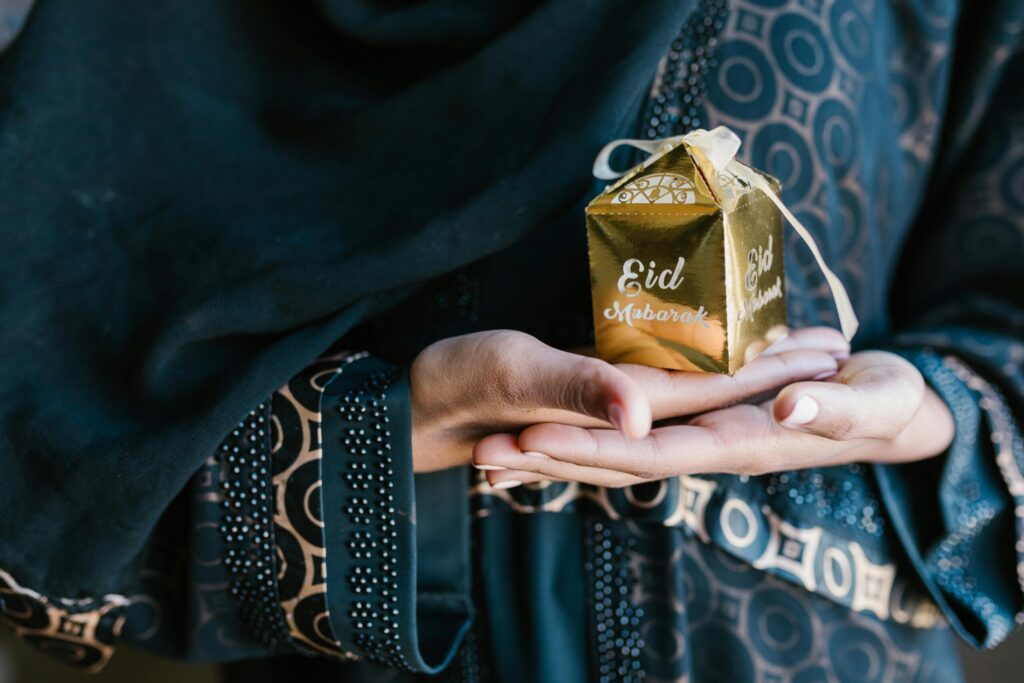
What is Eid? (definition, meaning, origins)
Eid is actually two major festivals in Islam. Each has its own rituals, its own symbols, and a whole history behind it. These days are eagerly awaited every year. They bring families and communities together around strong values, and you can feel it in the atmosphere.
The origin of the word “Eid” and its variants
The word “Eid” comes from the Arabic “ʿīd”, which means “festival” or “recurring return”. Depending on the region and language, there are several variants:
- “Eid al-Adha”: the festival of sacrifice.
- “Eid el-Kebir”: translated as “the great festival”, it is another name for Eid al-Adha.
- “Eid el-Fitr”: the festival that marks the end of the fast.
Each name corresponds to a specific festival, with its own customs and particular meaning.
The two major Muslim festivals: Eid al-Adha and Eid el-Fitr
- Eid al-Adha: also called “Eid el-Kebir”, it recalls Abraham’s act and the sacrifice of the sheep. It takes place during the great pilgrimage to Mecca.
- Eid el-Fitr: celebrates the end of Ramadan, the month of intense fasting and spirituality.
These two holidays differ in their origin, their atmosphere and their rituals. One highlights sacrifice and faith, the other the end of a month of deprivation. But at heart, it is always the spirit of sharing that prevails.
When is Eid al-Adha? (dates, calendar, upcoming years)
The date of Eid al-Adha changes every year. It depends on the Muslim lunar calendar, which makes it a bit unpredictable on the civil calendar.
Date of Eid al-Adha in 2024, 2025, 2026
Here is a small table to help you keep track over the coming years (note that these are estimates, as everything depends on the moon):
| Year | Estimated date of Eid al-Adha |
|---|---|
| 2024 | June 17 |
| 2025 | June 7 |
| 2026 | May 27 |
Good to know:
- Dates may vary from country to country, since not everyone sees the moon at the same time.
- Local religious authorities announce the exact date the day before or just before the holiday.
Why does the date change every year?
The Muslim calendar is based on the moon, not the sun. As a result:
- A year has 354 or 355 days, so it is 10 or 11 days short compared to the solar year.
- The result: each year, Eid arrives about 10 days earlier on the Gregorian calendar.
- Eid can therefore fall in the middle of summer as well as in the middle of winter.
So you don’t miss the holiday, the best thing is to follow the information given by your mosque or the associations near you. They announce the official date as soon as possible.
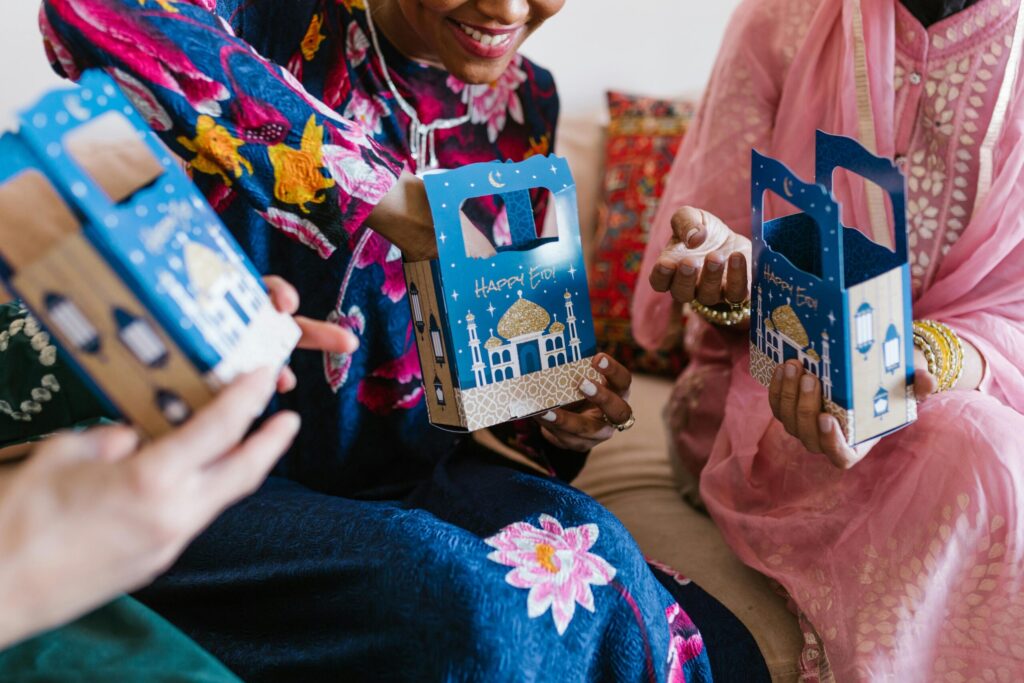
Why do we celebrate Eid al-Adha? (religious meaning)
Eid al-Adha is first and foremost a festival rooted in faith, remembrance and generosity. Its story goes back to a founding narrative, and it carries universal values.
The sacrifice of Abraham: story and symbolism
In the Islamic tradition, God asks Abraham to sacrifice his son as a sign of obedience. But at the last minute, a sheep takes the child’s place, rewarding Abraham’s faith. This story, shared by other religions, is at the heart of the festival:
- The sacrifice of the sheep recalls this act of total trust.
- It symbolizes obedience to God, unwavering faith.
It is a moment that invites reflection on faith, selflessness and gratitude.
The values carried by this festival
Eid al-Adha highlights strong values:
- Solidarity: the meat is shared with family and friends, but also with those in need.
- Generosity: the idea is to give without counting, no matter to whom.
- Family unity: we get together, strengthen our bonds and think of others.
The ritual is there, but what matters most is the spirit of sharing and kindness. And let’s be honest, it is also the moment when the table turns into a true feast.
How is Eid celebrated? (rituals, traditions, organization)
Eid is not something you improvise. Every step counts, from the preparation to the festival itself, in an atmosphere that blends spirituality and conviviality.
Preparations before the festival
Before the big day, there is a whole organization:
- People clean and decorate the home.
- New clothes are often bought, especially for the children.
- People prepare the traditional dishes.
- People take care of the sacrifice: choosing the animal and making sure everything complies with religious and health regulations.
For those who cannot perform the sacrifice themselves, there are specialized organizations or donations for a sacrifice carried out remotely.
How the day of Eid unfolds (prayer, sacrifice, meal, sharing)
Here is how it goes, step by step:
- Congregational prayer: early in the morning, everyone gathers at the mosque or outdoors for a special prayer, followed by a sermon.
- Sacrifice: the animal (sheep, goat, cow, camel) is sacrificed according to a specific ritual. The sheep is something of the star of the day.
- Sharing: the meat is divided into three parts:
- One for the family.
- One for relatives and neighbors.
- One for those in need.
- Meals and visits: the celebration continues with generous meals, exchanges of greetings, and visits with family or friends.
Rules and recommendations to follow
- The sacrifice must be performed by an adult Muslim, with respect for the animal and in keeping with hygiene rules.
- It is recommended to fast on the eve of Eid al-Adha (the day of Arafat), for those who wish to.
- The Eid prayer is the highlight, not to be missed, even if you are not performing the sacrifice.
Customs vary from country to country, but the spirit remains: spirituality, sharing, and togetherness. And a little stress in the kitchen, sometimes.
What are the differences between Eid al-Adha and Eid al-Fitr? (comparison)
The two are often confused, even though they are quite different. Here is a comparison to help you see more clearly.
Eid al-Adha: the festival of sacrifice
- When?: about 70 days after the end of Ramadan, during the pilgrimage to Mecca.
- Why?: to remember Abraham’s sacrifice.
- Main ritual: the sacrifice of an animal, with the meat shared among family, relatives, and people in need.
Eid al-Fitr: the festival of the breaking of the fast
- When?: at the end of the month of Ramadan, as soon as the crescent moon is sighted.
- Why?: to celebrate the end of the fast and give thanks for having completed this sacred month.
- Main ritual:
- Congregational prayer in the morning.
- Payment of the obligatory charity (zakat al-fitr) before the prayer.
- Festive meal, exchanges of greetings, sometimes gifts.
In summary:
- Eid al-Adha: the festival of sacrifice, focused on giving and commemoration.
- Eid al-Fitr: the festival that marks the end of the fast, centered on gratitude and solidarity.
A small table to help you visualize:
| Festival | Time of year | Main ritual | Meaning |
|---|---|---|---|
| Eid al-Adha | 70 days after Ramadan | Animal sacrifice | Remembrance of the sacrifice |
| Eid al-Fitr | End of Ramadan | Prayer, charity, meal | End of the fast, gratitude |
Eid today: traditions and changes (modernity, society)
Eid evolves with the times. The values remain, but practices adapt. We keep the spirit and adjust the habits.
Eid in France and around the world
In France, millions of people celebrate Eid every year. A few trends:
- Some have the sacrifice carried out remotely, through associations.
- Others prefer to make a donation to charities.
- Family meals remain central, even if the tables are sometimes smaller.
Elsewhere in the world:
- Large open-air prayers.
- Fairs and markets dedicated to Eid.
- Community initiatives to include those who need it.
And with digital technology, greeting messages and video calls bring families closer together, even when they live far apart. Traditions travel, but the essentials remain.
Solidarity, sharing, and family at Eid
Eid is also about:
- Strengthening bonds with loved ones.
- Giving gifts to the children.
- Sharing homemade dishes with neighbors and friends.
- Taking part in collections or meal distributions for people in need.
Associations play an important role in making sure everyone can take part in the celebration. Even if the ways of doing things change, human warmth and mutual support are still there. And, between two bites of cake, we remember that generosity is never too much.
Conclusion
Eid, whether it is Eid al-Adha or Eid al-Fitr, remains a major occasion for millions of people. It is a celebration of faith, sharing and solidarity. Its date changes every year, but its spirit does not: coming together, giving, celebrating together. Understanding Eid also means opening the door to a whole diversity of traditions all around you.
FAQ
In 2025, Eid al-Adha is expected to fall on June 7 (subject to moon sighting). To be sure of the date, always check with your local religious authorities.
To wish someone a happy holiday, you can say:
- “Eid Mubarak”
- “Happy Eid”
A simple, heartfelt message that always brings joy.
The sacrifice is recommended for every adult Muslim who can afford it. It is not obligatory for people who face financial difficulties or who are unable to do it for practical or health reasons.
Yes, it is perfectly possible to celebrate Eid without making a sacrifice. What matters is taking part in the prayer, sharing a festive meal and, if possible, making a donation to a charity. The spirit of solidarity and sharing counts for more than the act itself.