


The Tarawih prayer is a voluntary prayer performed during the month of Ramadan, after the ʿIsha prayer. It consists of several units of prayer (rakʿat) and can be performed individually or in a group, usually at the mosque. The Tarawih is not obligatory, but it is strongly recommended in Islam because of its many spiritual merits.
Tarawih – Definition and origin
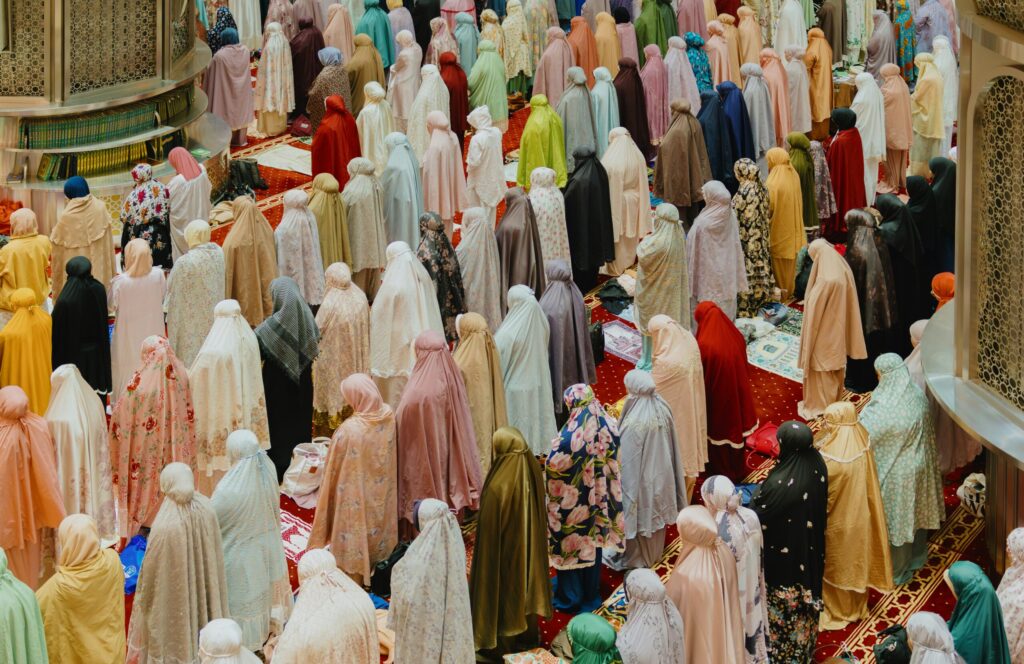
The Tarawih prayer is a voluntary prayer, meaning it is not obligatory, that takes place only during Ramadan. It is performed every evening, right after the Isha prayer, whether at the mosque or at home. In the time of the Prophet Muhammad (peace and blessings be upon him), it was first prayed in a group, and then he preferred to pray it alone so that people would not consider it an obligation. The idea was to keep the practice simple and flexible. Today, Tarawih remains a highlight of Ramadan: it brings the faithful together in an atmosphere of reflection and sharing. It is an additional effort, beyond the five daily prayers, that gives Ramadan its special dimension.
Tarawih – Meaning
“Tarawih” comes from the Arabic word “tarwiha “, which means “pause” or “rest”. This is no coincidence: during Tarawih, pauses are taken after each set of two or four units of prayer (rakats). These moments of pause allow you to catch your breath, reflect, or make supplications before continuing. This way of praying makes the prayer more accessible, even for those who are not used to long periods of standing. The pauses are therefore a real part of the Tarawih experience, not just a practical detail.
Difference between Tarawih and other night prayers
Tarawih is not like other night prayers, such as qiyam al-layl or tahajjud. What sets it apart? Its exclusive connection to Ramadan and the fact that it is often prayed in a group, especially at the mosque. Qiyam al-layl and tahajjud are practiced all year round, at any hour of the night, whereas Tarawih takes place only during Ramadan, right after Isha. Tarawih is often experienced as a communal moment, while other night prayers are generally more personal. In short, Tarawih is the typical night prayer of Ramadan, with its pauses and its unique atmosphere.
Prayer beads
Accompany your dhikr with prayer beads
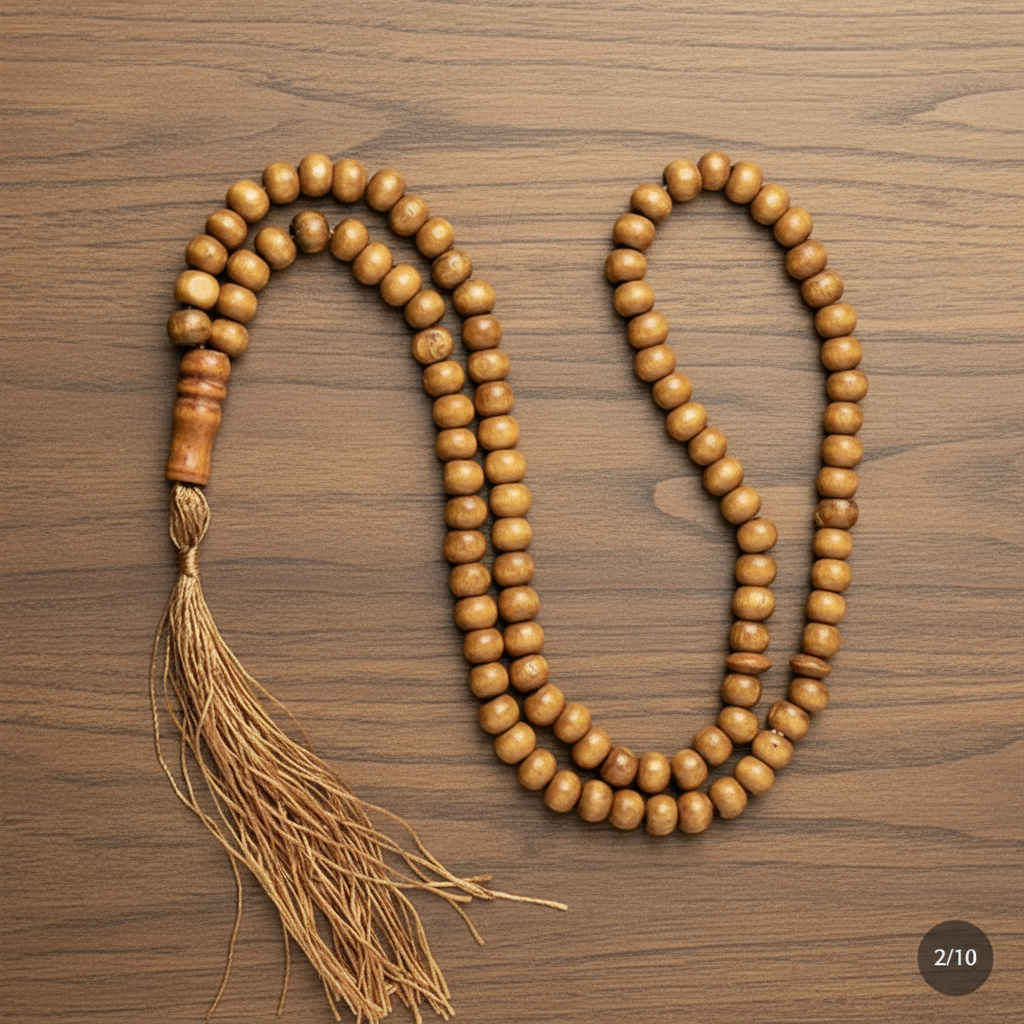
Wooden bead prayer beads · Soft and natural to the touch
Religious status of the Tarawih prayer
Is Tarawih obligatory or recommended?
Tarawih is not religiously required (fard) of Muslims. It is a sunnah mu’akkadah: a practice strongly encouraged by the Prophet (peace and blessings be upon him), but without obligation. In other words, there is nothing seriously wrong with not performing it, but it opens the door to great spiritual rewards if practiced regularly. This status allows everyone to adapt to their abilities, without pressure. Tarawih is the spirit of Ramadan : a voluntary effort, motivated by the desire to draw closer to God, not by compulsion.
Evidence in the Quran and the hadiths
In the Quran, there is no direct mention of the Tarawih prayer, but the night prayer is encouraged there, especially during Ramadan (see Surah 73, Al-Muzzammil). The authentic hadiths relate that the Prophet Muhammad prayed Tarawih, sometimes in a group, sometimes alone. A well-known hadith says: “ Whoever prays during the nights of Ramadan with faith and hoping for the reward, his past sins will be forgiven ” (narrated by Al-Bukhari and Muslim). This text highlights the spiritual dimension of Tarawih and its role in the purification of the soul.
Views of the different schools of jurisprudence
The four major Sunni schools (Hanafi, Maliki, Shafi’i and Hanbali) agree that Tarawih is recommended (sunnah mu’akkadah). They do not all agree on the number of rakats, which leads to different practices depending on the country or the mosque. But all of them recognize the importance of Tarawih as a rewarding act during Ramadan. This diversity allows everyone to choose what suits them, with complete peace of mind.
How to pray Tarawih?
Time and moment to perform Tarawih
Tarawih is prayed every night of Ramadan, right after Isha. It can be performed at any time of the night until dawn (fajr), but the usual practice, especially in a group at the mosque, is to pray it directly after Isha. This helps organize the evening and avoids building up fatigue. If you are at home, you can choose a later time, depending on your rhythm or your family’s. The most important thing is to maintain concentration and a serene atmosphere.
Number of rakats (rakat tarawih)
The number of rakats varies depending on traditions and schools. The most common are 8, 11 or 20 rakats. At the mosque, 20 is often prayed, but 8 or 11 are perfectly valid, especially at home. A quick recap in a table:
| School / Tradition | Recommended number of rakats |
|---|---|
| Hanafi | 20 |
| Maliki | 20 |
| Shafi’i | 20 |
| Hanbali | 8 or 20 |
| Practice at home | 8, 11 or 20 |
This variety allows everyone to adapt to their own abilities, without putting pressure on themselves. What matters is sincerity and consistency.
Detailed steps of the prayer
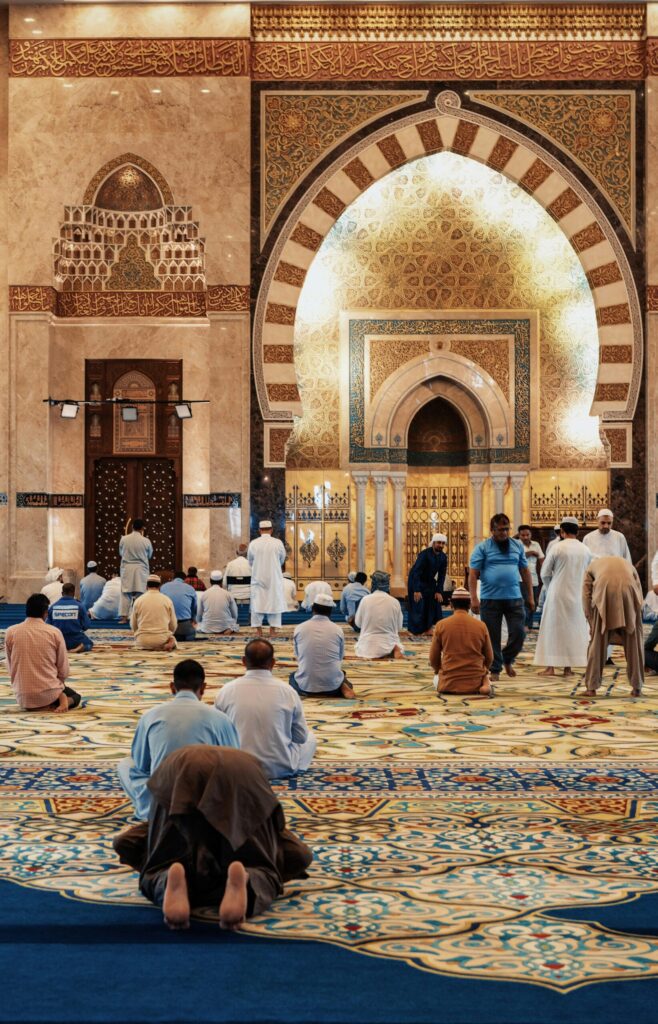
Tarawih is performed in pairs of two rakats. After each pair, a short break is advised, hence the name “Tarawih ”. At the end, the Witr prayer (odd-numbered prayer) is generally added, which closes the series. Two examples of how it unfolds:
- 8 rakats: 4 sets of 2 rakats, a break between each set, then 3 rakats of Witr.
- 20 rakats: 10 sets of 2 rakats, with a possible break every 4 rakats, then 3 rakats of Witr.
These breaks are there to maintain energy and concentration, especially when the prayer is long.
How to perform 8, 11 or 20 rakats?
- 8 rakats: 4 times 2 rakats, then Witr (3 rakats).
- 11 rakats: 8 rakats of Tarawih + 3 rakats of Witr.
- 20 rakats: 10 times 2 rakats, then Witr (3 rakats).
There is no fixed rule on the number: adapt to your energy and to the situation at home. No need to aim for records!
Tips for praying Tarawih well at home
A few tips to help everything go smoothly at home:
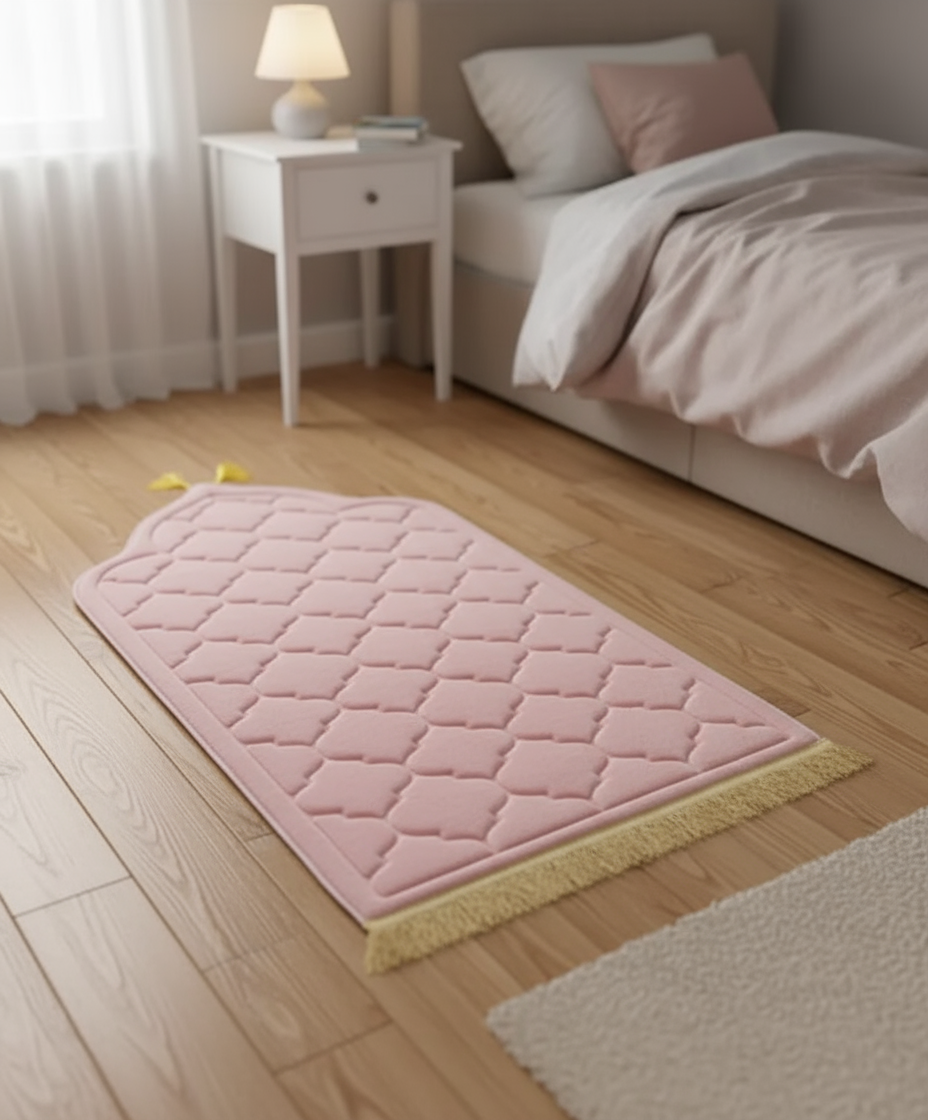
- Prepare a quiet corner that is clean for the prayer.
- Pray with your family or alone, depending on what suits you.
- Recite the surahs of the Quran that you know, even the shortest ones.
- Take regular breaks to stay focused.
- Add the Witr prayer at the end to complete the night.
With these tips, Tarawih can become a peaceful and beneficial moment, even without leaving your home.
Prayer outfit
Pray in comfort and serenity
Comfortable and modest outfits – For women & men

Tarawih for women and at home
Tarawih for women: specific rules
Women can pray Tarawih at the mosque or at home, with no difference in reward. Many scholars recommend praying at home, for greater comfort and tranquility, but the mosque remains an open option. When going to the mosque, it is recommended to dress modestly and decently. At home, the prayer can be performed alone or with family, adjusting the pace to suit your needs. What matters most is a sincere intention and focus.
Can you pray Tarawih at home?
Tarawih at home is entirely possible, and even quite traditional. The Prophet Muhammad (peace and blessings be upon him) often prayed Tarawih at home, so going to the mosque is not an obligation. This flexibility allows everyone to experience Ramadan at their own pace. At home, it’s also easier to accommodate children, elderly people or those who get home late from work. In short, the home can easily become a space of spirituality during Ramadan.
Tarawih with family or alone
Praying Tarawih with family is an opportunity to share the tradition and strengthen family bonds. Anyone can lead the prayer, depending on their knowledge. It’s also a way to involve children, teaching them discipline and the beauty of the night prayer. If you pray alone, the spiritual value remains the same. What matters: pray sincerely, stay focused and use this time to draw closer to God. With family or alone, Tarawih adapts to every situation.
Benefits and rewards of the Tarawih prayer
Spiritual rewards according to the hadiths
The Tarawih prayer brings great spiritual rewards. According to the hadiths, the Prophet Muhammad (peace and blessings be upon him) promised forgiveness of past sins to those who pray Tarawih with faith and sincerity during Ramadan. It is therefore a wonderful opportunity to draw closer to God, purify your heart and gain merit. Tarawih is not just a physical effort: it is an act of devotion that uplifts the soul. Even when fatigue sets in, the reward is well worth it.
Impact on Ramadan and spirituality
Tarawih gives a rhythm to the evenings of Ramadan, with a real spiritual dimension that accompanies the fast. It invites meditation, patience and unity. At the mosque, it creates a warm, fraternal atmosphere. At home, it turns evenings into sacred moments with family. Tarawih also helps strengthen discipline, improve focus and deepen your relationship with the Quran. In the end, it makes Ramadan a complete spiritual experience, far beyond simply fasting.
Tips to make the most of Tarawih
Here are a few ideas to get the most out of Tarawih:
- Focus on quality: it’s better to pray less, but with more concentration.
- Take the time to recite slowly, and try to understand the verses.
- Use the breaks to reflect, make supplications or simply breathe.
- Involve the family, even the children, to share and pass on the tradition.
- Adjust the pace to how you feel: Tarawih is not a marathon, but a spiritual appointment.
A little wink: if your legs start to complain, remember that even the break is part of the prayer!
Frequently asked questions about the Tarawih prayer
Can you pray Tarawih without knowing much of the Quran?
Of course. You don’t need to know long surahs to pray Tarawih. Recite what you know, even the shortest ones. What matters is a sincere intention and consistency. You can learn new verses over time, but don’t let a lack of knowledge hold you back. Simplicity takes nothing away from the value of the prayer.
Tarawih in Arabic: is it mandatory?
As with all ritual prayers, Tarawih is performed in Arabic, notably for the Fatiha and the surahs. There’s no need for long passages: short surahs are enough. You can learn gradually, at your own pace. What matters is to do your best, without pressure.
What if you miss a night of Tarawih?
If you miss a night of Tarawih, don’t panic: there is no obligatory make-up. Tarawih is a recommendation, not an obligation. If you miss a night, simply pick it up again the next day. What counts is consistency and sincerity. Ramadan is a spiritual marathon, not a sprint.
Conclusion
The Tarawih prayer has an essential place in Ramadan. It is not obligatory, but it brings serenity, unity and beautiful rewards to those who practice it. Whether you are at the mosque or at home, alone or with family, what matters most is to pray with heart, simplicity and regularity. Tarawih is an intimate appointment with God, every evening of Ramadan, to uplift the soul and strengthen faith. Take this opportunity to recharge and fully experience the spirituality of this sacred month.
FAQ
Tarawih is performed after Isha, in pairs of two rakats, with breaks between sets to rest. It generally ends with the Witr prayer, which closes the night. This structure makes the prayer more pleasant, even on long evenings.
No, Tarawih is not obligatory. It is classified as sunnah mu’akkadah: strongly recommended, but not required. Praying it regularly brings great rewards, but missing it is not a sin.
Tarawih is prayed after Isha, every night of Ramadan, and can be performed until dawn (fajr). Most of the time, it is done right after Isha, especially in a group at the mosque, but at home, it’s flexible.
For 11 rakats, pray 8 rakats (in 4 sets of 2), then add 3 rakats of Witr at the end. This format is very common and convenient for praying at home.
Yes, it is perfectly possible to pray Tarawih at home, alone or with family. What matters most is sincerity, consistency and focus, regardless of the place or the number of participants.