


1. What Is the Eid Celebration?
Eid is actually two major holidays for Muslims: Eid al-Adha (also called Eid el-Kebir, the “great feast”) and Eid al-Fitr. Each has its own atmosphere, rituals and symbols. Eid al-Adha revolves around sacrifice and sharing, while Eid al-Fitr marks the end of Ramadan, the well-known month of fasting. These occasions are meant for coming together, strengthening family ties, thinking of the most vulnerable and sharing warm moments.
Origin and History of Eid al-Adha
The story of Eid al-Adha goes back to an account found in all three monotheistic religions. In Islam, the Prophet Abraham (Ibrahim) agrees to sacrifice his son out of obedience to God. In the end, God spares the child and provides a ram in his place. This act of trust and self-giving is commemorated every year. It spans generations, unites believers and is celebrated everywhere, not only in Mecca.
Meaning of Abraham’s Sacrifice
Abraham’s sacrifice is not just an act: it is a symbol of faith, generosity and detachment from material things. What matters is the intention to give, to share, to think of others. The meat is divided into three parts:
- one for the family,
- one for relatives and friends,
- one for people in need.
This sharing is truly the essence of the celebration: that no one is forgotten. And as for the sheep: it did not choose, but it helps bring people together around a meal full of meaning and solidarity.
2. Date of the Eid Celebration in 2025 and 2026
The date of the Eid celebration changes every year, because it follows the Muslim lunar calendar. This calendar has 12 lunar months, which is about 11 days shorter than the standard (Gregorian) calendar. As a result, Eid arrives a little earlier each year, which explains why it falls in different seasons from one year to the next.
Why Does the Date Change Every Year?
It all depends on the moon: the Islamic calendar begins each month with the appearance of the new crescent. As a result, depending on where you are, the date can vary by a day or two. So people watch for the moon and wait for the official announcement, sometimes until the last minute. It adds a little suspense to the preparations for the celebration!
Calendar of Upcoming Eid Celebrations
A quick recap to help you keep track of the upcoming dates:
| Year | Eid al-Adha (el-Kebir) | Eid al-Fitr |
|---|---|---|
| 2025 | June 6 | March 31 |
| 2026 | May 27 | March 20 |
*Please note: these dates are approximate. They may shift depending on the moon sighting in each country. Be sure to check the official announcements just before the celebration.*
3. Traditions and Rituals of Eid al-Adha (or Eid el-Kebir)
Eid al-Adha is a celebration rich in traditions: spirituality, togetherness and solidarity all have their place. The day is marked by several highlights, each with its own meaning.
The Eid Prayer
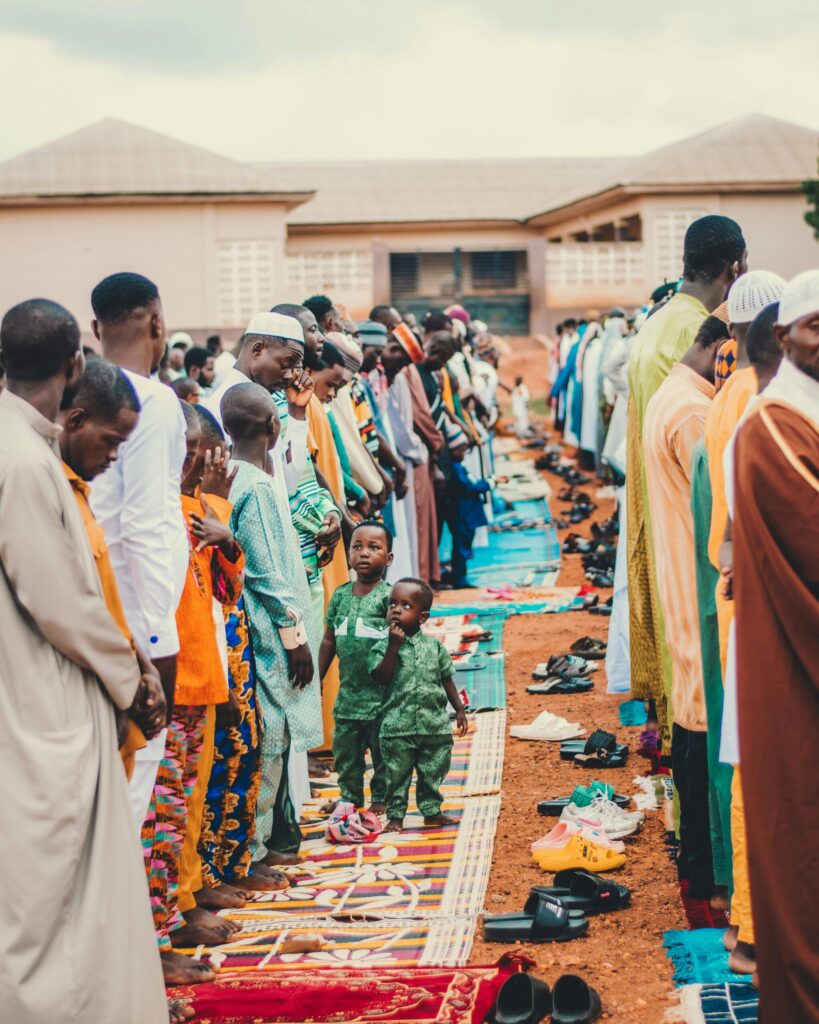
The day starts early with a communal prayer, often at the mosque or outdoors if the weather allows. It is short, but the intensity is there. Worshippers put on their finest clothes to mark the occasion. This moment is a true time of gratitude and fellowship, when people thank God and offer wishes of peace and solidarity for all.
The Sheep Sacrifice: Symbolism and Procedure
The sheep sacrifice (or of another permitted animal such as a goat, a cow or a camel) is the center of the celebration. The act must follow precise rules, both religious and sanitary. In France, everything takes place in approved slaughterhouses, under professional supervision. The meat is then shared:
- 1/3 for the family,
- 1/3 for relatives or neighbors,
- 1/3 for people in need.
This sharing is truly what makes the spirit of Eid: everyone counts, and solidarity takes on its full meaning.
Sharing, Solidarity and the Festive Meal
After the prayer and the sacrifice, it’s time for togetherness. Families gather around a generous meal, with the classics: couscous, tagines, grilled meats, pastries… Children receive gifts or treats, much to their delight. People visit relatives, neighbors and those who live alone. They share, exchange good wishes and check in on one another. Eid is truly the time to strengthen social bonds and look out for those who need it most. And for lovers of good food, it’s a real treat!
4. Differences Between Eid al-Adha and Eid al-Fitr
Although they are sometimes confused, these two celebrations are quite different, both in their origins and in their rituals.
Eid al-Adha: The Festival of Sacrifice
Eid al-Adha, or Eid el-Kebir, arrives about 70 days after the end of Ramadan, during the pilgrimage to Mecca (the Hajj). It recalls Abraham’s sacrifice, with an emphasis on giving, sharing and generosity. The sacrifice of an animal is at the heart of the celebration, followed by a big meal and acts of solidarity toward the most vulnerable. It is the most important holiday in the Muslim calendar, with a strong spiritual dimension and memorable family moments.
Eid al-Fitr: The Festival of Breaking the Fast
Eid al-Fitr, on the other hand, marks the end of Ramadan. After a month of fasting and reflection, it’s time for joy and gratitude. There is no animal sacrifice here, but a special prayer, followed by a mandatory donation to the poorest (zakat al-fitr). People share meals, pay visits and exchange good wishes. This celebration symbolizes purification, solidarity and the return to everyday life in good spirits. Two celebrations, two styles, but always the same spirit of fellowship.
5. How to Celebrate Eid Today
Eid, whether it is Eid al-Adha or Eid al-Fitr, is celebrated with family as much as with the wider community. Here are a few pointers to help you prepare for it and enjoy it fully.
Preparing for the celebration with family
A few days beforehand, preparations are in full swing:
- reserving or buying the animal for the sacrifice (Eid al-Adha),
- preparing traditional dishes and pastries,
- choosing festive outfits, often brand new or freshly ironed,
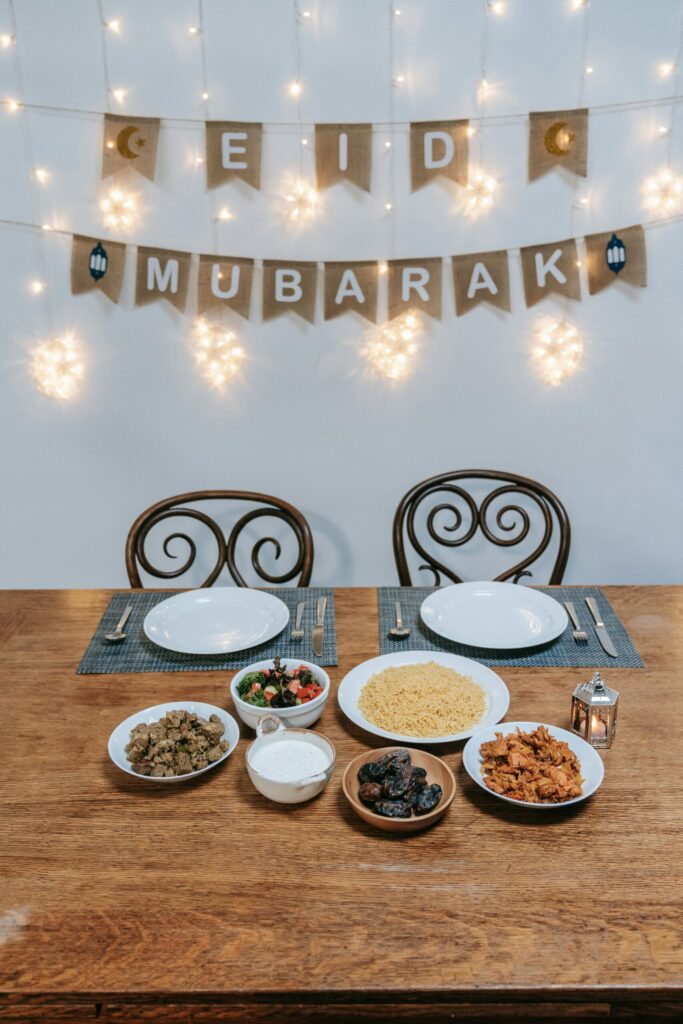
- decorating the house, with garlands or flowers,
- involving the children in the preparations, to pass on the values of the celebration.
The idea is to create a warm atmosphere where everyone has their place.
Wishing someone a happy Eid
To send your wishes, there’s no need to make it complicated. The most common expressions:
- “Happy Eid!”
- “Eid Mubarak!” (blessed celebration)
- “Eid Said!” (happy celebration)
A sincere message, a smile or a quick call, and you’ve brightened someone’s day and strengthened your bonds.
Practical tips for a successful celebration
A few tips for enjoying a harmonious celebration:
- follow the health and legal regulations for the sacrifice, especially in France,
- if the sacrifice is not possible, consider a donation or a symbolic sharing,
- keep those who are alone in mind: a gesture, a visit, a shared meal can make all the difference,
- find out about prayer times and gathering places near you,
- prepare for the celebration at your own pace, without pressure: what matters is the intention and the togetherness.
And keep in mind: Eid is above all a celebration of the heart.
Conclusion
Eid, whether it is Eid al-Adha or Eid al-Fitr, holds an essential place in the lives of Muslims. It is a blend of spirituality, traditions and shared moments. Whether you embrace it wholeheartedly or simply want to understand its meaning, Eid is a reminder of the importance of respect, solidarity and living together. A celebration that brings people together, plain and simple.
FAQ
Eid refers to two major festivals: Eid al-Adha (the Festival of Sacrifice) and Eid al-Fitr (the festival marking the end of the fast). They mark the rhythm of the Muslim year, centered on prayer, sharing and solidarity.
In 2025, Eid al-Adha is expected to be celebrated on June 6 (provisional date, to be confirmed based on the sighting of the moon).
Eid al-Adha commemorates Abraham’s sacrifice and involves an animal sacrifice. Eid al-Fitr marks the end of Ramadan: there is no sacrifice, but there is a prayer and donations to those in need.
The holiday begins with a communal prayer, followed by the sacrifice (for Eid al-Adha), then a meal shared with family and loved ones. Acts of solidarity are at the heart of the celebration.
You can say “Happy Eid!” or “Eid Mubarak!”. A simple message that is always appreciated.