


The Dhuhr prayer is the obligatory midday prayer in Islam. It is performed after the sun has begun to descend, and before the Asr prayer. It consists of four obligatory rakats and is one of the five daily prayers that every Muslim performs each day. It is a moment to pause, refocus and reconnect with Allah in the middle of the day.
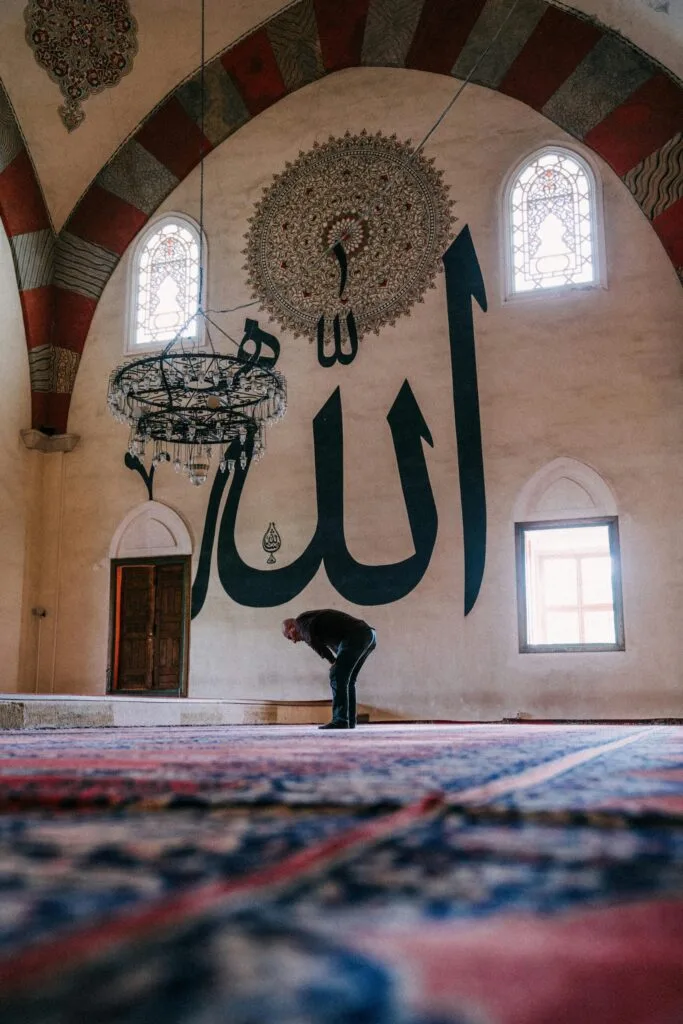
What is the Dhuhr prayer?
Dhuhr prayer – Meaning and importance in Islam
The Dhuhr prayer (which can also be called salat Dhuhr or simply the noon prayer) is the second obligatory prayer of the day. It is performed when the sun begins to descend after reaching its peak. In the Muslim tradition, it is the midday break, the moment when we catch our breath and reconnect with what matters most.
The Dhuhr prayer is a true anchor point in the day. We disconnect from stress and take time for ourselves and our spirituality. It is a reminder to keep room for faith, even when the day speeds up. This prayer encourages us to organize our schedule around small moments of calm and gratitude.
In short: the Dhuhr prayer is not just a religious act. It is a refreshing pause, a landmark, and above all, proof that regularity has meaning in faith. The sun doesn’t wear a watch, but the Dhuhr prayer never misses its slot.
At what time of day does the Dhuhr prayer take place?
The Dhuhr prayer begins just after the zenith, that is, when the sun has reached its highest point and begins to descend toward the west. It is the signal of the start of the afternoon, between the morning and the rest of the day.
In practice, the Dhuhr prayer is performed from the moment the sun leaves its zenith, until an object’s shadow becomes equal to its length (before the time of the Asr prayer). The time changes depending on the season and the city you are in, so it’s important to check prayer times regularly. We don’t all have the same sun overhead, so it’s best to check!
Prayer beads
Accompany your dhikr with prayer beads
Wooden bead prayer beads · Soft and natural to the touch

What time is the Dhuhr prayer?
Dhuhr prayer times in France and around the world
The Dhuhr prayer times change every day, and depending on where you are. In France, for example, salat Dhuhr starts around 1 p.m. in winter, and can shift to around 2 p.m. in summer because of the sun’s position. This principle holds almost everywhere: latitude, season, lunar calendar… everything affects the exact time.
To get the precise time of Dhuhr, there are several options:
- Go to specialized websites that update prayer times.
- Use mobile apps such as Muslim Pro, Salaat Time, etc.
- Check the website of your local mosque.
These tools take everything into account (the sun’s position, local specifics…) to give reliable times. Remember to check regularly, as it can shift a little each day.
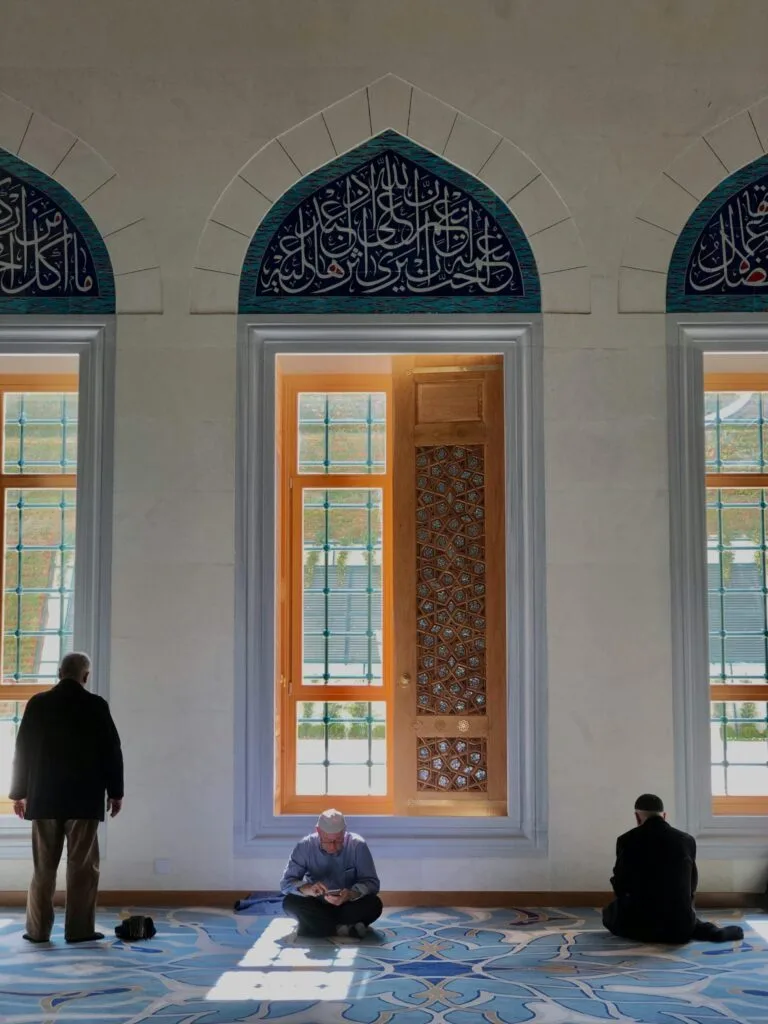
How to calculate the exact time of salat Dhuhr for your city
To find out the exact time of the Dhuhr prayer where you live, it’s nothing complicated:
- Take a look at the website of your mosque or a local Islamic center.
- Download a reliable prayer app with geolocation.
- Go to sites like islamicfinder.org or horaires-prieres.com.
Simply enter your city or zip code, and you’ll get the times day by day. Some sites even offer alerts or notifications, so you don’t forget. A little tip: turn on reminders on your phone, it saves busy days.
How many rakats for the Dhuhr prayer?
Dhuhr prayer – Number of obligatory rakats
The Dhuhr prayer consists of 4 obligatory rakat. Each rak’a is a unit of prayer with specific movements and recitations, to be performed in a certain order. Everyone performs these 4 rakat: men and women, the same rule for all.
Alongside the 4 obligatory ones, there are supererogatory rakat (sunnah) that are recommended but not required. According to tradition, it is advised to perform:
- 4 rakat sunnah before the obligatory prayer
- 2 rakat sunnah after
This allows you to go further in your spirituality, but it is not obligatory.
In summary:
- 4 obligatory rakat (fard)
- 4 sunnah rakat before (recommended)
- 2 sunnah rakat after (recommended)
Dhuhr Prayer – Differences Between Schools or in Particular Situations
In all the major schools of Islamic jurisprudence (Hanafi, Maliki, Shafi’i, Hanbali), the 4 obligatory rakat of salat duhr do not change. The differences mainly concern the supererogatory rakat, but the essentials remain the same.
When traveling, the duhr prayer can be shortened to 2 rakat (qasar), according to the rules of travel. This option eases the practice without losing the rhythm of the prayer. If you are traveling, find out about the conditions of the qasar to be sure you are doing it correctly.

How to Perform the Dhuhr Prayer Step by Step
Preparing for the Dhuhr Prayer (Ablutions, Intention)
Before starting salat dohr, there are a few steps you shouldn’t skip:
- Perform the ablutions (wudu): hands, mouth, nose, face, arms, head, ears, feet.
- Choose a clean place, ideally on a prayer mat.
- Face the qibla (the direction of Mecca).
- Form the intention in your heart (there is no need to say it out loud).
All of this is so that the duhr prayer is valid and so that you put yourself in the right conditions. A calm, clean place really helps you concentrate.
Dhuhr Prayer – How the 4 Rakat Unfold (Movements, Words, Order)
Here is how each rak‘a goes, step by step:
1. Standing (qiyam)
- Say “Allahu Akbar”
- Recite the Fatiha, then another surah or a few verses in the first two rakat
2. Bowing (ruku‘)
- Bend forward, hands on knees, back straight
- Say “Subhana Rabbiyal ‘Azim” three times
3. Rising (qiyam)
- Stand back up, say “Sami‘a Allahu liman hamidah”
4. Prostration (sujud)
- Place your forehead, hands, knees and toes on the ground
- Say “Subhana Rabbiyal A‘la” three times
5. Sitting (jalsa)
- Sit briefly, then perform another prostration
6. Standing for the next rak‘a
- You start again for a new rak‘a
At the end of the 2nd rak‘a, you remain seated for the tashahhud (testimony of faith). At the 4th rak‘a, you recite the complete tashahhud, then finish with the salutation to the right and to the left: “Assalamu alaykum wa rahmatullah”.
Prayer Clothing
Pray in comfort and serenity
Comfortable, modest outfits – For women & men

Dhuhr Prayer – Common Mistakes to Avoid
Here are the classic pitfalls during the duhr prayer:
- Forgetting an important step (bowing, prostration, tashahhud…)
- Getting the number of rakat wrong
- Lacking concentration or intention
- Going too fast or skipping a phrase
- Neglecting the cleanliness of the place or of your clothes
The simple advice: take your time and go step by step. No superpowers needed, just a bit of consistency and attention.
Simplified version translated (for beginners)
For those who are just starting out, here is a simplified version to recite in a low voice:
1. Standing: “God is the greatest.”
2. Recite: “Praise be to God, Lord of the worlds.”
3. Bow: “Glory to my Lord, the Most Great.”
4. Stand back up: “God hears the one who praises Him.”
5. Prostrate: “Glory to my Lord, the Most High.”
6. Sit, then prostrate again.
7. Start over for each rak‘a.
8. At the end: “May peace be upon you.”
It’s a good foundation for learning at your own pace while respecting the essentials.
Frequently Asked Questions About the Dhuhr Prayer
Are there any differences for women?
No, there is no difference in the steps, the rakat or the times between men and women. Only the attire changes: women cover the whole body except the face and hands, to preserve modesty.
Apart from that, everything is the same: same times, same structure, same recitations. The rules of purity and cleanliness also apply in the same way.
What should you do if you missed the Dhuhr prayer?
If you missed the Dhuhr prayer, it is recommended to make it up as soon as possible (qada’). Perform it as usual, without rushing, keeping the same concentration.
How to do it in practice:
- Perform your ablutions if needed
- Pray the 4 rakat as usual
- Have the intention of making up the duhr prayer
Try not to accumulate missed prayers. Make them up as soon as you can, to stay on track and keep up the consistency.
Can you combine dhuhr and asr?
It is possible to combine dhuhr and asr in certain cases (travel, illness, exceptional circumstances). There are two options:
- Jam‘ taqdim: you pray asr right after duhr, during the time of duhr
- Jam‘ ta’khir: you delay duhr and pray it together with asr, during the time of asr
This combining remains exceptional. Outside of these cases, it’s better to keep each prayer at its proper time, to maintain your rhythm and prevent the prayer from becoming a mere formality.
Conclusion
The dhuhr prayer structures the day, between midday and afternoon. It consists of 4 obligatory rakat, simple to follow, for everyone. The times vary by city and season, but they are easy to find. With the detailed steps, even beginners can pray duhr without stress. A little consistency and a reminder of the time, and the duhr prayer becomes an appointment that is easy to keep.
FAQ
Perform your ablutions, make your intention, then pray 4 rakat: standing (recitations), bowing, rising, prostration, sitting, and start again. At the end, recite the tashahhud then give the salam to the right and to the left.
The time depends on the city and the day. Check an app or your mosque’s website for the exact time.
There are 4 obligatory rakats for the Dhuhr prayer.
No, everything is the same for women, except for the clothing, which should be adapted.
Make it up as soon as possible, following the usual order.