


Muslim women’s outfits are a whole world designed to combine modesty, elegance and comfort in everyday life. Abaya, hijab, khimar, long dress or set… each piece has its role and its style, and fits into daily life as well as special moments. This guide gets straight to the point to help you understand the differences, choose the outfit that suits you and shop without stress.
In brief
- Muslim clothing for women: abayas, hijabs, khimars, long skirts, sets and kimonos.
- Each type has its uses: everyday, work, special occasions.
- The choice depends on your body shape, style, the occasion and the fabrics.
- When shopping online, compare shops, reviews and return policies.
The different types of Muslim women’s clothing
There are several types of clothing for Muslim women: abaya, hijab, khimar, long dress, skirt, set and kimono. Each meets specific needs for modesty and style, suited to everyday life or particular occasions.
Muslim clothing for women comes in several categories, each with its own codes.
- Abaya: long, loose dress with long sleeves, perfect for everyday life, prayer or going out.
- Hijab: scarf covering the hair; it goes with every outfit, at work as well as when going out.
- Khimar: veil covering the head and chest, ideal for prayer or when you want more coverage.
- Jilbab: loose-fitting outfit that covers the whole body, except the face and hands.
- Long dress, skirt, kimono: elegant and varied alternatives for putting together looks suited to every moment.
- Modest fashion sets: matching top and bottom, modern, loose cuts.
To make things clearer, here is a summary table:
| Type of clothing | Short description | Main uses |
|---|---|---|
| Abaya | Long, loose dress with long sleeves | Everyday, prayer, outings |
| Hijab | Scarf covering the hair | Everyday, work, occasions |
| Khimar | Veil covering head and chest | Prayer, outings, occasions |
| Jilbab | Loose outfit covering the whole body | Prayer, outings, occasions |
| Long dress | Dress covering the legs, sometimes with long sleeves | Everyday, work, events |
| Long skirt | Skirt covering the legs | Everyday, work, occasions |
| Kimono | Long, flowing jacket for layering | Work, outings, layering |
| Modest fashion set | Matching top + bottom, loose and modern cuts | Everyday, work, occasions |
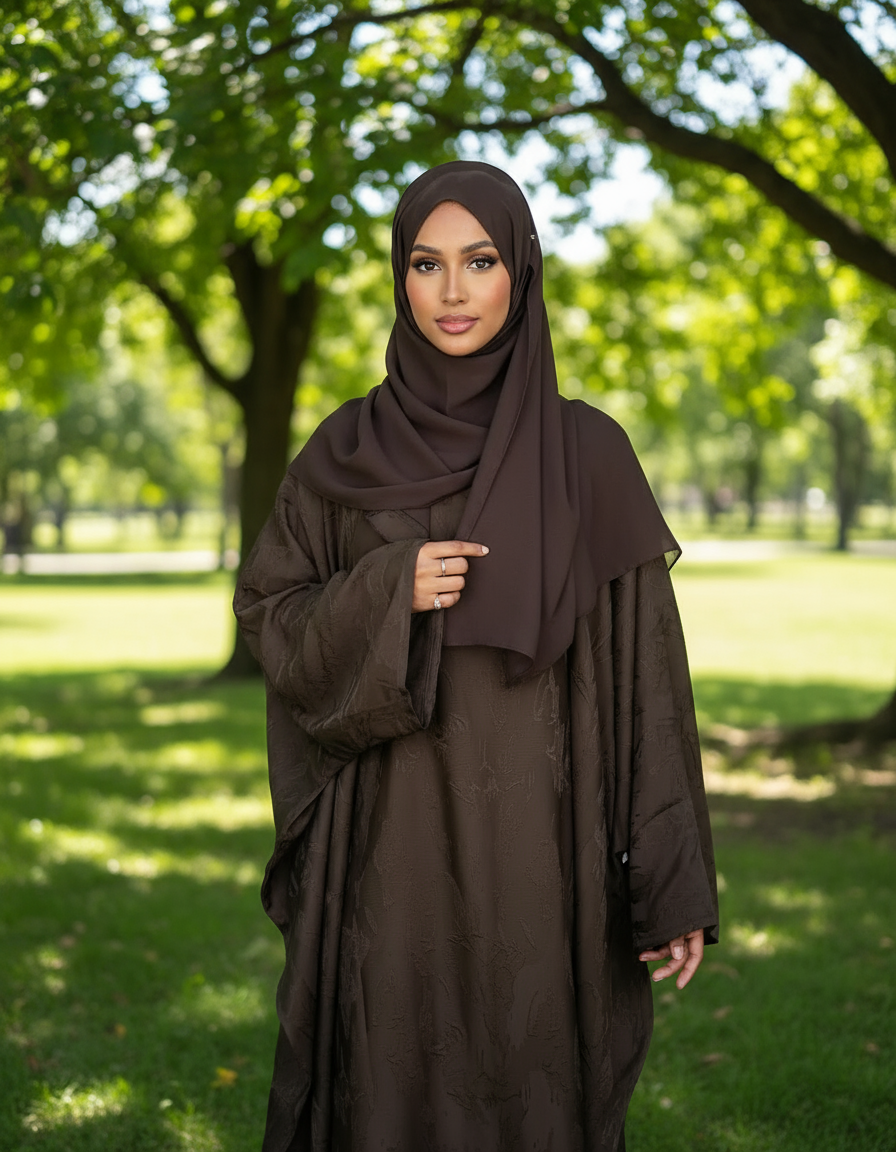
Abaya, hijab, khimar, jilbab: what are the differences?
The abaya is a long, loose dress, the hijab is a scarf covering the hair, the khimar is a veil covering the head and chest, and the jilbab is an outfit covering the whole body except the face and hands.
Each of these garments has its own use and style. The abaya, for example, can be worn for prayer as well as for going out thanks to its comfortable cut. The hijab comes in endless wrapping styles and fabrics, from the lightest to the most opaque, adapting to every situation. The khimar, which offers more coverage, is often preferred for prayer or for outings where you want more discretion. The jilbab, with its very loose cut, is perfect for those looking for a fully covering outfit that is also practical, especially for outings or moments when discretion matters. All these pieces come in understated or colorful versions, depending on your tastes and the occasion.
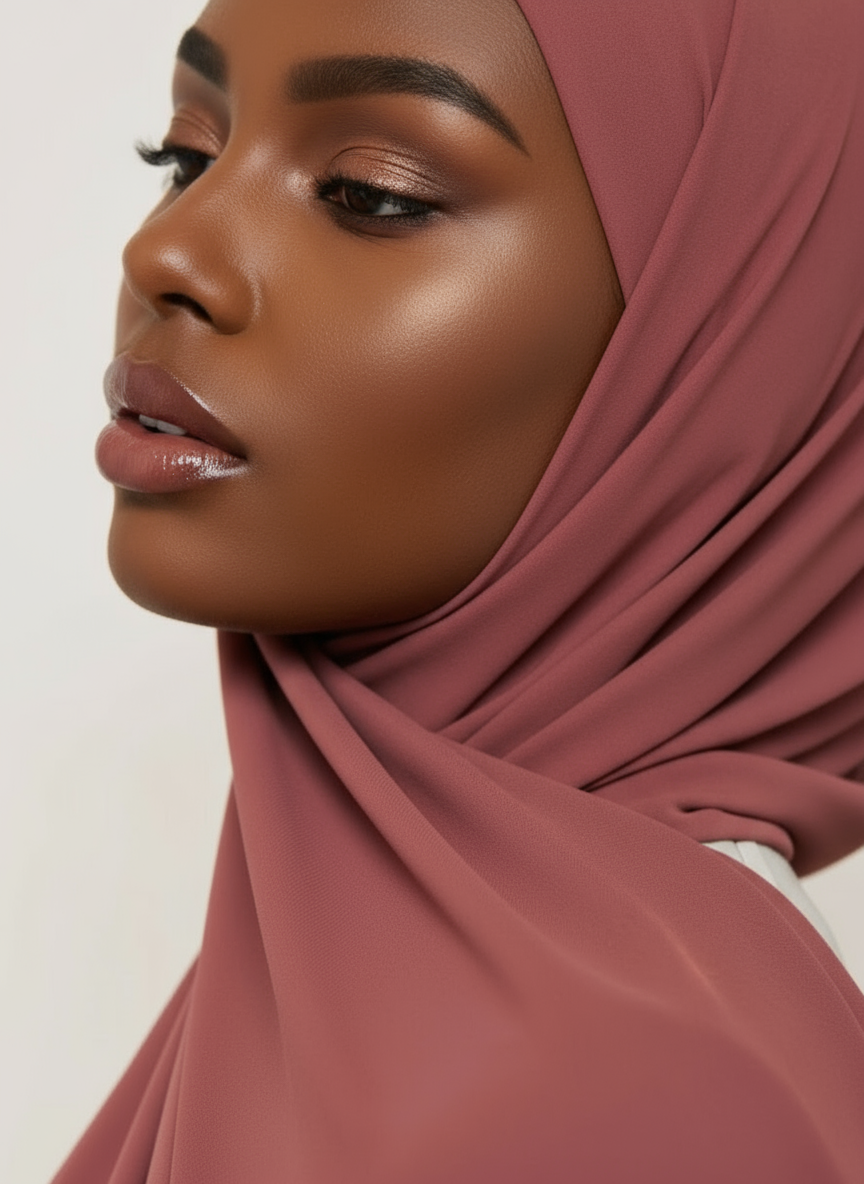
Long dress, skirt, kimono: what are they for?
The long dress, the skirt and the kimono are elegant alternatives to the abaya or the jilbab, suited to everyday wear, work or special occasions.
These garments let you vary your styles while respecting modesty.
- Long dress: straight or flared, with or without sleeves, it goes from everyday wear to more dressed-up events.
- Long skirt: paired with a covering top, it creates personalized looks, ideal for the office or for outings.
- Kimono: perfect for layering, it modernizes a simple outfit and is worn just as well in transitional seasons as on cooler days.
You can easily play with fabrics, colors and accessories to create unique outfits. And a little bonus: the kimono is also the perfect ally for adding style to a simple outfit or for concealing a slightly fitted top.
Modest fashion set: the modern choice
The modest fashion set, made up of a matching top and bottom, wins people over with its modern look and practicality. It lets you mix styles, adapt your outfit to different occasions and bring a contemporary touch to Muslim fashion.
These sets suit every situation: work, outings, events, all while respecting modesty. The cuts are designed to be both loose-fitting and trendy.
What people love is the variety:
- Monochrome sets for a chic style,
- Mixes of colors and fabrics for more originality,
- Modern details (balloon sleeves, belts, pockets).
The fabrics range from lightweight cotton for summer to warmer materials for winter, so you can adapt to the season. If you like to save time in the morning, the matching set is the quick and efficient solution: no need to think, everything is already coordinated!
-
Bestseller
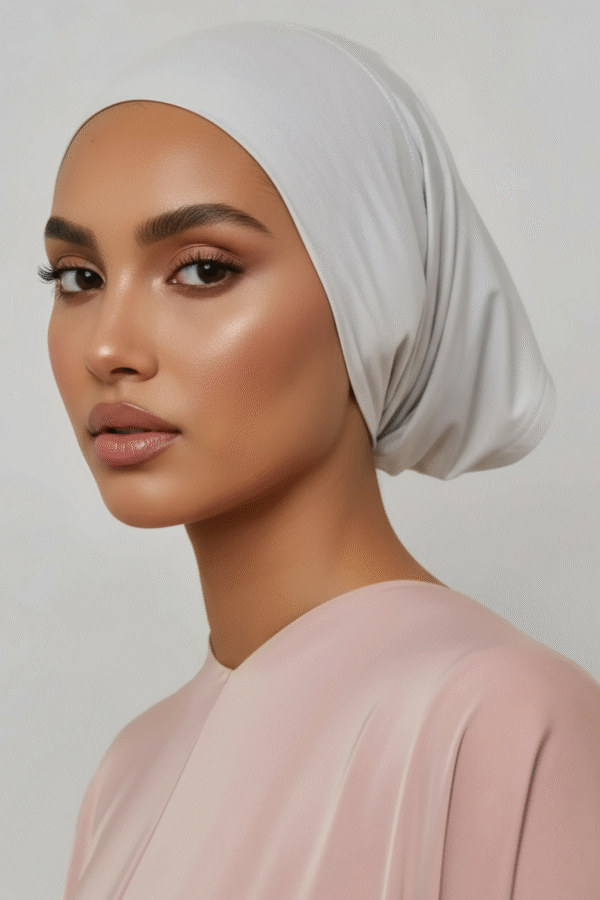
Soft Cotton Hijab Underscarf
£6.24Select options This product has multiple variants. The options may be chosen on the product page -
Bestseller-21 %
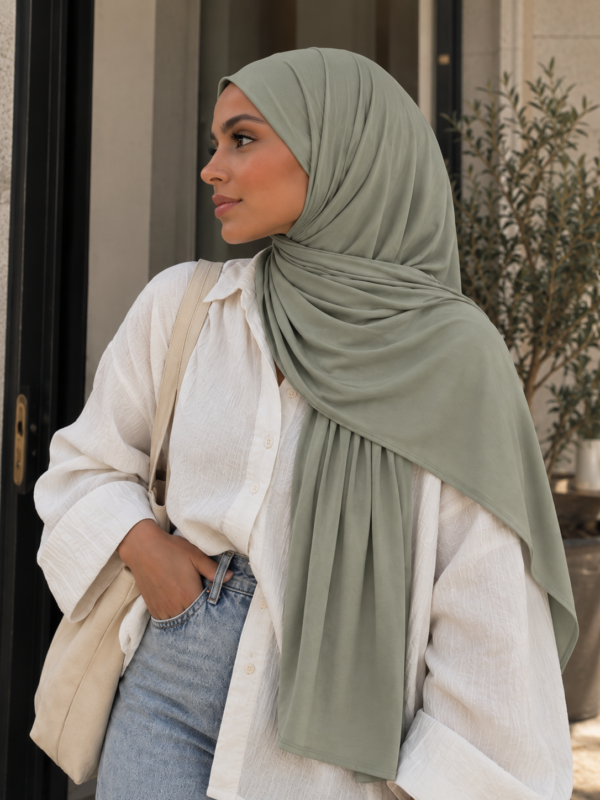
Hijab Premium High-End Bamboo Jersey – Lightweight, Crease-Resistant!
Original price was: £16.32.£12.84Current price is: £12.84.Select options This product has multiple variants. The options may be chosen on the product page -
Sold out
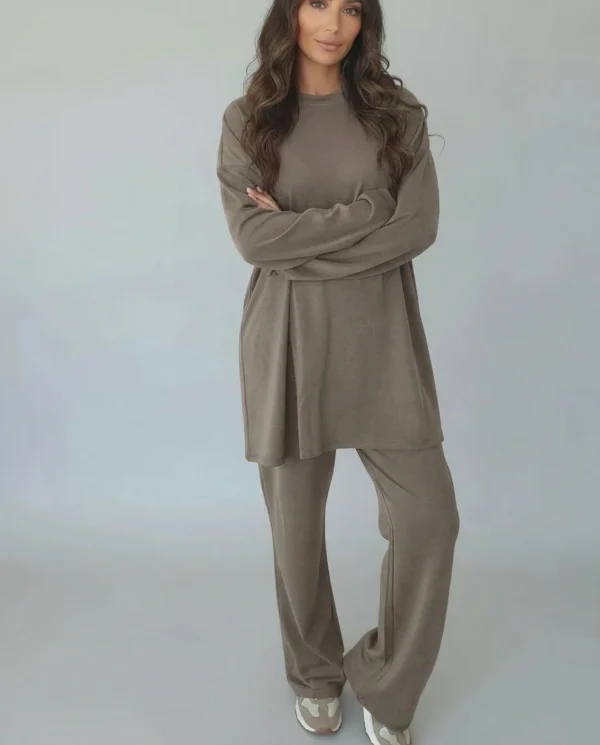
Hijab-Friendly Sportswear - Loose Top and Flowing Trousers - Taupe
Original price was: £27.96.£24.84Current price is: £24.84.Select options This product has multiple variants. The options may be chosen on the product page

How to choose your Muslim outfit for women?
When choosing a Muslim outfit for women, you need to consider your body shape, the style you want, the occasion and the materials. Prioritize comfort, a suitable cut and easy care for everyday wear.
Several criteria should be taken into account:
- Body shape: straight cut to elongate the silhouette, flared skirt for comfort, kimono to add structure.
- Occasion: a simple abaya for everyday, a chic long dress for celebrations, a modern set for the office.
- Materials: cotton for softness, polyester for easy care, flowing fabrics for elegance.
- Season: lightweight fabrics in summer, thicker ones in winter.
Here is a table to help you narrow down your choices:
| Criterion | Possible options | What to prioritize depending on… |
|---|---|---|
| Body shape | Straight, flared, fitted cut | Silhouette, comfort, personal style |
| Occasion | Everyday, work, prayer, event | Simplicity or elegance desired |
| Material | Cotton, polyester, linen, viscose | Season, ease of care |
| Season | Lightweight, thick, flowing | Temperature, comfort |
Selection criteria: body shape, occasion, material
To choose well, match the cut to your body shape, select the material according to the season and use, and think about the occasion to adjust the style.
- Body shape: straight cut to elongate, flared for more ease of movement.
- Occasion: understated for everyday, refined details for celebrations.
- Material: cotton or linen for summer, thicker fabrics for winter.
- Care: choose fabrics that are easy to wash and durable.
Take the time to try different cuts to see what suits you best. For example, a straight cut looks great on slender silhouettes, while a flared cut offers more freedom of movement. For colors and patterns, think of neutral tones for work and prints or embroidery for special occasions. When it comes to materials, go for breathability in summer (cotton, linen) and warmth in winter (thicker blends). Also check how easy it is to care for: an outfit that doesn’t wrinkle too much and washes easily means peace of mind. And if you can’t decide, nothing stops you from alternating depending on your mood or the weather!

Tips for care and durability
Good care extends the life of your Muslim outfits. Always read the label, opt for a gentle wash and avoid the dryer to preserve the fibers.
Here are a few practical tips:
- Wash at a low temperature to prevent shrinking.
- Air dry to keep the shape.
- Iron at a moderate temperature, especially for delicate fabrics.
- Store on hangers to avoid creases.
To go further, sort your clothes by color before washing to avoid unpleasant surprises. Delicate fabrics (viscose, synthetics) benefit from being washed in a mesh bag. For abayas or embroidered kimonos: remember to turn them inside out before washing to preserve the details. For veils and hijabs, hand washing keeps their luster, especially for fine materials. Finally, air out your closet regularly to prevent dampness. Regular care means less stress in the morning — and more outfits that last!
Where to buy a modern Muslim outfit for women?
Several online stores offer Muslim outfits for women, combining modernity with respect for religious guidelines. Compare the offers, check the delivery and return conditions, and read customer reviews to shop with confidence.
Today, buying a modern Muslim outfit is easy thanks to the many specialized online stores. Before ordering, take the time to compare the collections, check the sizes, read the customer reviews and look at the return conditions. Dedicated sites offer a wide selection, regular new arrivals and styles to suit every taste.
Specialized online stores: what should you compare?
To choose the right store, compare the following points:
- Variety of styles (abaya, hijab, set, kimono…)
- Quality of product photos and descriptions
- Size availability and measurement guide
- Delivery and return conditions
- Customer reviews and the site’s reputation
A few popular stores to explore:
- Oummi Muslim
- Anaaz Store
- Avenue du Muslim
- Almoultazimoun
- Anika Boutique
- Mon Hijab Modest
Pay attention to the clarity of the product pages: photos from different angles and close-ups of the fabrics all help you picture the item. An accurate size guide avoids unpleasant surprises. Also think about how responsive the customer service is if you have a question. Customer reviews are valuable for judging the quality and reliability of the site. Finally, a quick look at the stores’ social media often lets you discover new arrivals worn in real life (and find outfit ideas!). In short, the clearer it is, the more reliable it is.
Tips to avoid unpleasant surprises
For a successful online purchase, keep these points in mind:
- Check the size guide before ordering.
- Read customer reviews carefully.
- Choose shops with clear return policies.
- Look at photos of the item being worn to better visualize the fit.
- Be wary of offers that seem too good to be true or of little-known websites.
Before confirming your cart, read the description of the materials and cuts carefully. If you have any doubt about the length or width, contact customer service. Also check the shop’s social media: customers often share their photos, which gives you a real idea of how the item looks. Keep in mind that colors may vary depending on screens, so it’s best to expect a slight difference. One last tip: keep a record of your order and your exchanges, as it makes things easier if you need to make a return. Shopping online is convenient, but a little vigilance is the key to avoiding disappointment.
FAQ on Muslim women’s clothing
Here are the answers to the most frequently asked questions about Muslim women’s clothing, to help you make an informed choice suited to your needs.
How should a woman dress to pray in Islam?
To pray, a Muslim woman should wear loose clothing covering the whole body, except for the face and hands. The abaya, the jilbab or a long dress with a hijab are all perfectly suitable.
Once you have chosen an outfit suited to prayer, make sure the clothing is not see-through and remains comfortable for the movements. Choose soft and breathable materials, especially in summer or in warm spaces. Many women set aside a specific outfit for prayer, to ensure optimal coverage and simplify care. The key is to feel comfortable and in line with the principles of modesty.
What is the difference between abaya, hijab, khimar and jilbab?
The abaya is a long dress, the hijab a scarf covering the hair, the khimar a veil covering the head and chest, and the jilbab a loose outfit covering the whole body except the face and hands.
The differences lie as much in shape as in use. The abaya can be worn alone or with a hijab, whereas the jilbab is often a two-piece set (loose top + skirt or trousers). The khimar stands out for its length, sometimes covering down to the waist or more, while the hijab is limited to the head and neck. Each piece meets different needs: everyday life, prayer, special occasions.
Is the abaya a religious garment?
The abaya is traditionally worn to respect the modesty prescribed in Islam, but wearing it is not mandatory everywhere. It is considered a garment suited to religious practice.
In some countries, the abaya is part of the local clothing culture; elsewhere, it is mainly worn for prayer or religious events. Its adoption varies depending on context and preferences. The key is respect for modesty, which can take different forms depending on the styles chosen.
What is the traditional outfit of Muslim women?
The traditional outfit varies by region, but often includes a long dress (abaya), a veil (hijab, khimar) and sometimes a jilbab. The choice depends on local customs and personal preferences.
In some countries, the traditional outfit may include pieces such as the caftan, the djellaba
Conclusion
Today, Muslim women’s clothing offers a wide variety of styles, cuts and materials, allowing everyone to combine modesty, elegance and comfort. Whether you are looking for a classic abaya, a modern set or a trendy kimono, there are solutions for every need and every occasion. Taking the time to compare, choosing according to your body shape and prioritizing quality remains the key to dressing with confidence and peace of mind.
FAQ
To pray, a Muslim woman should wear loose clothing covering the whole body, except for the face and hands. The abaya, the jilbab or a long dress with a hijab are all perfectly suitable.
After choosing an outfit suited to prayer, make sure the clothing is not see-through and remains comfortable for the movements. Choose soft and breathable fabrics, especially in summer or in warm spaces. Many women set aside a specific outfit for prayer, to ensure optimal coverage and simplify care. The essential thing: feeling comfortable and in line with the principles of modesty.
The abaya is a long dress, the hijab is a scarf covering the hair, the khimar is a veil covering the head and chest, and the jilbab is a loose outfit covering the whole body except for the face and hands.
The differences lie as much in shape as in use. The abaya can be worn alone or with a hijab, whereas the jilbab is often a two-piece set (loose top + skirt or trousers). The khimar stands out for its length, sometimes covering down to the waist or more, while the hijab is limited to the head and neck. Each piece meets different needs: everyday life, prayer, special occasions.
The abaya is traditionally worn to observe the modesty prescribed in Islam, but wearing it is not required everywhere. It is considered a garment suited to religious practice.
In some countries, the abaya is part of the local clothing culture; elsewhere, it is mostly worn for prayer or religious events. How it is adopted varies depending on context and preference. What matters most is respecting modesty, which can take different forms depending on the styles chosen.
Traditional attire varies by region, but often includes a long dress (abaya), a veil (hijab, khimar) and sometimes a jilbab. The choice depends on local customs and personal preferences.
In some countries, traditional attire may include pieces such as the kaftan, the djellaba or the harem pants. Colors, fabrics and embellishments change from one culture to another. This diversity allows every woman to put together an outfit true to her tradition and her style, while remaining modest.
You can buy modern Muslim clothing from specialized online stores, which offer a wide choice of designs, styles and sizes to suit every need.
Before buying, compare the collections, read the customer reviews and check the size guides. Online stores often offer regular new arrivals and tips for choosing well. Brands’ social media accounts are also a good source of inspiration and real-life feedback.
Leave a Reply