


Finding the best veil fabric mostly comes down to knowing what you want to use it for. For the hijab or fashion, crepe, jersey, chiffon and silk are the big favorites. In sailing, the go-to choices are woven (Dacron), laminate or membrane. This guide covers both worlds to help you choose easily, with no headaches.
In brief
- The star fabrics for the hijab: crepe, jersey, chiffon, silk – to be matched to the season and the look you want.
- For a sailing sail, woven (Dacron), laminate and membrane are the safe bets, each with its own use.
- The choice always depends on the use, comfort, season and budget.
- Two summary tables to compare the advantages of each fabric at a glance.
The main veil fabrics for the hijab and fashion
The leading fabrics for the hijab and fashion are crepe, jersey, chiffon, silk, cotton, modal and pashmina. Each has its own style, level of opacity and comfort. Choose according to the season, the look you want and how practical you need it to be.
Choosing the right fabric for a hijab or a fashion veil is mostly a matter of comfort, style and practicality. Crepe is loved for its matte texture and flowing drape; jersey, for its stretch and ultra-comfortable feel; chiffon, for its lightness and sheerness; silk, for its sheen and softness. Cotton, modal and pashmina round out the choice, each with its own strengths depending on the season or occasion. Think about the climate, the opacity, the style (casual or chic) and ease of care.
To go further, also look at:
- The feel on the skin (some fabrics are softer than others)
- The ease of styling (some stay in place better, others slip)
- The compatibility with accessories (under-caps, pins, etc.)
Concrete examples:
- Crepe stays in place, with no need to keep readjusting it.
- Jersey, thanks to its flexibility, follows all your movements, perfect for busy days.
- Chiffon is light and airy, great for sophisticated draping; but you often need an under-layer to avoid sheerness.
- Silk adds a touch of luxury and stays cool in summer, but requires a bit more care.
Also think about the effect of colors and patterns: some fabrics make prints or bright colors stand out. And a little tip: always test the fabric on a small area of skin to avoid irritation, especially if you wear your hijab for a long time.
-
Bestseller-25 %

Jilbab with hood and long skirt
Original price was: 48,00 €.36,00 €Current price is: 36,00 €.Select options This product has multiple variants. The options may be chosen on the product page -
Bestseller

Soft Cotton Hijab Underscarf
7,20 €Select options This product has multiple variants. The options may be chosen on the product page -
Bestseller
Hijab Underscarf – Soft and Lightweight
4,80 €Select options This product has multiple variants. The options may be chosen on the product page


Crepe, jersey, chiffon: pros and cons
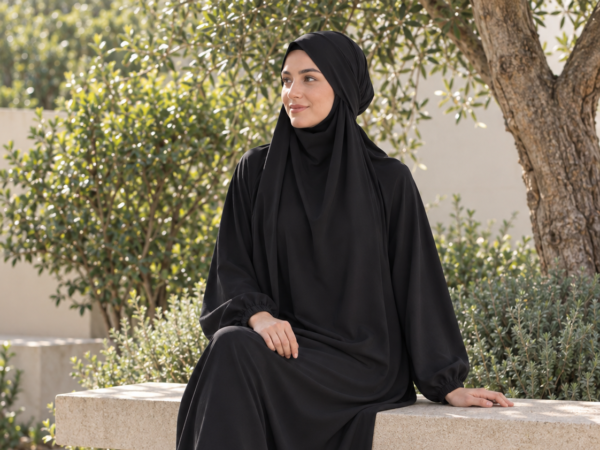
Crepe, jersey and chiffon dominate the world of the modern hijab. Crepe, with its natural drape, doesn’t slip and stays opaque, but it can feel warm in summer. Jersey is ultra-comfortable and stretchy, perfect for active days, but a little less chic for big occasions. Chiffon, light and airy, is ideal for summer or a flowing style, but it often needs an under-layer to avoid sheerness and slipping.
Also good to know:
- Crepe wrinkles very little: perfect for avoiding ironing.
- Jersey, often made of blended fibers, withstands washing well and keeps its shape.
- Chiffon requires gentle ironing and careful storage to avoid creases.
In summary:
- For a practical, hassle-free hijab, jersey is an everyday ally.
- For an elegant or sophisticated look, chiffon makes the difference.
- Crepe remains the happy medium between elegance and practicality.
One last point: some fabrics hold better with specific accessories (pins, magnets). Try out what works best for you.
Silk, cotton, modal, pashmina: for which occasions?
Silk embodies elegance, ideal for ceremonies or evenings, but requires meticulous care. Cotton is versatile, breathable and easy to live with, perfect for everyday wear. Modal, soft and flowing, combines comfort and easy care. Pashmina, thicker, is the favorite for cold winters or cozy looks, while remaining chic.
A closer look at each fabric:
- Silk, with its natural glow, elevates dressy outfits and special events. Be careful, it is sensitive to moisture and friction.
- Cotton, hypoallergenic and absorbent, is great for sensitive skin and hot climates. It washes effortlessly and dries quickly.
- Modal, made from wood, wins people over with its softness and flowing feel. It does well in the washing machine and keeps its shape.
- Pashmina, a blend of wool and silk, brings warmth and elegance in winter; it can be worn as a shawl or as a thick hijab.
In short: for formal occasions, go for silk or pashmina. For every day, cotton or modal are unbeatable. And as soon as the cold arrives, pashmina remains a chic and comfortable solution.

Comparison table of hijab fabrics
| Fabric | Drape | Opacity | Season | Care |
|---|---|---|---|---|
| Crepe | Flowing | Good | Mid-season | Easy |
| Jersey | Soft | Very good | All year | Very easy |
| Chiffon | Light | Medium | Summer | Delicate |
| Silk | Smooth | Good | Occasions | Delicate |
| Cotton | Natural | Good | All year | Easy |
| Modal | Flowing | Good | Mid-season | Easy |
| Pashmina | Thick | Excellent | Winter | Delicate |
This table sums up the essentials for comparing each fabric. Also think about your lifestyle: a fabric that is easy to care for is always a plus during the week. Don’t hesitate to mix up the fabrics so you have the right option in every season and for every style.
Tips for choosing based on the season and style
- Chiffon or cotton for summer: light and breathable.
- Crepe or jersey for everyday: comfort and stability.
- Silk or pashmina for occasions or winter.
- Check the opacity if you don’t want to wear an under-scarf.
- A hijab that slips is like a shirt that’s too big: it’s noticeable right away. Test how well it stays in place before buying.
A few tricks to refine your choice:
- If your days are busy, jersey stays in place effortlessly.
- In humid climates, cotton or modal dry quickly and prevent that clammy feeling.
- For travel, opt for fabrics that wrinkle very little and are easy to wash.
- For more sophisticated styles, chiffon allows for elegant draping (it takes a bit of technique, but the result is worth it).
Keep in mind: comfort comes first. A hijab that feels great to wear is the key to a successful day.
Sail materials for sailing and boating
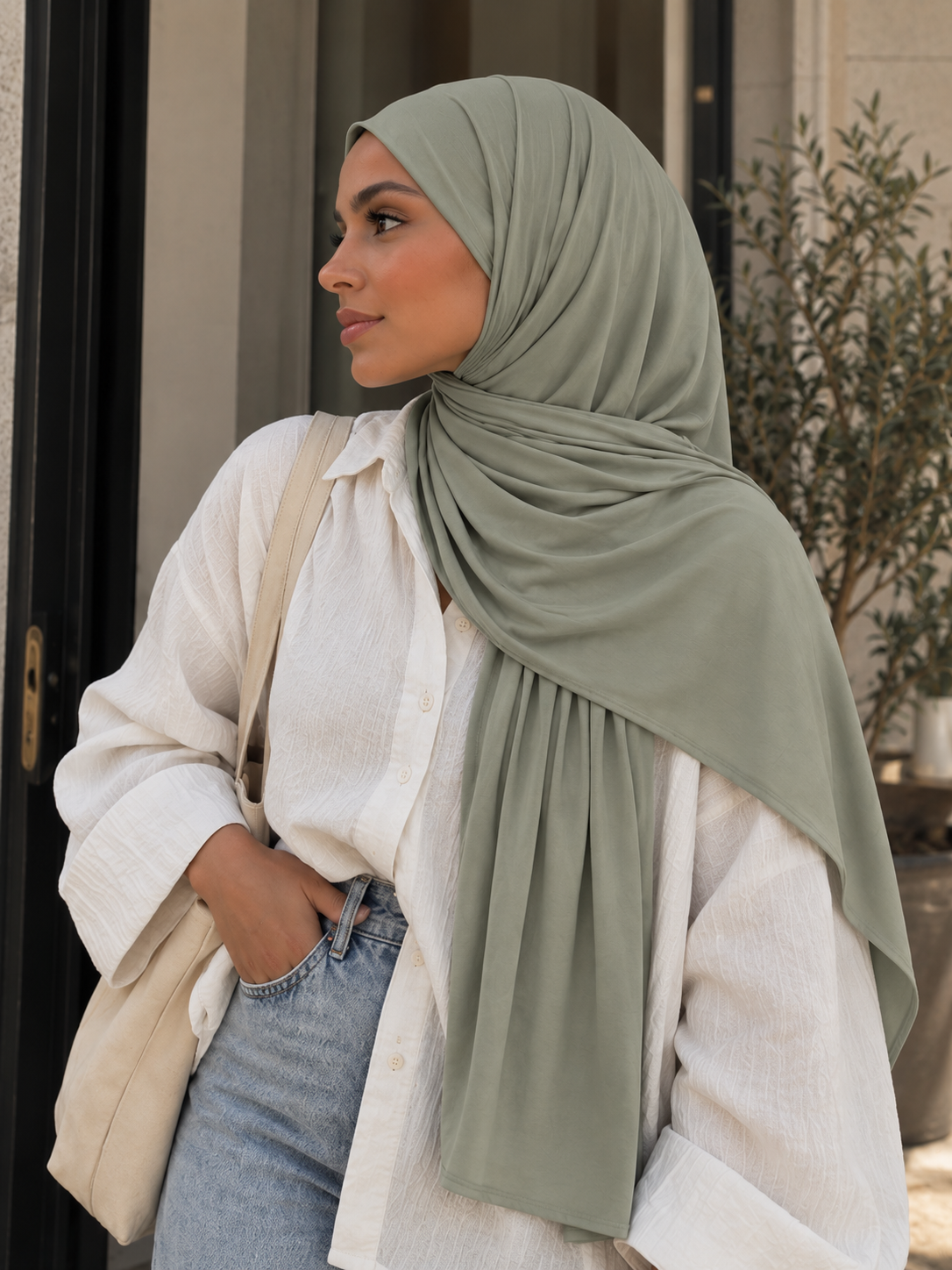
In nautical sailing, the main materials are woven fabric (Dacron), laminate and membrane. Woven fabric is sturdy and easy to maintain, laminate aims for performance, and membrane seeks lightness and precision for competition.
The choice of fabric for a boat sail is crucial: it affects performance, lifespan and practicality. Woven fabric (Dacron) remains the reference for cruising, thanks to its sturdiness and easy maintenance. Laminate, more technical, combines several layers to gain lightness and performance, but it requires more care. Membrane, ultra-light and precise, is the top choice for competition, but it is more fragile and costly. Each type of sailing has its own material: type of boat, how often you sail, level of performance expected.
Keep in mind:
- Woven fabric (Dacron) is easy to repair, even far from ports.
- Laminate, although high-performing, may require technical intervention if there is a problem.
- Membrane, highly specialized, demands careful maintenance to stay in top shape.
The choice also depends on the type of sailing (sea, lake, river), the usual weather conditions and the frequency of use. For intensive use or in difficult conditions, durability and ease of maintenance are your best allies. Don’t hesitate to ask a professional for advice if you are unsure.
Woven, laminate, membrane: differences and uses
- Woven fabric (Dacron): strong, durable, easy to repair, perfect for cruising and versatile uses.
- Laminate: lighter, better shape retention, suited to racing or those seeking performance.
- Membrane: custom-made, ultra-high-performance, reserved for competition, but more fragile to maintain.
A few useful details:
- Woven fabric (Dacron) remains the standard on family sailboats and for long cruises. It handles weather variations well.
- Laminate, made of plastic films and technical fibers, holds its shape well but can suffer if poorly maintained (delamination is possible).
- Membrane fits the rigging to the millimeter and optimizes every meter sailed, but remains sensitive to impacts and folding.
In short: match the material to your plans. Simplicity for leisure, performance for racing, and a minimum of vigilance for maintenance.
Advantages and limitations of each material for boat sails
- Woven:
- Sturdy, easy to live with, good quality/durability ratio
- Less performant for competition
- Laminate:
- Lightness, performance, good shape retention
- Less durable, more specialized maintenance
- Membrane:
- Precision, featherweight, custom-made
- Fragile, high price, delicate maintenance
A few practical tips:
- Woven fabric is forgiving of mistakes and handles folding well.
- Laminate, even though it performs well, can wear out quickly in the sun or if poorly stored.
- Membrane, despite its qualities, requires constant attention: avoid folding it when wet and watch for snags.
In short, each material has its strengths and limitations. For family or occasional use, go for sturdiness. For racing, performance justifies the investment in more technical fabrics.
Comparison table of nautical fabrics
| Material | Durability | Performance | Maintenance | Main use |
|---|---|---|---|---|
| Woven | Excellent | Average | Easy | Cruising, leisure |
| Laminate | Good | Good | Moderately easy | Racing, performance |
| Membrane | Average | Excellent | Delicate | Competition |
This table helps you decide quickly. If you do a bit of everything (cruising and racing), laminate can be a good compromise. For peace of mind, nothing beats woven fabric. For speed and precision, membrane is unbeatable… as long as you accept its demanding side.
Tips for choosing according to your type of sailing (cruising, racing, long-distance)
- For cruising and leisure, choose woven fabric: reliable, simple, durable.
- For racing or performance seekers, laminate is a good compromise.
- For pure competition, membrane is the top choice, but you need to take care of it.
- Think about the environment (sun, humidity, salt): each material reacts differently to wear.
A few extra tips:
- At sea, look for a material that is resistant to UV and salt.
- For long crossings, ease of repair is key: woven fabric can be repaired even with a basic kit.
- In racing, check the condition of your sails regularly.
- For high-end sails, store them flat or rolled to avoid creases.
A good choice of material also means less stress in case of the unexpected!
Criteria for choosing the right sail or veil material for your needs
To choose the right sail material, you need to think about the use (fashion or nautical), the climate, comfort, durability, maintenance and budget. The criteria change depending on whether you are looking for elegance, performance or ease of maintenance.
The choice is not limited to style or performance. For a hijab, think about opacity, breathability, ease of maintenance and staying power on the head. For nautical sailing, moisture resistance, sturdiness, ease of repair and performance are essential. Budget and frequency of use also matter. Finally, some materials are best avoided depending on the use, to prevent unpleasant surprises.
To clarify, make a list of your priorities:
- Do you want a fabric that is easy to wash or a sophisticated look?
- Do you have any allergies or sensitive skin?
- For sailing: freshwater or saltwater?
- Do you use your sail often or occasionally?
- Does your budget match your wishes?
Try several fabrics before making up your mind: sometimes, how a fabric feels matters more than the spec sheet. And keep in mind that comfort and practicality are often your best allies.
Use, season, care: the questions to ask yourself
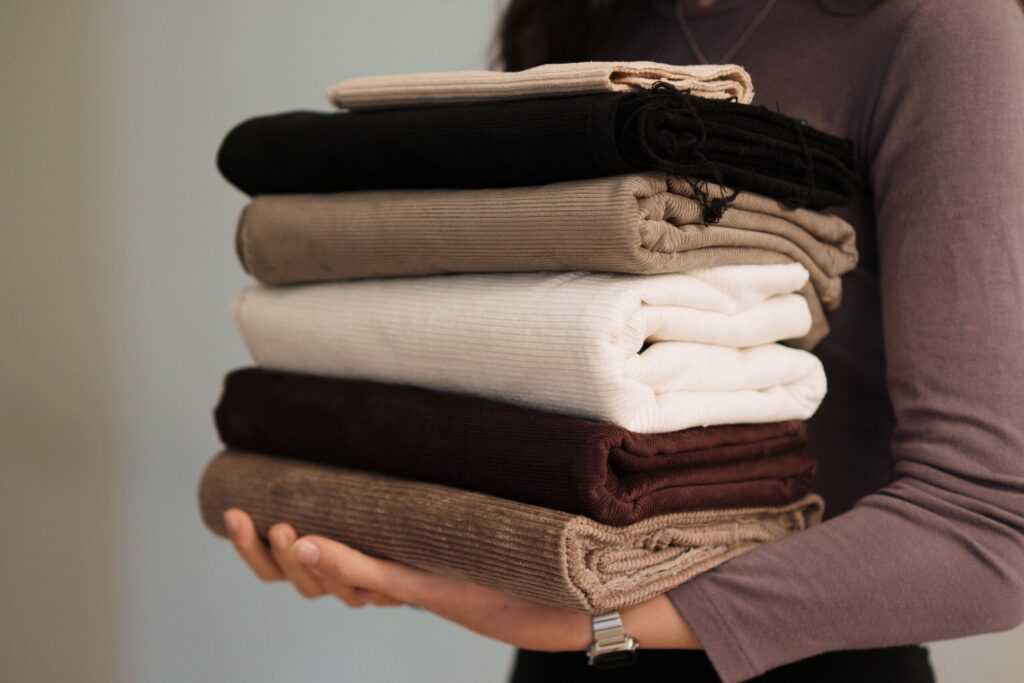
- What will your veil be used for? (everyday, special occasion, sports, leisure)
- What season will you wear it in? (summer, winter, year-round)
- Are you looking for easy care, or are you willing to pamper a delicate fabric?
- Do you need a very opaque fabric or a lightweight one?
- What is your budget?
Also consider:
- Does the fabric need to dry quickly?
- Are you often on the move?
- For sailing, do you have easy access to a repair service?
Asking the right questions helps you avoid a lot of disappointment. It’s better to think it through now than to regret an unsuitable purchase later.
Fabrics to avoid depending on use
For the hijab:
- Fabrics that are too slippery (some synthetics)
- Fabrics that are too thick in summer (wool, pashmina)
- Fabrics that are too sheer without an underscarf (thin chiffon)
For nautical sails:
- Fabrics with low resistance to UV or moisture
- Fabrics that are fragile for cruising (membrane on a family boat)
- Fabrics that are hard to repair far from a port
Be wary, too, of fabrics that promise everything at once: the perfect compromise rarely exists! For the hijab, stick to tried-and-true options approved by the community. For sails, ask experienced sailors or reputable sailmakers for their opinion.
Tips to extend the life of your veil
- Hand wash or use a delicate cycle for fragile fabrics (silk, chiffon, membrane).
- Always air dry, in the shade, to avoid warping or fading.
- Store your veils away from light and moisture.
- For sailing, rinse with fresh water after every outing at sea.
- Regular care is the key to keeping your veil beautiful and high-performing.
A few more ideas:
- Avoid harsh chemical products that damage the fibers.
- Fold carefully to avoid breaks or pronounced creases.
- Inspect seams and friction areas often to anticipate repairs.
- For nautical sails, air them out after every outing to prevent mold.
A well-maintained veil is a veil that lasts and stays pleasant to use. A little care today, a lot of peace of mind tomorrow!
Conclusion
The best veil fabric really depends on how you use it: crepe, jersey or chiffon for the hijab; woven, laminated or membrane for sailing. Think about the season, comfort, care, and the style or performance you want. The comparison tables and practical tips in this guide are here to make your life easier and help you choose well, without unnecessary jargon.
FAQ
Crepe and jersey are often the most popular: comfortable, with a lovely drape and easy to care for. For special occasions, chiffon and silk remain safe choices.
For cruising, woven fabric (Dacron) remains a reliable benchmark. For performance and racing, laminate and membrane are preferred.
For the hijab, avoid fabrics that are too slippery or delicate (some synthetics). For sailing, steer clear of materials that are not very resistant to moisture or sun.
In summer, go for lightweight, breathable fabrics like chiffon or cotton for the hijab, and thin sails for the boat. In winter, pashmina, wool or thicker veils and sails are ideal.
Each fabric has its own needs: gentle washing for silk and chiffon, rinsing with clear water for woven nautical fabric, air drying to avoid any deformation.
Leave a Reply