


Putting on a hijab may seem technical at first, but in reality it’s accessible to everyone with the right moves. You just need the right accessories, to follow a few clear steps, and to adjust according to your style or face shape. This practical guide shows you how to put on a hijab easily, with or without pins, and offers styles for every occasion.
In short:
- Prepare a suitable fabric, an under-hijab cap and the necessary accessories.
- Follow the basic steps to place and adjust the hijab.
- Try different methods: classic, turban, jersey, pinless.
- Adapt the style to your face shape for a harmonious look.
Preparing your hijab and accessories
To put on a hijab well, you need to choose a suitable fabric, prepare the necessary accessories (under-hijab cap, pins, clips) and sit in front of a mirror. This preparation makes it easier to put on and ensures a comfortable, polished result.
Before you start, lay everything out on the table: fabric, under-hijab cap, pins, clips. No need to run around looking for what’s missing. Sit in front of a well-lit mirror so you can see every detail. Try different fabrics to find the one that suits you for the season: lightweight chiffon for summer, jersey for winter. Also change your under-hijab cap or bonnet depending on your outfit, which lets you vary styles and match the color to your look.
Choosing the right fabric and shape
The choice of fabric affects ease of wearing and comfort. Fabrics like jersey, cotton or chiffon are popular for their hold and softness. Rectangular shapes are the most versatile, while squares suit certain specific styles.
A quick overview of the main fabrics:
- Jersey: stretchy, doesn’t slip, perfect for wearing without pins.
- Cotton: lightweight, breathable, easy to wash, great for everyday.
- Chiffon: flowing, airy, gives a chic effect for special occasions.
- Satin: shiny, slips easily, best for events.
As for shape, go for the rectangle for all styles, simple or sophisticated. The square is nice for vintage or structured looks. Consider the size of the scarf: too big and it overflows; too small and it doesn’t cover enough.
Essential accessories
- Under-hijab cap or bonnet
- Safety pins or flat clips
- Non-slip headband (optional)
- Brush or comb to tame the hair
- Well-lit mirror
These accessories are the basics of a hijab that stays in place. The under-hijab cap keeps the hair in place and prevents the fabric from slipping. Pins or clips secure it without damaging it. A non-slip headband is the secret for fine hair or fabrics that are too smooth. A quick brush to smooth the hair, and the mirror to check everything: you’re ready!
Preparing your hair before putting on the hijab
Tie your hair in a low bun or ponytail to avoid bumps under the hijab. Put on the under-hijab cap to cover all of your hair and smooth down stray strands. This step ensures a neat and comfortable result.
For comfort, avoid tying too tightly: the goal is to forget you have a hair tie in. Opt for a soft scrunchie, especially if you have long hair. Spread the hair evenly at the nape so everything stays smooth under the cap. With short hair, a simple headband is often enough. Don’t forget to tuck in all stray strands, especially on the sides and at the back.

Steps to put on a classic hijab
Putting on a classic hijab takes just a few steps: place the scarf on your head, adjust the sides symmetrically, secure under the chin with a pin, then wrap and adjust according to the chosen style. This method works with most fabrics.
This is the technique that works every time, especially if you’re a beginner. Simple, effective, and you can customize it however you like. After the basic steps, take the time to adjust the fabric around your face. For more coverage, let the long side hang over your chest. For a clean look, wrap it around your neck. Try different pin positions, it changes everything when it comes to comfort. And for an elegant touch, gather the fabric slightly under the chin before securing it. A quick look at the back in the mirror, and you’re ready to head out.
Placing the hijab on the head (numbered steps)
1. Place the under-hijab cap over your hair.
2. Drape the scarf over your head, leaving one side longer than the other.
3. Adjust both sides so they frame the face nicely.
4. Secure under the chin with a pin or clip.
5. Bring the longest side around your head and place it over the opposite shoulder.
6. Adjust the fabric around the face for a neat finish.
Each step can be adapted to your taste. For more volume, pull the fabric slightly before bringing it around. If you like a snug fit, tighten under the chin before fastening the pin. You can also let one side fall freely for a more relaxed effect. It’s up to you to invent your own version!
Securing the hijab without pins (tip)
To avoid pins, choose a non-slip fabric like jersey. Cross the sides behind the nape and bring them over the shoulders. A well-fitted under-hijab cap helps keep everything in place.
This tip is perfect if you’re in a hurry or want to avoid damaging the fabric. Jersey stays put even when you move a lot. A non-slip headband under the under-hijab cap, and you’re set for the day, even for sports. Practical, quick, and no fuss.
Tips for a perfect hold
- Use a non-slip headband under the under-hijab cap.
- Prefer flat pins for more comfort.
- Adjust the hijab regularly throughout the day if needed.
Before leaving, check that everything is in place. If something slips, reposition it right away. Flat pins are discreet and prevent discomfort. A small pocket mirror can save the day for quick touch-ups, especially after putting on or taking off a coat.
-
Bestseller-25 %

Jilbab with hood and long skirt
Original price was: 48,00 €.36,00 €Current price is: 36,00 €.Select options This product has multiple variants. The options may be chosen on the product page -
Bestseller

Soft Cotton Hijab Underscarf
7,20 €Select options This product has multiple variants. The options may be chosen on the product page -
Bestseller
Hijab Underscarf – Soft and Lightweight
4,80 €Select options This product has multiple variants. The options may be chosen on the product page
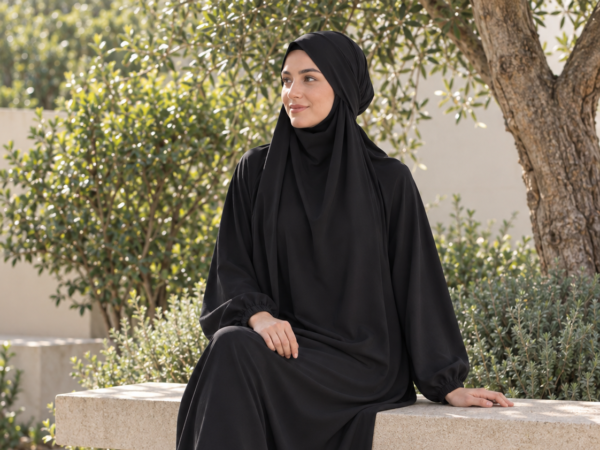


Different ways to wear the hijab
There are several ways to wear the hijab: classic style, turban, in jersey, pinless, or for special occasions. Each method adapts to your preferences and to your face shape.
Changing styles is the easiest way to vary your looks depending on your mood or the event. Some techniques are quick, others are more elaborate for important moments. Here is an overview of the best-known styles, with a few tips to adapt them to your body type.
Varying styles also means playing with colors, fabrics, and even accessories. A turban for a modern touch, a layered hijab for a polished effect, or a luxurious fabric for big occasions. What matters is choosing what feels like you and stays comfortable all day long.
Turban style (bulleted steps)
- Place the scarf at the back of your head, with both ends even.
- Cross the two ends over your forehead.
- Bring each end back and tie them at the base of your neck.
- Tuck the ends under the turban for a neat finish.
The turban is the practical and trendy style. It frees the neck, highlights the face, and can be done in no time. For a chicer touch, add a brooch on the side or choose a patterned fabric. The turban suits everyone, whether you have short or long hair, as long as everything is securely fixed underneath.
Hijab in liquid jersey (quick method)
Liquid jersey is stretchy and stays in place without pins. Place it on your head, adjust it around your face, cross the ends behind your neck, and bring them over your shoulders. No accessories are needed.
It’s the ultra-quick solution for mornings when every minute counts. The fabric hugs the face without wrinkles for a neat, natural look. You can leave one end over your shoulder or wrap it around your neck for a change. As a bonus: liquid jersey comes in every color, so you can have fun with your outfits.
Adapting the hijab to your face shape
- Round face: Opt for a hijab that elongates, with little volume on the sides.
- Oval face: All styles work, so play with textures.
- Square face: Favor a soft drape around the chin.
- Long face: Add volume on the sides to balance.
Adapting the hijab to your face is really the detail that changes everything. To elongate a round face, avoid volume on the cheeks. Oval faces can pull off anything: have fun! To soften a square face, go for flowing fabrics and rounded drapes near the chin. If your face is long, add a little volume on the sides or choose a thicker fabric. One simple adjustment and everything is balanced.
Ideas for special occasions (weddings, celebrations)
For a wedding or a celebration, choose a satin or embellished fabric, add decorative accessories (brooches, head jewelry), and work on the drape for a sophisticated effect. Turban or layered hijab styles are very popular.
To shine at an event, match the color of the hijab to your outfit or accessories. Brooches, pearls, tiaras: anything goes for personalizing. Layer fabrics to play with volume and contrast. For a complex drape or delicate accessories, a friend or a hairdresser can lend a hand. A well-styled hijab is the cherry on top of your party outfit.

Practical tips and mistakes to avoid
For a comfortable hijab that stays in place all day, it is important to avoid fabrics that are too slippery, adjust the pins properly, and choose a style suited to your daily routine. A few tips can help you avoid common mistakes.
A well-placed hijab is one you almost forget you’re wearing. No need to readjust it with every movement. Take the time to choose your accessories and the right fabric for the day’s activity: a turban for sports, a classic style for work, a sophisticated look for an evening out. Also keep an eye on the condition of your accessories, to avoid a bent pin or a worn-out cap.
Anti-slip and comfort tips
- Favor fabrics with a matte texture.
- Use an hijab underscarf or a non-slip headband.
- Avoid tightening too much under the chin to stay comfortable.
For more comfort, choose a cotton hijab underscarf, especially when it’s hot. Breathable fabrics are the basics for not getting too warm under the hijab. A non-slip headband under the cap, and everything stays in place. Adjust the tension under the chin: a slightly loose hijab is better than one that leaves marks.
Common mistakes to avoid
- Choosing a fabric that is too slippery or too thick.
- Positioning the hijab underscarf poorly, which creates bumps.
- Pinning too tightly, which can be uncomfortable or damage the fabric.
To avoid hassle, test your fabrics and accessories at home. If it slips, change the material or add a headband. Check that the hijab underscarf covers all your hair and doesn’t wrinkle. Handle pins gently; they should hold without hurting you or damaging the fabric. Taking a few extra minutes guarantees a hijab that stays beautiful all day.
Quick care tips
- Wash the hijab by hand or on a delicate cycle.
- Dry flat to preserve its shape.
- Iron on low heat if needed.
Gentle care is the key to keeping your hijabs looking beautiful for longer. Wash them by hand or on the delicate setting, especially thin fabrics. Dry them flat to keep them from losing their shape. If you iron, do it on low heat, and for delicate fabrics, place a thin cloth between the iron and the hijab. A well-cared-for hijab keeps its softness and colors, even after several washes.

Conclusion
Putting on a hijab becomes simple with good preparation and clear steps. By choosing the right fabric, the right accessories, and the method that suits you, you’ll get a comfortable and elegant result. Don’t hesitate to try different styles to find the one that flatters you most in everyday life.
FAQ
Simply choose a non-slip fabric such as jersey and adjust the hijab snugly around your face, crossing the ends behind your neck. A hijab underscarf can also help hold everything in place without pins.
To keep the hijab securely in place, opt for a well-fitted hijab underscarf and, if needed, a non-slip headband. It’s the ideal method for moving around stress-free and avoiding snags in the fabric.
You can wear the hijab in a classic style, as a turban, in jersey, without pins, or in a special style for weddings. Each method adapts to your needs and your style.
Feel free to try several styles to find your favorite. The classic for everyday, the turban for a modern touch, and sophisticated styles for big occasions. To each their own look, depending on your mood.
Use an hijab underscarf, flat pins or discreet clips, and choose a fabric that doesn’t slip. Fit the hijab snugly around the face for optimal hold.
To keep the hijab in place, check from time to time that nothing has shifted, especially after taking off a coat or a bag. A pocket mirror can be very handy for quick touch-ups.
The essential accessories are the hijab underscarf, safety pins or clips, and sometimes non-slip headbands. They make styling easier and ensure a secure hold.
Depending on your hair and the fabric, add a non-slip headband or opt for flat pins. What matters most is choosing what makes you feel comfortable and what suits your hijab style.
For a round face, favor a hijab that elongates the silhouette. For a long face, opt for a style with more volume on the sides. Every face shape can be flattered with a few simple adjustments.
Look at yourself in the mirror and try different drapes. Sometimes, simply moving the fabric a little is enough to change the whole harmony of the face. Trust your instincts.
Leave a Reply