


Wearing trousers in Islam is not formally prohibited, but it is a topic that divides opinion, especially when it comes to women. It all revolves around modesty, the cut of the garment and the clear distinction between the genders. We walk you through the different opinions point by point, the conditions to respect, and what you really need to remember.
In brief
- Trousers are not prohibited in Islam, but wearing them depends on specific conditions, especially for women.
- Scholars differ: some forbid them for women, others allow them under conditions (looseness, modesty).
- For men, trousers are permitted as long as they are not too tight or feminine, and ideally above the ankles.
- The general rules: modesty, looseness, no transparency, distinction between men and women.
The ruling on trousers for women in Islam
Wearing trousers as a Muslim woman is debated: some scholars forbid it, while others allow it if strict conditions are met (looseness, no transparency, modesty). Most agree on the importance of not dressing like men and of respecting modesty.
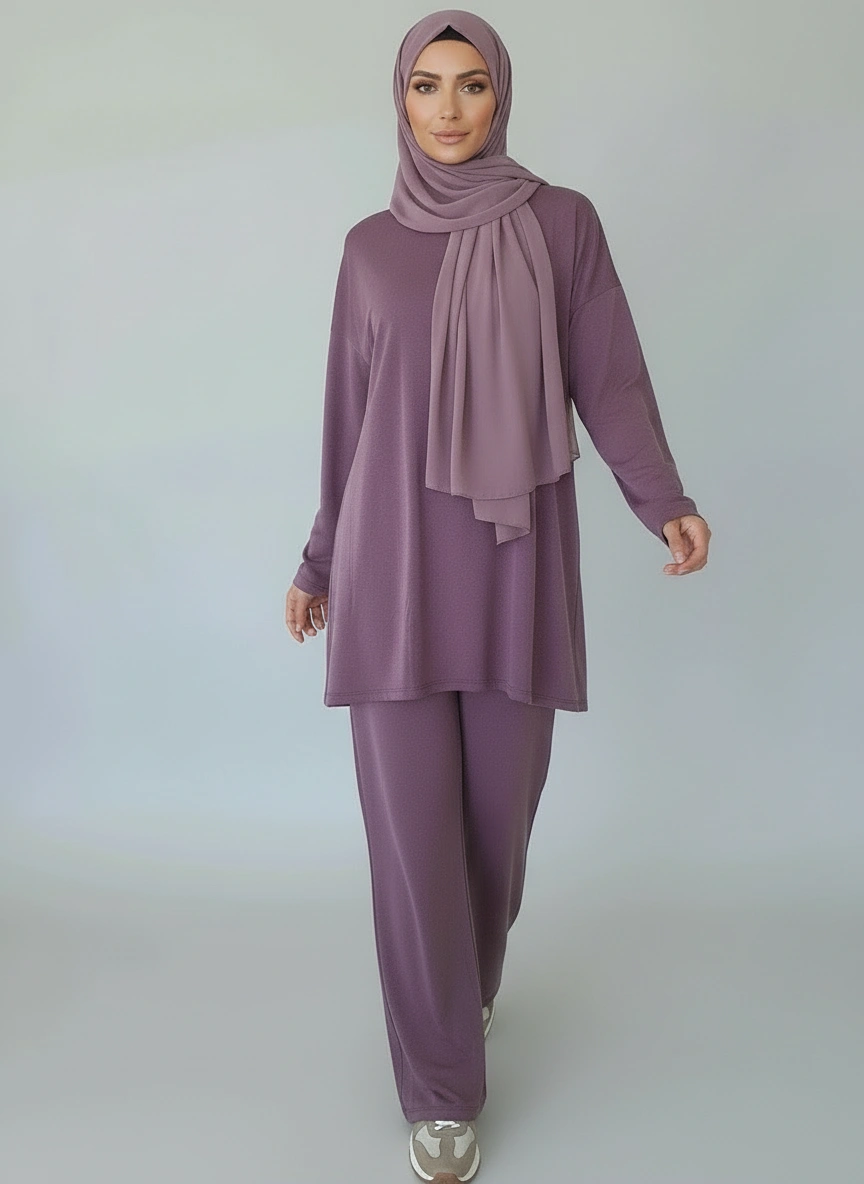
In practice, it all depends on the context and the religious opinions followed. For some authorities, trousers are too close to men’s clothing or do not cover the female figure enough, and are therefore forbidden. Others allow them provided they are loose, opaque and worn under a long tunic. The central idea remains modesty and a clear distinction between men and women.
Also worth noting: local culture plays an important role. In some countries, seeing a woman in trousers shocks no one; elsewhere, it can spark debate. Religious opinions sometimes adapt to these social differences. To avoid any misunderstanding, it is advisable to seek advice from trusted people or religious authorities around you. Practices vary depending on the schools of thought and the context, so it is best to stay attentive to your surroundings.
Scholars’ opinions on trousers for women
Muslim scholars do not all share the same opinion on women wearing trousers. Some forbid it entirely, while others allow it under strict conditions.
- Strict prohibition: for some, trousers are considered men’s clothing, especially if worn alone or if they are tight-fitting.
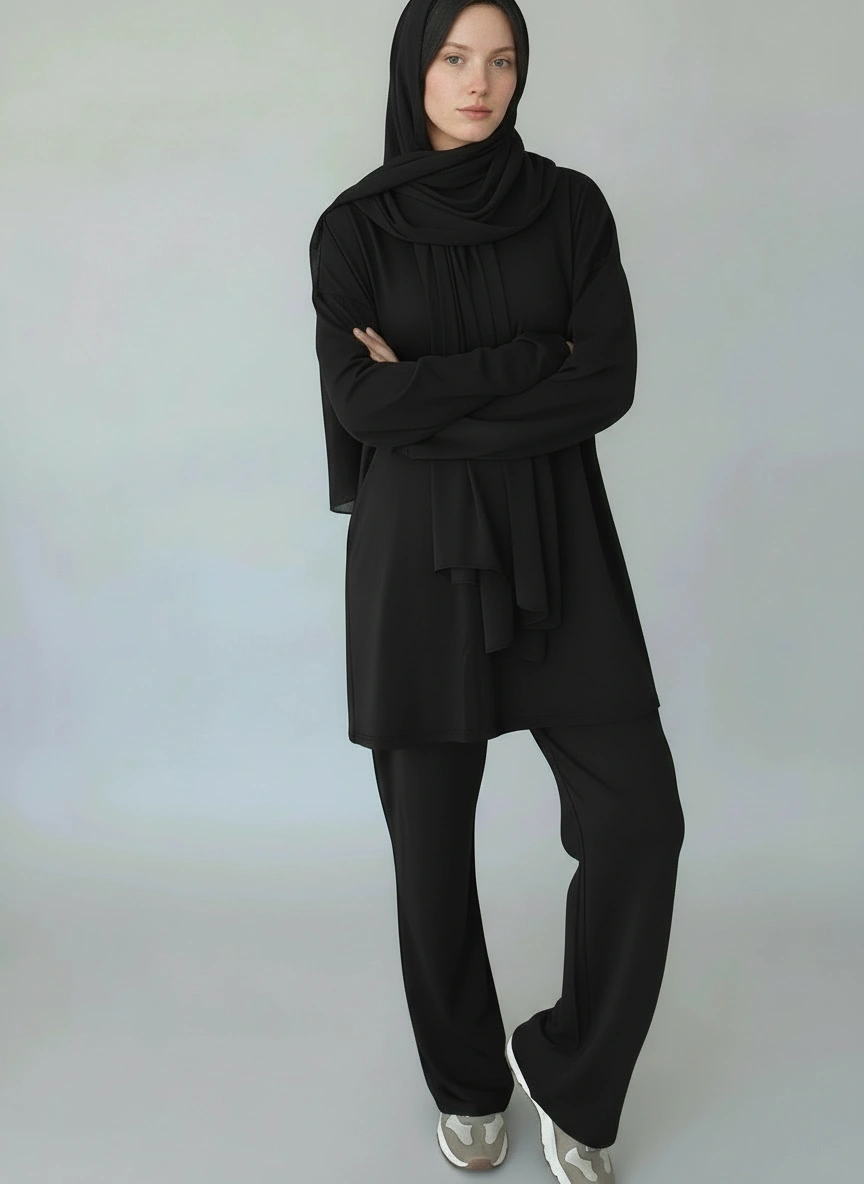
- Conditional permission: others accept trousers if they are loose, non-transparent, and worn under a long tunic that covers at least down to the knees.
- Intermediate opinions: some tolerate trousers only in the privacy of the family, but not in public.
Comparison table of scholars’ opinions
| Position | Main argument | Conditions mentioned |
|---|---|---|
| Total prohibition | Resembling men, lack of modesty | None |
| Permission | Loose, non-transparent trousers, under a long tunic | Looseness, no transparency |
| Private tolerance | Accepted with family or among women | Not in public, private setting |
This diversity of viewpoints shows that the question is not settled. Scholars in favor stress respect for modesty and a clearly feminine cut. Those who oppose it fear the blurring of genders or the abandonment of traditional landmarks. The choice therefore depends on the social context, the community and each woman’s personal situation. Today, there are in fact very loose trousers and long tunics that make this compromise easier.
The conditions for trousers to be permitted
Trousers can be permitted for a Muslim woman if several conditions are met: they must be loose, not tight-fitting, not transparent, and ideally worn under a long tunic that covers the figure.
Here are the main conditions mentioned by scholars:
- The trousers must be wide enough not to outline the figure.
- They must not be transparent.
- They must be completed by a covering garment (tunic, abaya) reaching at least down to the knees.
- They must not resemble men’s trousers (neither in cut nor in style).
- They must not draw attention or go against Islamic modesty.
In practical terms, it all comes down to the choice of fabric, cut and layering. Wide-leg trousers in a thick fabric, paired with a long, covering tunic, generally tick all the boxes. It’s best to avoid flashy colors or eye-catching patterns. These points, moreover, don’t apply only to trousers, but to the whole women’s outfit in Islam.
-
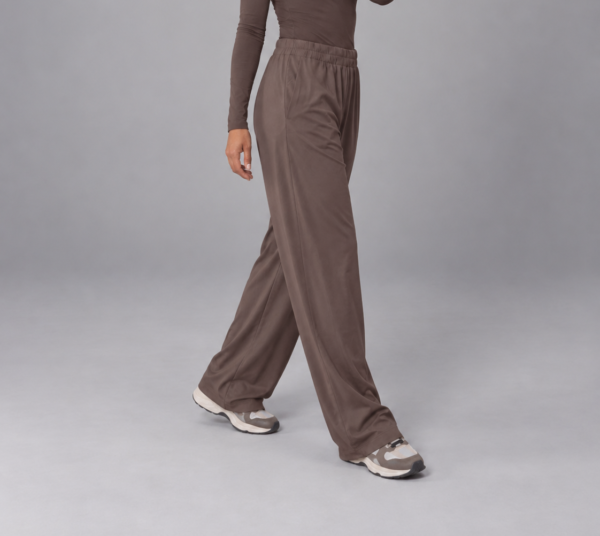
Sports Trousers - Lightweight, Breathable and Anti-UV - Brown
£3.12Select options This product has multiple variants. The options may be chosen on the product page -
Sold out
Sports Trousers - Lightweight, Breathable and Anti-UV - Brown
£25.80Select options This product has multiple variants. The options may be chosen on the product page -
Sold out
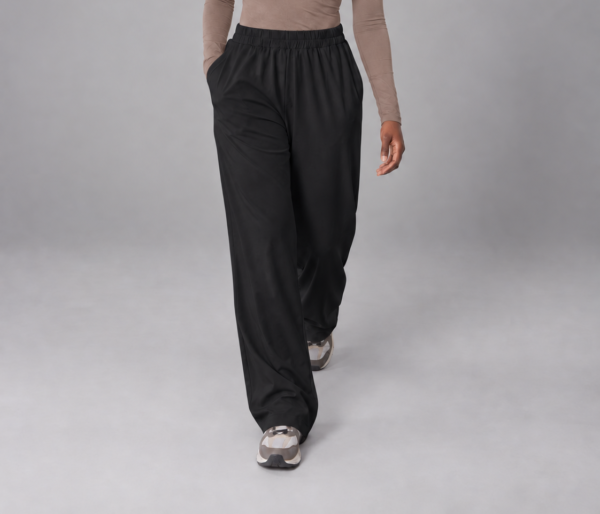
Sports Trousers - Lightweight, Breathable and Anti-UV - Black
£25.80Select options This product has multiple variants. The options may be chosen on the product page

Why do some forbid trousers for women?
Some scholars forbid trousers for women because they consider that they look too much like men’s clothing or do not guarantee modesty, especially if they are tight-fitting or transparent.
The arguments put forward are mainly:
- The risk of being mistaken for men’s attire, which is explicitly discouraged in the Islamic tradition.
- The difficulty of preserving modesty if the trousers hug the body’s shape or let the skin show through.
- Even when loose, in certain contexts, trousers can still be perceived as masculine.
There is also the desire to maintain a clear clothing identity between the genders, considered essential in many religious opinions. Some fear that trousers make outfits that are less in line with modesty seem ordinary, or encourage a fashion that moves away from traditional values. Finally, in societies where women’s trousers remain rare, they can cause misunderstandings. In short, every context has its sensitivities, but the foundation remains: modesty and dignity above all.
Wearing trousers as a Muslim man
For men, wearing trousers is not forbidden in Islam, but certain rules must be respected: they should not be too tight, nor resemble women’s clothing, and ideally should not go past the ankles according to some opinions.
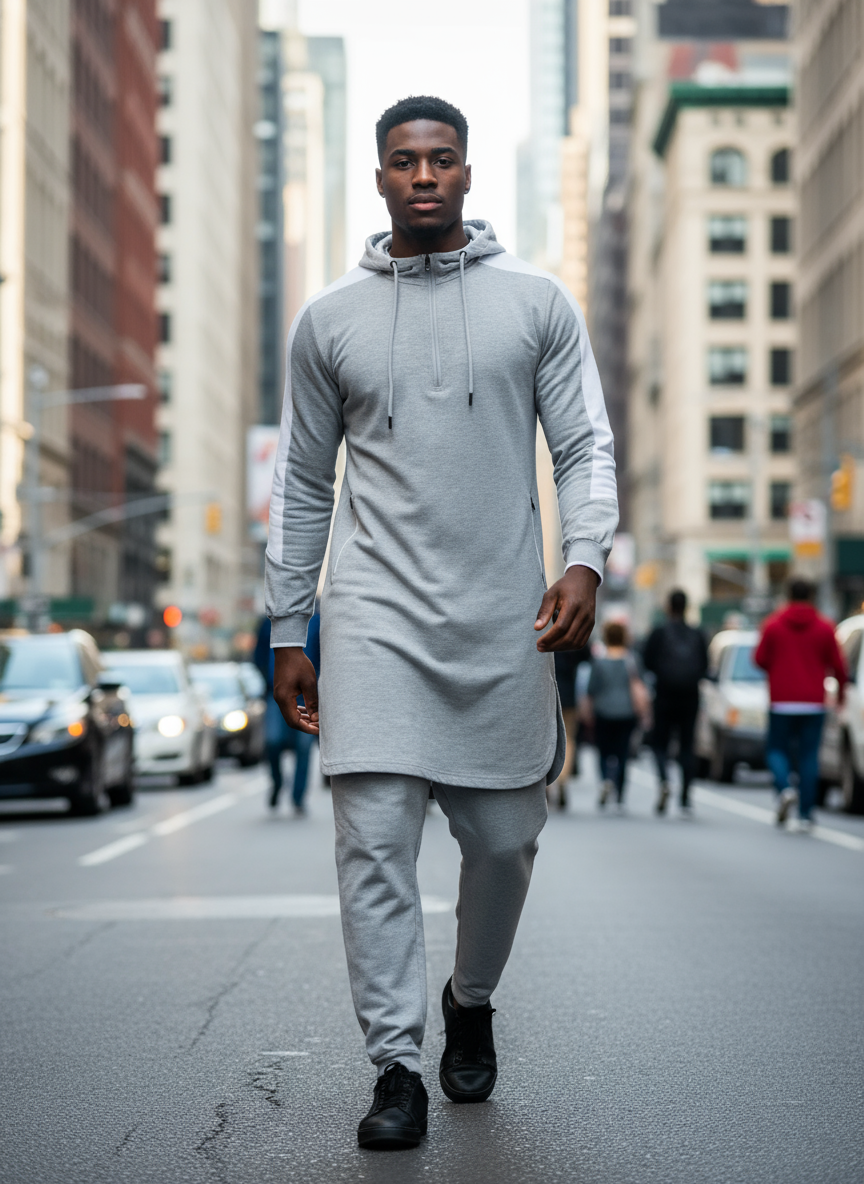
For men, trousers are generally accepted, as long as they respect modesty and the distinction between the genders. They should be loose enough not to cling to the body, not resemble women’s clothing, and, according to certain hadiths, not fall below the ankle. The goal: to preserve modesty and masculine identity.
In everyday life, this means it’s better to favor straight or loose cuts, and to avoid very fitted trousers or overly feminine patterns. It’s also better to opt for understated colors and opaque fabrics, and to avoid eccentricities. Some scholars prefer trousers that sit above the ankle, but this point varies depending on the school of thought. The golden rule remains simplicity, far from any extravagance.
Dress rules for men
A Muslim man may wear trousers if these conditions are met:
- Trousers that are not clingy or too tight.
- No resemblance to women’s clothing.
- Covering the area between the navel and the knees (awra).
- No ostentatious signs or patterns contrary to Islamic ethics.
These rules ensure modesty and the distinction between the genders. The material matters too: fabrics that are too thin or too stretchy should be avoided. Classic styles without embellishments are preferred. It is also worth checking that the trousers don’t reveal skin when sitting or bending over. Finally, simplicity remains the key: understated trousers, without flashy logos or provocative messages, fit the Islamic spirit better. Humor in your outfit? Yes, as long as it goes unnoticed!
Trousers below the ankle: what does Islam say?
Wearing trousers below the ankle is discouraged for men according to certain hadiths, but it is not strictly forbidden by all scholars.
Prophetic texts encourage not letting clothing hang below the ankle, in order to remain humble. Other scholars add nuance, saying that it is mainly the intention of pride that matters. In practice, many men wear trousers that cover the ankle without seeing any fault in it, but the recommendation exists.
Conditions for men
- Trousers that are not clingy
- No resemblance to women’s clothing
- Covering from the navel to the knees
- Ideally above the ankle
- No patterns or signs contrary to Islamic ethics
As a precaution, it’s better to choose trousers that don’t go past the ankle, especially for prayers or religious occasions. The essential thing is to wear your trousers without arrogance, in a spirit of simplicity. To sum up: it’s better to aim for discretion rather than risk stepping on your hem!
General dress rules in Islam
Islam sets out clear rules for dress: modesty, looseness, opacity, and a clear distinction between men’s and women’s clothing. These principles apply to all garments, including trousers.
The goal is simple: to preserve modesty, avoid provocation, and mark the difference between men and women. Clothing must properly cover the body, must not be transparent or clingy, and must not imitate the style of the opposite sex. This applies to trousers as much as to other pieces.
Simplicity is also called for: understated colors, discreet patterns, no extravagant accessories. Clothing should allow you to be comfortable while staying within the limits set by religion. These rules apply both in public and in private, even if family intimacy sometimes allows a little more flexibility. What matters is everyone’s dignity and integrity, without confusion between the genders.
The criteria of modesty and looseness
For a garment to comply with Islamic ethics, it must:
- Cover the parts of the body considered intimate (awra).
- Be loose enough not to outline the body’s shape.
- Be opaque, meaning not transparent.
- Not draw excessive attention.
These criteria apply to all garments: trousers, skirts, tunics… It’s better to choose thick fabrics, wide cuts and discreet colors to avoid any ambiguity. Modesty doesn’t depend only on the amount of fabric, but also on how the garment is worn and perceived. For example, a loose but very flashy garment can still attract looks. So favor discretion and simplicity, while staying elegant. Yes, modesty and style can go hand in hand!
Resemblance between men and women in dress
Islam stresses the importance of the distinction between men’s and women’s clothing. Imitating the style of the opposite sex is discouraged, whether through cut, color or patterns.
General criteria for Islamic dress
- Modesty: properly cover the body
- Looseness: do not cling to the body’s shape
- Opaque: no transparency
- Distinction: no resemblance between men and women
- Simplicity: avoid ostentation
This differentiation aims to preserve each person’s identity and to avoid any confusion in society. Clothing should clearly indicate the person’s gender. This concerns trousers, but also all other garments. So choose colors, patterns and accessories with these principles in mind. Trends that blur the line between masculine and feminine should be avoided. Finally, always aim for discretion: a clean, appropriate and unambiguous outfit is better than a look that is too showy.
Frequently asked questions about trousers in Islam
Many practical questions come up around wearing trousers: for prayer, within the family, below the ankle… Here are clear, quick answers for each case.
Can a woman pray in trousers?
Yes, a woman can pray in trousers if they are loose and not transparent. The essential thing is that the outfit properly covers the body and respects the modesty required during prayer.
A long tunic or an abaya is recommended, especially if the prayer takes place in front of other people. This avoids any discomfort and ensures that the rules of modesty are respected. If you have doubts about the cut or fabric, it’s better to choose a more covering outfit. What matters is to present yourself before God with dignity.
Why are trousers forbidden for women according to some opinions?
Some scholars forbid them because they consider that trousers resemble men’s clothing too closely or that they do not respect modesty, especially if they are clingy or transparent.
This view aims to preserve the distinction between the genders and avoid any ambiguity in appearance. The scholars who defend this position emphasize modesty and feminine specificity. They also fear that trousers may encourage outfits that are less in keeping with Islamic ethics or blur the line between men and women. However, this remains a minority opinion in some contexts, as other scholars allow trousers under strict conditions.
Is it permissible to wear trousers below the ankle?
For men, wearing trousers below the ankle is discouraged according to certain hadiths, but not strictly forbidden. For women, length is not an issue as long as modesty is respected.
For men, this recommendation aims at humility and the absence of pride. Most scholars agree that wearing trousers that cover the ankle is not a sin, as long as modesty is preserved and there is no arrogant intention. For women, the essential point is covering the body, with no requirement regarding length in relation to the ankle.
What are the recommended alternatives?
The recommended alternatives are loose, non-transparent garments, such as long skirts, abayas or wide-leg trousers worn under a covering tunic.
These choices allow you to respect modesty while staying comfortable. Long skirts and abayas cover the body well without revealing the shape. Wide-leg trousers, paired with long tunics, are also a modern and practical option. Opt for opaque fabrics, loose cuts and understated colors to stay within Islamic dress ethics.
Conclusion
Trousers are not absolutely forbidden in Islam, but wearing them is subject to strict conditions, especially for women. Scholars’ opinions vary, but modesty, looseness and the distinction between genders remain the essential criteria. For men, trousers are permitted if they respect modesty and simplicity. When in doubt, choosing loose, covering garments remains the safest path.
FAQ
Yes, a woman can pray in trousers if they are loose-fitting and not transparent. What matters is that the outfit properly covers the body and respects the modesty required during prayer.
Some scholars forbid them because they consider that trousers too closely resemble men’s clothing or that they do not respect modesty, especially if they are tight-fitting or transparent.
For men, wearing trousers below the ankle is discouraged according to some hadiths, but not strictly forbidden. For women, length is not an issue as long as modesty is observed.
The recommended alternatives are loose, non-transparent clothing, such as long skirts, abayas or wide-leg trousers worn under a covering tunic.
Leave a Reply