


-
Bestseller-24 %
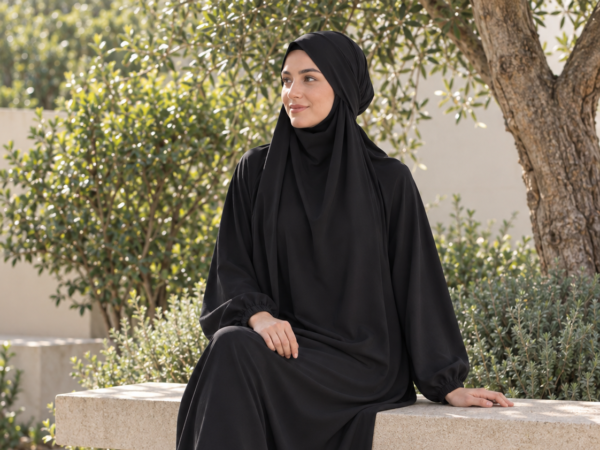
Jilbab with hood and long skirt
Original price was: £41.28.£30.96Current price is: £30.96.Select options This product has multiple variants. The options may be chosen on the product page -
-19 %

Jilbab Premium for Women – Jersey Set
Original price was: £42.36.£34.08Current price is: £34.08.Select options This product has multiple variants. The options may be chosen on the product page -
Sold out
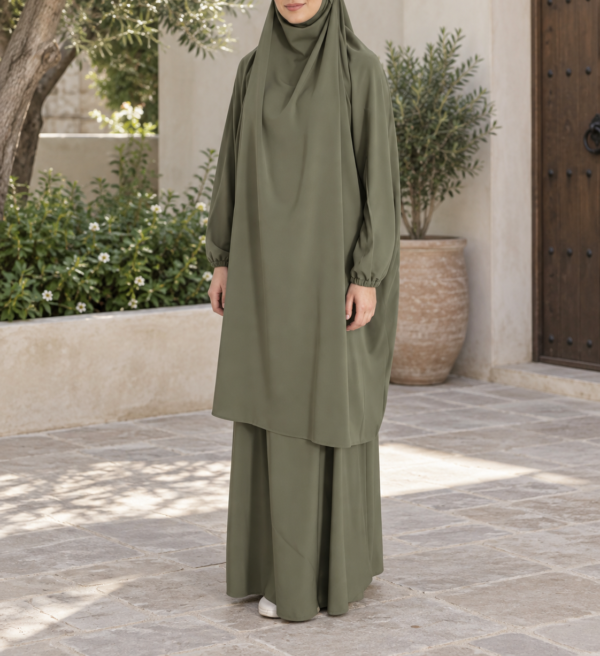
Jilbab with hood & long skirt
Original price was: £41.28.£30.96Current price is: £30.96.Read more

The jilbab for women truly has a place of honor in today’s modest fashion. It blends tradition, comfort and style, while meeting very concrete needs, both spiritual and practical. Before you get started, it’s best to understand this garment, its different styles and the points to check in order to choose well. This guide walks you through it, step by step.
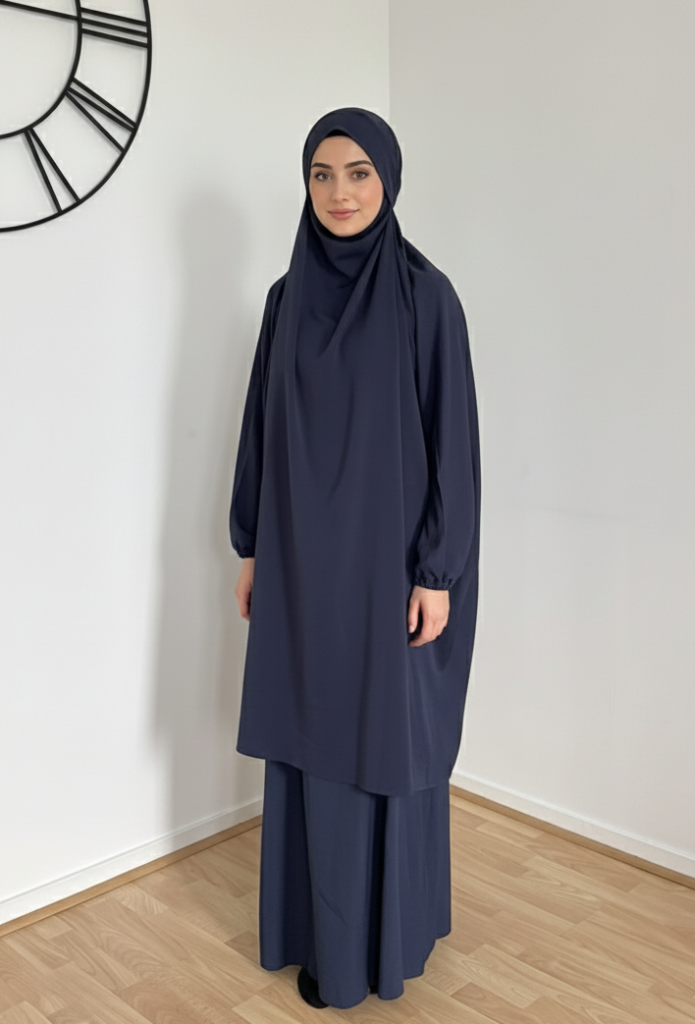
What is a jilbab for women?
Definition and origin of the jilbab
The jilbab is a loose garment that covers a woman’s body, except the face and hands, in accordance with the clothing guidelines of Islam. It appears in religious texts, with a clear purpose: to preserve modesty and dignity. Originally, it comes from the Middle East and North Africa, where it became a staple of modest dress. Today, it adapts to many different contexts, whether climate or culture, but it always keeps the same mission: to offer discreet, elegant and protective coverage. What makes it unique? Its very loose cut, which doesn’t cling, and its ability to adapt to all kinds of daily lives.
Differences between jilbab, abaya, hijab and khimar
There are several garments for a modest outfit, each with its own specifics:
- Jilbab: covers the whole body, from head to toe, often in one or two pieces, usually with an integrated veil.
- Abaya: a long, loose dress worn over clothes, open or closed, but you need to add a hijab for the head.
- Hijab: a simple scarf covering hair and neck, but leaves the rest of the body visible.
- Khimar: a cape covering the head, neck and sometimes the shoulders, but ending at chest level.
The jilbab stands out for its very loose cut and its ultra-covering nature, whereas the abaya or the hijab have more targeted roles. For a clearer picture, here is a summary table:
| Garment | Area covered | Number of pieces | Main use |
|---|---|---|---|
| Jilbab | Head to feet | 1 or 2 | Full coverage |
| Abaya | Shoulders to feet | 1 | Dress worn over clothes |
| Hijab | Hair and neck | 1 | Scarf |
| Khimar | Head, neck, shoulders | 1 | Covering cape |

The different models of jilbab for women
1-piece jilbab: advantages and uses
The 1-piece jilbab looks like a large, loose dress, often with an integrated veil or hood. This model is popular for its simplicity: you put it on in a single motion, without having to combine several items. It’s super practical for women who don’t have time to waste in the morning or who want an easy outfit for everyday wear. The strong points:
- Ultra-quick to put on, perfect for getting around or for prayer.
- No need to layer, so no hassle with adjustments.
- Maximum comfort thanks to a loose cut that lets air circulate.
This model suits beginners and regular wearers alike. Small bonus: you can’t forget a piece in the morning, everything is already there.
2-piece jilbab and models with sarouel pants
The 2-piece jilbab consists of a loose top (with or without a hood) and a skirt or sarouel pants. This system offers quite a lot of freedom, including:
- Easier adjustment to your body shape.
- Enhanced freedom of movement, great for active days.
- The possibility of playing with colors and styles.
The jilbab sarouel stands out thanks to its loose trousers, very practical for walking, driving or handling daily tasks. It is very popular with active or sporty women, because it combines modesty and practicality. This model also adapts to the seasons: a light top for summer, a thicker skirt or sarouel for winter.
Modern, classic and luxury jilbab: how to choose?
To choose, it all depends on what you’re looking for:
- Classic jilbab: simple cut, sober colors (black, navy blue, gray), light and discreet fabric. Ideal for everyday wear or if you like simplicity.
- Modern jilbab: varied colors, small patterns, innovative materials (microfiber, stretch). You often find practical details such as elasticated sleeves or pockets.
- Luxury jilbab: quality fabrics, very careful finishing, sometimes beautiful embroidery or ornaments. Perfect for special occasions or when you love elegance.
To make your choice, ask yourself:
- Do I want a discreet garment or one that stands out?
- Will I wear it every day or just for occasions?
- Are comfort and care essential for me?
A little wink: the colors of the modern jilbab may surprise you, but the spirit of modesty is still very much there.
Why wear a jilbab?
Religious and cultural significance
Wearing the jilbab is not just a question of clothing. It is first and foremost a spiritual path and a statement of identity. For many Muslim women, it is a way to follow the rules of modest dress, but also to express a connection to a tradition and to values that are passed down. The jilbab allows you to affirm your cultural belonging while remaining discreet in public spaces. Sometimes it is also a personal and thoughtful choice, far from passing trends, to affirm your faith and your commitment in everyday life.
Modesty, comfort and practicality in everyday life
Beyond the religious dimension, the jilbab also offers real comfort in everyday life. Its loose cut lets you move freely, whether you are walking, working or running the household. It shields you from prying eyes while remaining practical for daily activities. The fabrics are often lightweight and breathable, so you don’t feel stifled, even in the middle of summer. There are also lined models for winter, or thinner ones for warmer days. Another advantage is that it is easy to put on and to care for: a true ally for active women. In the end, it is a garment that combines modesty, ease and practicality… and which, let’s admit it, sometimes simplifies the famous “what do I wear today?”
How to choose your jilbab for women?
Size, cut and body shape
Finding the right jilbab size is the foundation for feeling comfortable and elegant. A jilbab that is too short will not provide enough coverage, and one that is too long may get in the way when walking. Brands often offer several sizes, either by letter (S, M, L, XL) or by height in centimeters (1m60, 1m70…). To choose well:
- Measure your height from the top of your head to your feet.
- Check the length indicated in the brand’s size guide.
- Choose a cut that is not tight on the chest or the hips.
- Make sure the sleeves fully cover the wrists.
A size conversion chart can help you find the right model for your body shape. Also take a look at customer reviews to see whether it runs large or small.
Fabrics, colors and finishes
The fabric is what determines the comfort and longevity of a jilbab. For spring, fall and summer, microfiber, crepe or cotton are perfect: lightweight and breathable. In winter, think thicker or lined fabrics instead. As for colors, it all depends on what you like:
- Understated tones (black, blue, gray) to stay discreet.
- Pastel or bright colors for a more modern look.
The finishes matter too: sturdy stitching, discreet buttons, practical pockets, or embroidery on the luxury versions. A well-finished jilbab will hold up better wash after wash and keep a beautiful look.
Tips for caring for your jilbab
To keep a jilbab in good condition for a long time, a few simple steps are enough:
- Wash at 30°C, by hand or in the machine on a delicate cycle.
- Use a mild detergent, which protects the colors and the fabric.
- Avoid the dryer, which can damage the shape or dull the fabrics.
- Let it air dry, ideally on a hanger to prevent wrinkles.
- A quick pass with a warm iron (medium temperature), and you’re done.
With these simple steps, your jilbab will keep its shape and its colors, wash after wash. And when it comes to comfort, nothing changes!
Where to buy a quality women’s jilbab?
Specialized online stores
Today there are many online stores dedicated to Islamic women’s clothing. You will find a wide choice of jilbabs: 1-piece and 2-piece models, with harem pants, in every size and color. Shopping online means:
- Enjoying a much wider selection than in a regular store.
- Being able to easily compare models, prices and customer reviews.
- Accessing detailed product pages, with photos, size guides and information on the fabrics.
Some stores also offer personalized advice or filters to refine your search. A tip: check the site’s reputation before placing an order, to avoid unpleasant surprises.
-
Bestseller-24 %
Jilbab with hood and long skirt
Original price was: £41.28.£30.96Current price is: £30.96.Select options This product has multiple variants. The options may be chosen on the product page -
-19 %
Jilbab Premium for Women – Jersey Set
Original price was: £42.36.£34.08Current price is: £34.08.Select options This product has multiple variants. The options may be chosen on the product page -
Sold out
Jilbab with hood & long skirt
Original price was: £41.28.£30.96Current price is: £30.96.Read more
Criteria for buying with confidence (delivery, returns, customer reviews)
To buy a jilbab with peace of mind, keep an eye on these points:
- Delivery: look at the delivery times, any fees, and whether pickup point delivery is available.
- Returns: make sure the site offers exchanges or refunds in case of a sizing issue or a defect.
- Customer reviews: read other buyers’ feedback to get an idea of the quality and the service.
- Precise descriptions: favor sites that clearly detail sizes, fabrics and care instructions.
Don’t hesitate to read the site’s terms and conditions and to note the customer service contact details. One last tip: keep a record of your order, it can always come in handy.
Conclusion
The women’s jilbab is much more than a simple garment: it symbolizes modesty, respect and comfort. Between 1-piece and 2-piece models, classic or more contemporary styles, every woman can find the version that suits her. Taking the time to compare, to choose the right size and the right fabric is the key to a successful purchase and a pleasant experience every day. In short, the jilbab is the blend of tradition and modernity, for modest fashion without compromise.
FAQ about the women’s jilbab
Is the jilbab mandatory?
Whether the jilbab is obligatory depends on religious interpretations and schools of thought. For some, it is recommended as a modest garment, but there is no single rule. Each person remains free to make her own choices, according to her understanding of the texts and her situation.
What is the difference between the jilbab and the abaya?
The jilbab covers the body from head to toe, often in one or two pieces, with an integrated veil. The abaya is a long, loose dress, generally worn with a separate hijab for the head. As a result, the jilbab offers more complete coverage.
Can you wear the jilbab every day?
Yes, the jilbab is designed for everyday wear. It offers comfort, practicality and discretion, whether you are going out, working or studying. Its loose cut and suitable fabrics make it a real everyday ally.
What are the care tips for a jilbab?
Wash your jilbab at a low temperature, let it air dry and avoid the dryer. Gentle ironing is enough to keep a nice drape. These simple steps help preserve the quality and lifespan of the garment.
FAQ
Whether the jilbab is obligatory depends on religious interpretations and schools of thought. For some, it is recommended as a garment of modesty, but there is no single rule. Everyone remains free to make her own choices, according to her understanding of the texts and her situation.
The jilbab covers the body from head to toe, often in one or two pieces, with an integrated veil. The abaya is a long, loose-fitting dress, generally worn with a separate hijab for the head. The result: the jilbab offers more complete coverage.
Yes, the jilbab is designed for everyday wear. It provides comfort, practicality and discretion, whether you’re going out, working or studying. Its loose cut and suitable fabrics make it a real everyday ally.
Wash your jilbab at a low temperature, let it air dry, and avoid the dryer. Gentle ironing is enough to keep a nice drape. These simple steps help preserve the quality and lifespan of the garment.
Leave a Reply