


Getting ready for Umrah also means choosing the right clothing. Between what is expected religiously and the wish to be comfortable, it’s not always easy to know where to start. This guide will help you see things clearly: how to dress for Umrah as a woman, what to pack in your suitcase, which accessories not to forget, and how to leave with peace of mind, along with my own personal experience to give you concrete examples.
In short:
- The basic rules: cover the whole body except the face and hands, and choose loose, opaque clothing
- The ideal suitcase: one simple main outfit (abaya, jilbab or long dress), and as an alternative a loose top to pair with a skirt and a hijab/khimar. Add light, breathable hijabs and a thin legging to wear under the skirt or the jilbab – useful for certain activities such as riding a camel.
- Footwear: Crocs for everyday, sneakers for the climb to the Cave of Hira
- Accessories that are often forgotten: a backpack, sunglasses with UV protection
- Adapt your suitcase to the season (very hot summer, mild but not cold winter)
1. Dress code rules for women on Umrah
Religious requirements to respect
For Umrah, there are a few simple rules to follow regarding attire. You need to:
- Cover the whole body, except the face and hands
- Choose loose clothing that is not form-fitting
- Focus on opacity: nothing should be see-through, even in full sunlight
- Stay understated: no shiny fabrics, no rhinestones, no embroidery that catches the eye
The goal is to remain discreet and keep modesty, as religion recommends. There is no single required outfit: the most important thing is modesty. Forget fabrics that are too thin or too luxurious. When your outfit is simple and discreet, you can focus on what truly matters during this journey.
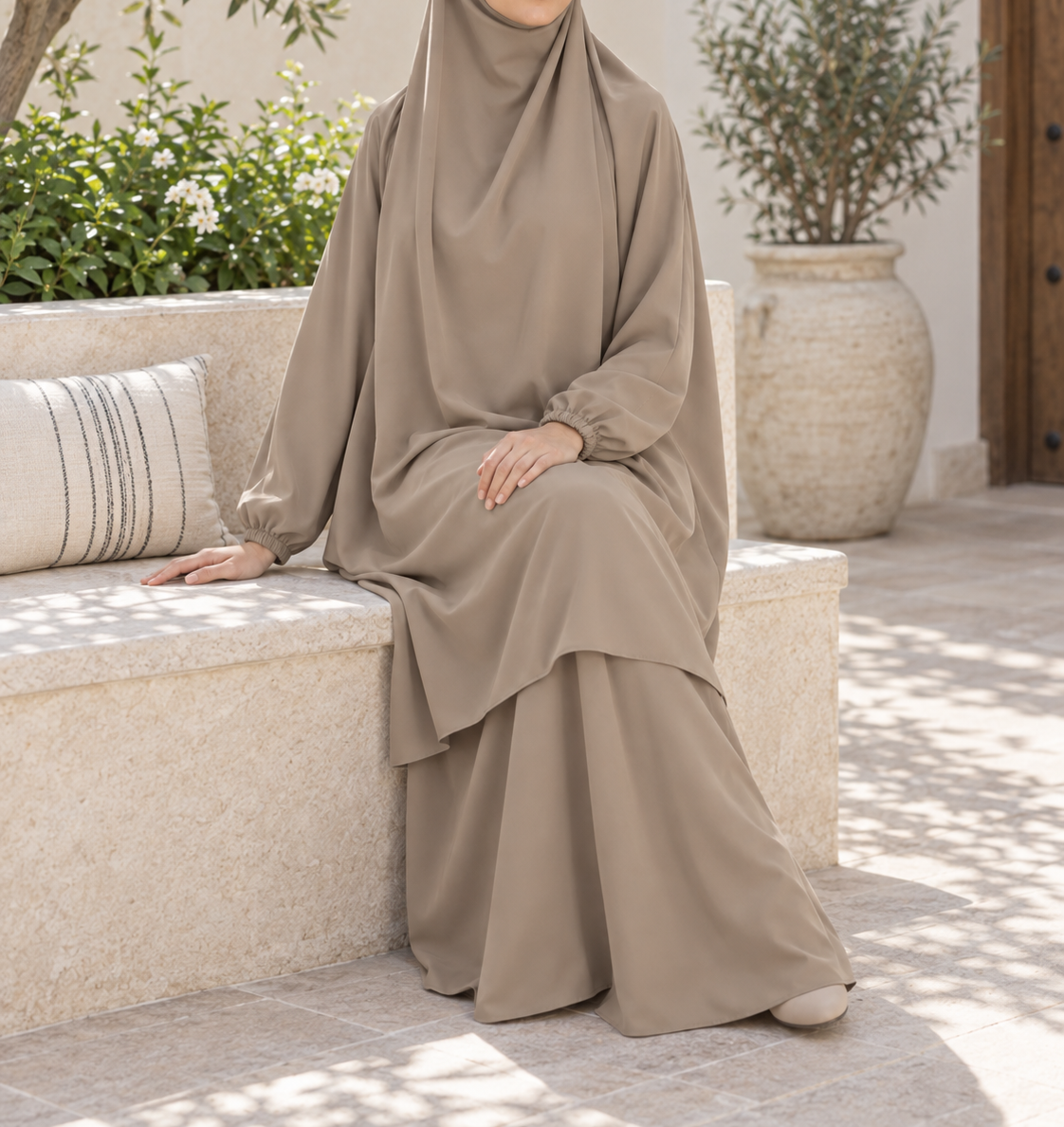
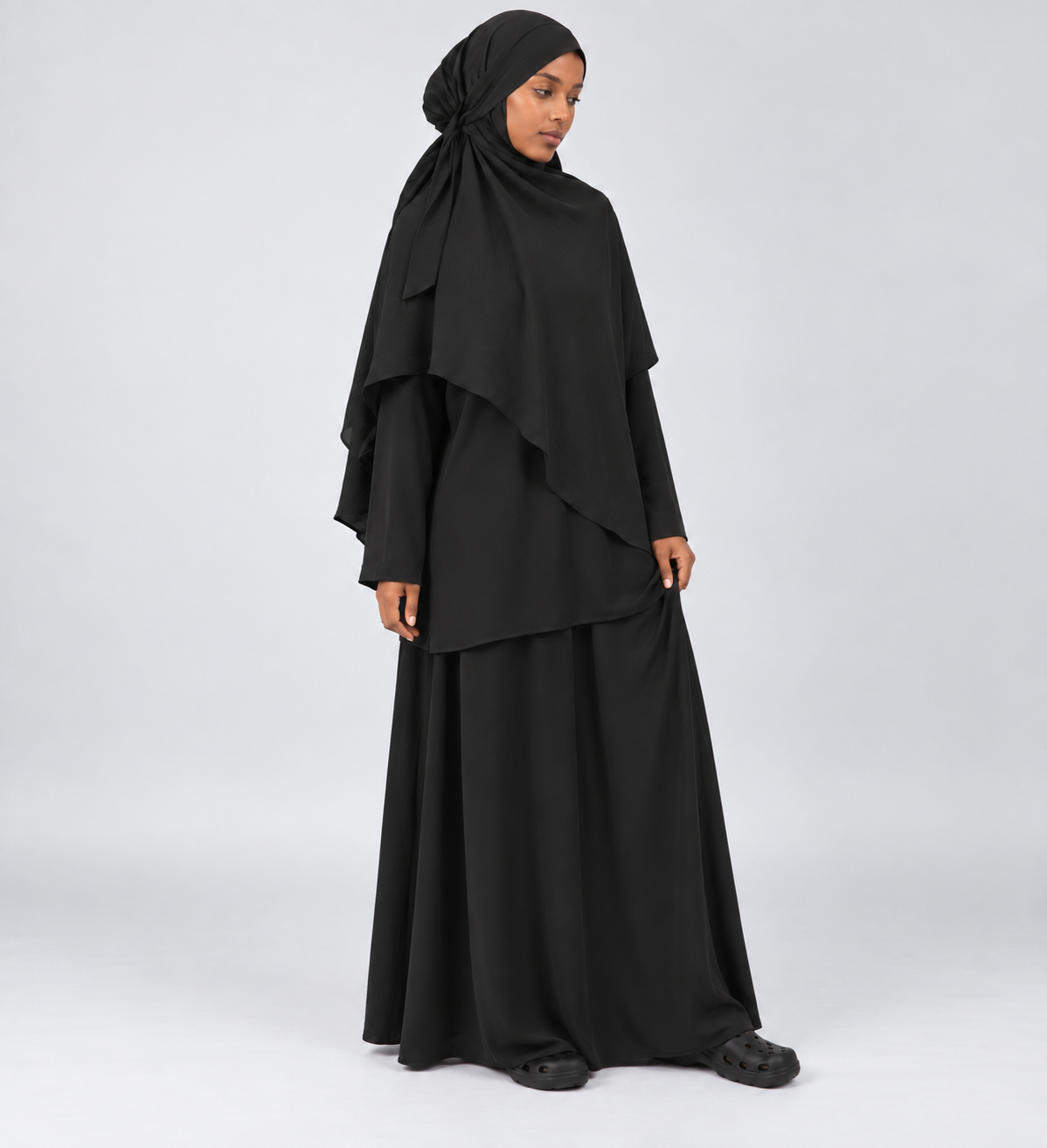
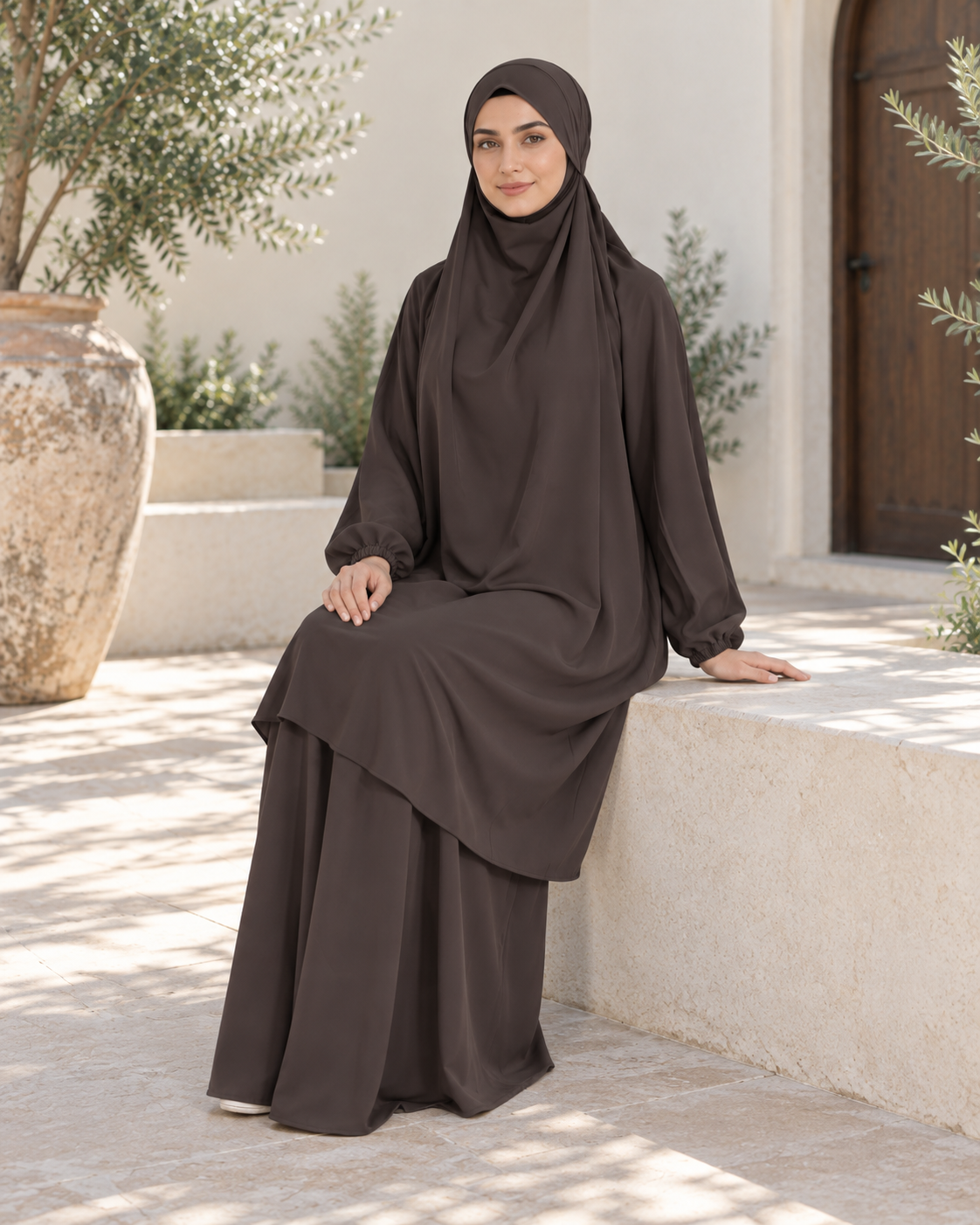
What sets women’s and men’s attire apart
When it comes to attire, the difference between women and men is striking. Men wear the ihram: two white, unstitched pieces, highly symbolic. For women, there is no required outfit: abaya, jilbab, long dress, loose top, long skirt… anything is possible as long as modesty is respected. Women keep their faces and hands uncovered, while men keep their heads uncovered. Colors and cut are up to you, provided they remain understated. Everyone adapts according to their habits, as long as discretion is there. In short: simplicity and discretion are the foundation, whatever outfit you choose.
2. Tips for choosing your Umrah outfit as a woman
Materials and fabrics to favor
The climate in Mecca is hot. Really hot. To avoid discomfort, natural materials are your allies:
- Cotton, linen, viscose: breathable, light, pleasant to wear
- Avoid anything synthetic (polyester, acrylic), as it traps heat and quickly sticks to the skin
But be careful: some technical blends designed for sports (polyester + viscose + spandex, for example) can actually work very well, even in intense heat – they are often knitted in an airy mesh and let air through better than a thick cotton. I wore a sports top in this kind of fabric during my Umrah, and honestly, it was perfect: the top was loose, and the air flowed through nicely.
(A quick note: I went in April, so neither in the height of summer nor in a very mild winter – more in between, like spring back home. That gives you an idea of the heat I’m talking about.)
In fact, I’m going back to Medina insha’Allah, and I definitely plan to buy this sports top again, but in taupe this time, to switch things up from black. - If you are really sensitive to heat, there are also technical anti-sweat fabrics, which are worth trying. But let’s be honest: when it’s 45°C, it’s 45°C. No fabric, however technical, will turn a scorching day into a cool one. The right choice of material helps, but it’s not a miracle solution – the best weapon is still simply to wear loose and light clothing, and to accept that at certain moments you will feel hot, perfect fabric or not.
A quick note for winter : no need to pack thick clothing, a simple light cardigan is more than enough when the evenings are a bit cooler. Before leaving, test your clothes: comfort, lightness, ability to release heat… that’s all that matters.
Cut, looseness and opacity
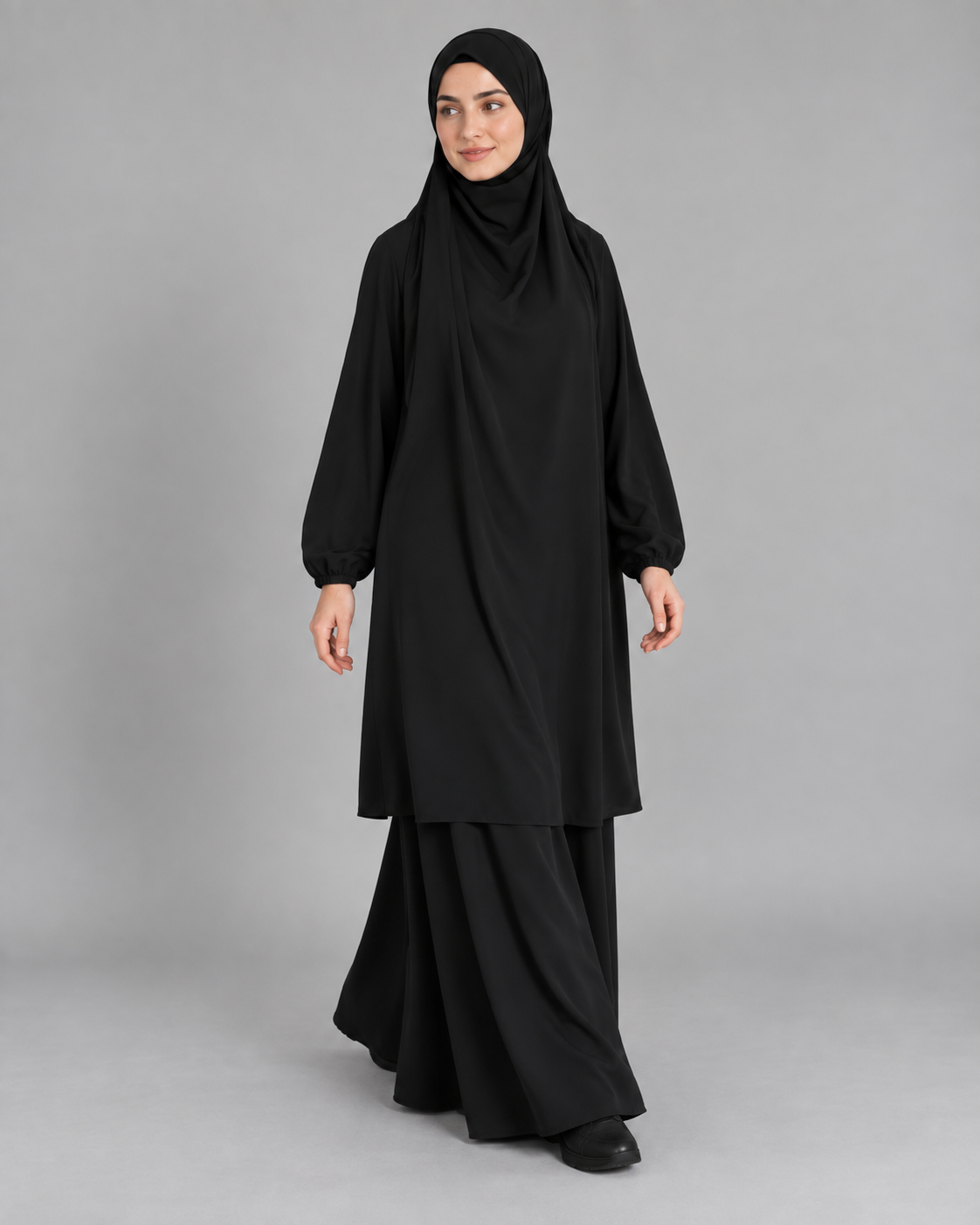
To be comfortable and follow the guidelines, the cut plays a key role. Aim for:
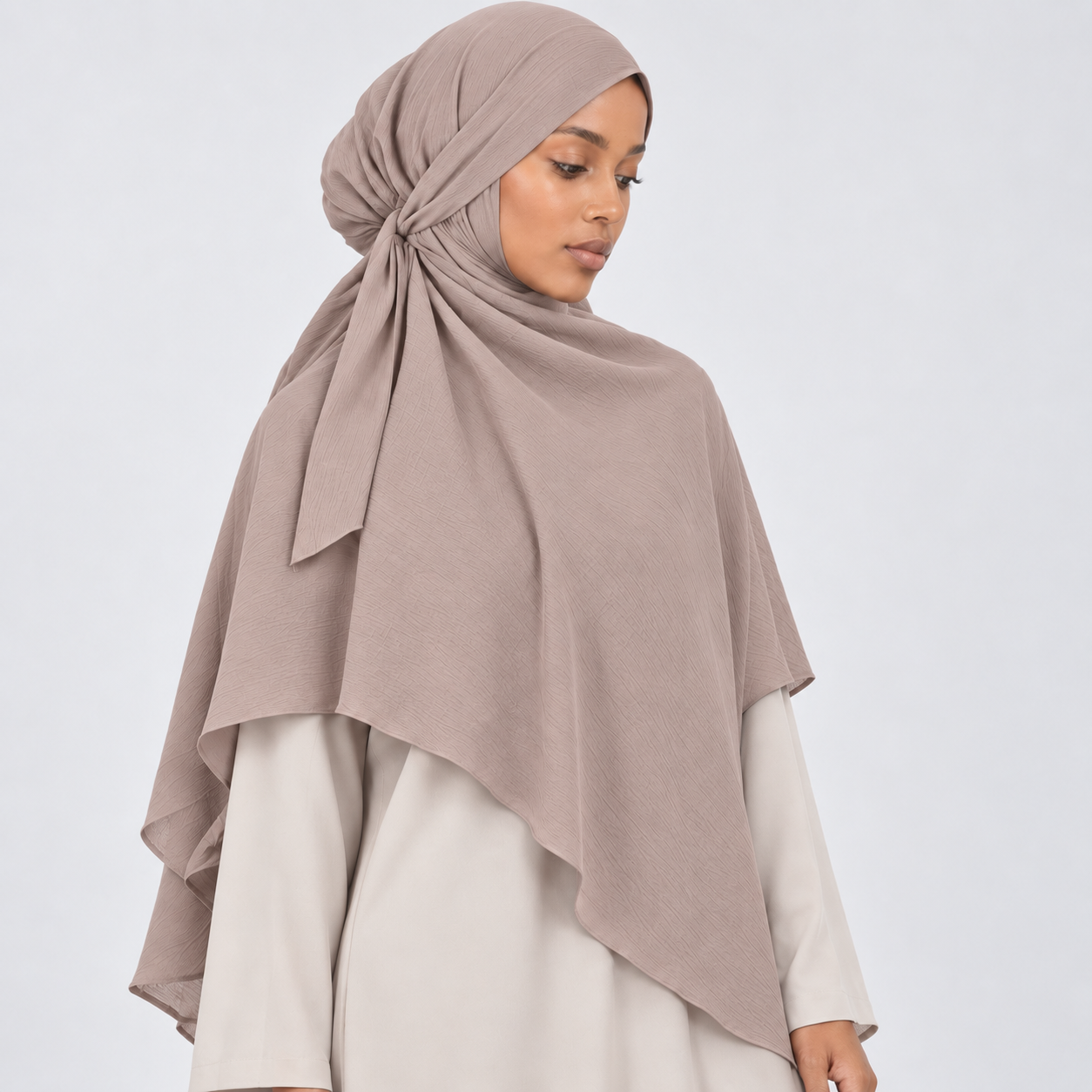
- Loose cuts (wide abaya, jilbab, non-fitted long dress, or the combination of a loose top + long skirt)
- Long sleeves, a simple neckline, nothing too tight
- A length that fully covers the ankles
- Fabric that is completely opaque, even in strong light
A little tip: a tank top or a thin pair of leggings under the dress helps avoid unpleasant surprises when it comes to sheerness. And it lets you move freely without a second thought. In fact, it really came in handy during the camel ride in the desert: the skirt of my jilbab rode up during the trip, and I was so glad I had leggings underneath, which allowed me to stay covered!
Permitted and recommended colors
No color is forbidden, but discretion remains the rule. The colors to favor:
- Black, beige, gray, navy blue: understated, practical, easy to match
- White: allowed, but it gets dirty quickly
- To avoid: flashy colors, overly conspicuous patterns, bright red or vivid yellow
Neutral tones make life easier: fewer visible stains and more ease when mixing and matching. Above all, think about practicality, especially with travel and the heat.
My personal experience: how I dressed for my Umrah
Beyond the general guidelines, I wanted to share my own experience with you. I went in April – neither in the full heat of summer nor during the milder winter, a climate in between that should give you a good point of reference. And on the ground, you quickly realize that there are several ways to dress well without breaking the bank or buying too many things.
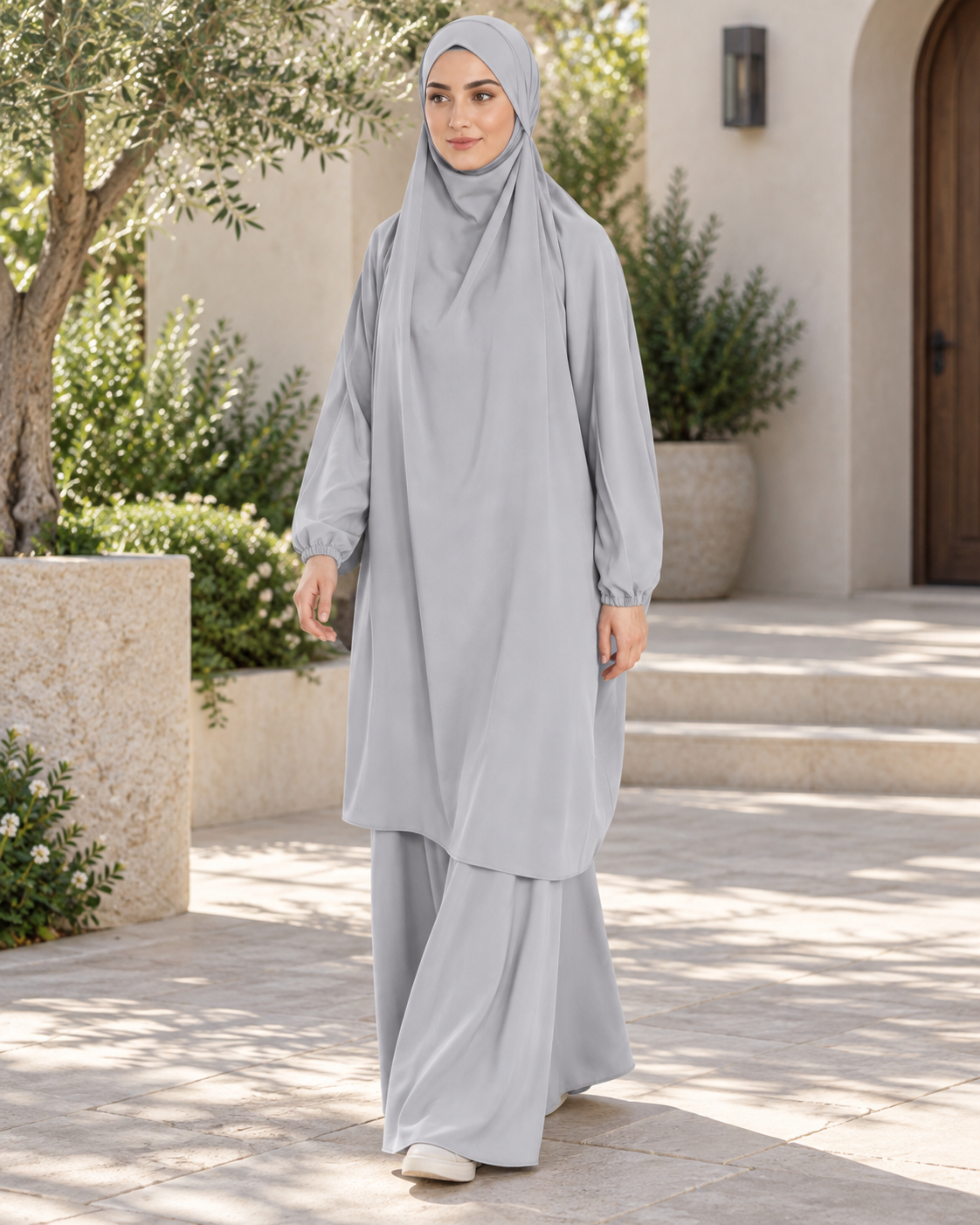
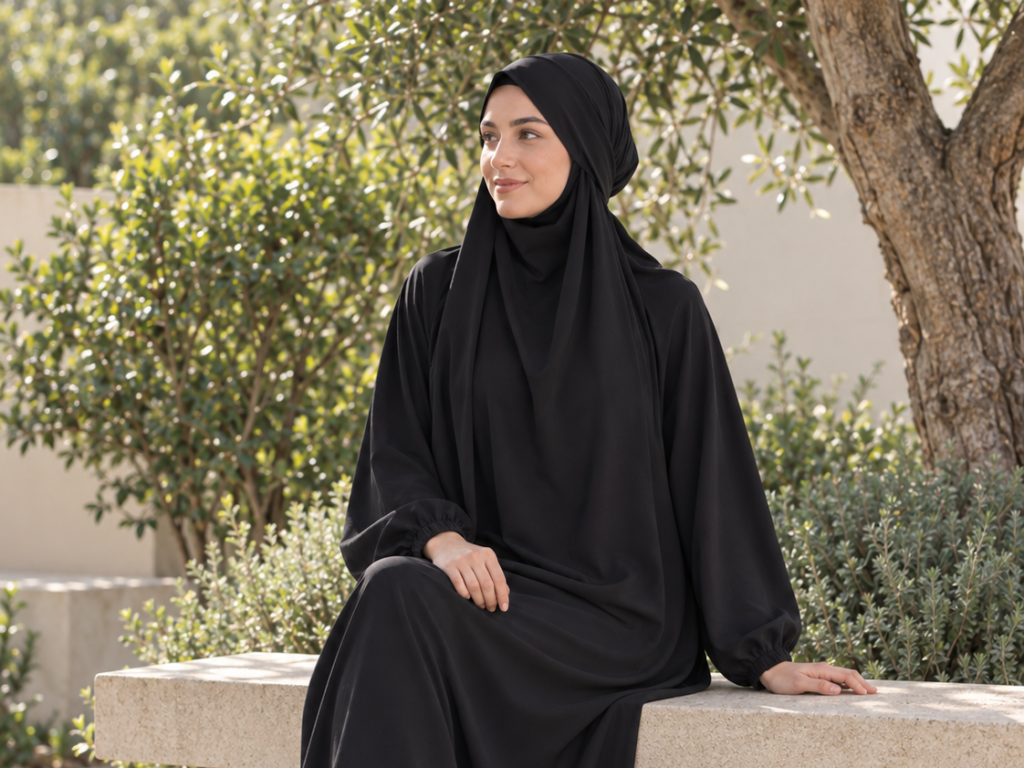
My essential is the jilbab with hood and long skirt, which I got in several colors, because it’s the simplest piece: you slip it on and don’t have to think about it anymore. But the advantage of a two-piece jilbab is that you can also style it in different ways. One day, I wore only the skirt of that same jilbab with a loose, stretchy sports top, and over it a soft, flowing khimar, much cooler for the days when it’s really hot. I did the same with the skirt of a long stretch jersey jilbab, which is even more comfortable for walking long distances.
The idea to remember: you don’t need to buy ten different outfits. A jilbab that you style in different ways (skirt alone, or the complete set), an oversized top you may already own, a cape or a sleeveless khimar over it, or even a long classic hijab, and you get several different outfits from just two or three pieces.
These are the outfits I took from Anaaz Concept Store for my Umrah:
As for shoes, two pairs were enough for me: Crocs for everyday use (going to the mosque, sightseeing, anything that requires taking your shoes off often), and hiking sneakers, essential if you plan on climbing to the Cave of Hira, where the Prophet ﷺ received his first revelations. The path is rocky and steep, so it’s best to be well shod. A little tip: don’t forget to bring tights-style socks to wear with your Crocs, much more practical and cooler than regular socks – they slip a little more than regular socks, but they’re so much cooler that it’s worth it.
3. What clothes should you pack in your suitcase for Umrah?
List of essentials (abaya, jilbab, underwear, etc.)
To make sure you don’t forget anything, a checklist is always useful. Here is what you need to pack in your suitcase:
| Garment | Main purpose | Practical tips |
|---|---|---|
| Loose Abaya/jilbab | Covers the entire body in a single piece, it’s the simplest solution and quick to put on every day | Take 2 or 3 abaya/jilbab, depending on the length of the trip For example: https://www.anaaz.store/en/product/jilbab-with-hood-and-long-skirt/ |
| Opaque long dress | Another piece, easier to put on than an abaya, to vary your outfits | 1 or 2 dresses are enough |
| Loose long-sleeved top | Another option if you want a change from the abaya: the loose long-sleeved top and the loose long skirt, to pair with a hijab. | A practical and modular combination: it lets you vary your outfits! For example: this top : https://www.anaaz.store/en/product/loose-stretchy-modest-top-sport-yoga-everyday/ + the skirt of this jilbab : https://www.anaaz.store/en/product/jilbab-with-hood-and-long-skirt/ + this khimar : https://www.anaaz.store/en/product/hijab-khimar-soft-flowing-and-lightweight/ This combination works well! It’s actually what I wore on some days during my Umrah. |
| Loose long skirt | To combine with a long-sleeve top and a hijab | 1 or 2 skirts are enough, to pair with thin leggings underneath to stay modestly covered |
| Cotton underwear | Cotton lets the skin breathe better and absorbs sweat well, which is important for intimate hygiene, especially with the heat there | Plan on about 1 or 2 per day of your stay. Cotton remains the best option for this particular item; if you want to be able to wash and dry quickly on site, a cotton/polyester blend dries much faster while keeping most of the comfort |
| Lightweight Hijab | Lets you vary your outfits, to pair with the jilbab, the loose top or the loose skirt | 2 to 3 breathable hijabs. For example: https://www.anaaz.store/en/product/hijab-premium-high-end-bamboo-jersey-lightweight-crease-resistant/ |
| Tank top | To slip on under the abaya/dress | To wear under your dress if needed. |
| Thin leggings/trousers | Cover the legs under the dress or skirt, for greater ease of movement without ever revealing anything | 2 to 3 pieces are enough – super useful if you plan to ride a camel in the desert: even a loose skirt can ride up during the activity and reveal your legs, whereas with leggings underneath, everything stays covered, which is great! |
| Thin tights-style socks, stopping at the ankle | Cover the feet and avoid direct contact with the floor in very crowded places (mosques, …) | Bring several pairs, ideal to wear with Crocs, and much less hot than a regular sock |
| Comfortable pajamas | Loose and lightweight, to sleep well despite the heat | Favor cotton, linen, viscose or silk, which breathe well while remaining covering. Be careful with satin: it isn’t a material in itself, and if it’s polyester (often the case), it traps heat instead of releasing it. Also bring a slightly more classic/covering pair of pajamas for well air-conditioned rooms, where it can be cooler than outside. Plan on 3 to 4 pairs of pajamas to get by without having to wash every day |
Also add:
- A backup outfit for unexpected situations
- A small bag for dirty clothes
- A scarf or a shawl for temperature changes
Everything is ready, you’re leaving with peace of mind!
Tips by season (heat, winter)
The weather changes everything depending on when you go. Here is how to adapt your suitcase:
In summer (May to October), it is very hot, up to 45-48°C. Go for ultra-lightweight and breathable fabrics, light colors rather than black (dark colors absorb heat), a breathable hijab, and avoid anything that clings to the skin.
In winter (December to February), you might think you need to bundle up, but that’s not the case: in Mecca, it never gets really cold, even in winter. It is between 25°C and 30°C during the day, and it drops a little in the evening, especially early in the morning for the Fajr prayer. No need for thick clothes, but keep a thin cardigan within reach – useful both for cool evenings and for the sometimes strong air conditioning in mosques, hotels and buses.
Always check the weather before packing your suitcase, and if you sweat easily, an anti-sweat hijab can save your day.
4. Accessories and shoes for women’s Umrah
The backpack, an essential that is often forgotten
A small lightweight backpack is very useful during Umrah, especially for your active days at the mosque. It lets you carry your water bottle (essential in the heat), your Quran or your supplication book to keep them within reach, as well as your phone and your important documents. It’s also handy to store your shoes once you’ve taken them off at the mosque entrance, so you don’t risk losing them among hundreds of other pairs. A small detail that really makes a difference day to day while you’re there.
Sunglasses, a true must-have
Whatever you do, don’t forget your sunglasses. The sun in Mecca can be impressively intense – one day, on my way to the Kaaba, the brightness was so strong that I could barely see anything. I was really scared at that moment, wondering if something was going to happen to me. Since then, I never leave without my sunglasses: it’s a detail that’s easy to forget when packing your suitcase, but it can really spare you an unnecessary moment of panic.
A little extra tip: choose sunglasses with good UV protection, and not just tinted ones. Lenses that are simply dark reduce the perceived brightness, but if they don’t have a real UV filter, they don’t actually protect your eyes – worse, they can even be counterproductive, since the tint makes the pupil dilate, letting in more UV rays without you feeling it. Check that your sunglasses indicate UV400 protection, the standard that blocks almost all UV rays.
Suitable shoes and sandals
Shoes are the foundation for enjoying Umrah without suffering. What to choose:
- Sandals or closed shoes, comfortable, easy to put on and take off
- Non-slip sole (to avoid slipping, especially at ablution time)
- No heels, no complicated laces
- Already worn before departure (to avoid blisters)
Crocs are also an excellent choice for everyday wear: easy to slip on and take off, perfect for anything that requires frequently removing your shoes (mosque, visits). Also bring a pair of sneakers if you plan to do more physical activities, like a hike.
Avoid new or stiff shoes. Slip a spare pair of sandals into your suitcase, and for breaks, lightweight slippers can be welcome.
Jewelry, gloves, niqab: what is allowed or not
A few simple rules about accessories:
- Jewelry: allowed, but stay discreet. No flashy or precious jewelry, to avoid any trouble.
- Gloves: no, the hands must remain uncovered during the rites.
- Niqab: no either, the face must remain visible. The hijab is enough.
Summary table:
| Accessory | Allowed? | Tips |
|---|---|---|
| Jewelry | Yes | Simple, discreet |
| Gloves | No | Uncovered hands |
| Niqab | No | Uncovered face |
Simplicity saves time… and prevents forgetting things.
And what about piercings?
A question I asked myself before leaving: can you keep your piercings during Umrah? I asked my guide on site directly, who confirmed that it wasn’t a problem. Personally, I kept my piercing for my whole stay, without any issue. That said, opinions may vary depending on schools of thought – if the question concerns you, don’t hesitate to ask an imam or a guide before your departure, so you can leave with peace of mind.
5. Mistakes to avoid and practical tips
Try on your outfits before leaving
A piece of advice I truly recommend: try on your outfits before leaving. Take the time to see concretely what you’re going to wear, and which pieces you can mix and match with each other. Yes, it takes a little time, and of course you never know exactly what tomorrow will bring – but once you’re there, you already know which combinations you have on hand, without having to think or dig through the suitcase. It’s a real gain in time and peace of mind.
Common things people forget
The classic oversights? Here are the pitfalls to avoid:
- Not bringing enough spare underwear (always plan generously)
- Packing clothes that are too tight or too sheer (test them before leaving)
- Bringing unsuitable shoes (comfort above all)
- Forgetting a spare hijab (with the heat, a second one can save the day)
One last point: a written list prevents last-minute oversights. Especially if the weather changes.
Care and comfort tips
To keep your clothes in top shape during your stay:
- Choose fabrics that are easy to wash and dry quickly
- Avoid fabrics that wrinkle too much (no ironing, less stress)
- Bring a small bag to separate clean from dirty
- A mist spray or a small towel to freshen up is always nice
- Test all your outfits beforehand: comfort, opacity, ease of walking
And always keep a backup outfit in your bag: the unexpected happens quickly, and it can change everything.
Conclusion
Dressing for Umrah for women means: simplicity, modesty, loose-fitting clothing suited to the heat. There is no required outfit, but a few easy rules to follow: comfort, discretion, practicality. Pack your suitcase with the essentials – without forgetting the small details that really make a difference once you are there, like good shoes, a practical backpack or suitable sunglasses. Try on your outfits before you leave so you know exactly which combinations you are taking, and set off with peace of mind. Keeping things simple is what makes the experience smoother and more beautiful.
FAQ
All colors are fine, but muted tones like black, beige, gray or navy blue are the most suitable. White works too, but be aware that it gets dirty very quickly. Flashy colors or large patterns are a no, to stay discreet and in keeping with the spirit of Umrah.
Go for comfortable shoes or sandals, closed or open, that hold up on long walks. They should be easy to take off for the rites, non-slip, flat, and above all already broken in to avoid blisters. Crocs or flat sandals are perfect for everyday use (mosque, visits), while a pair of sneakers becomes essential if you plan a hike, such as the climb to the Cave of Hira. Practicality first is the motto.
Yes, but discretion is still expected. Opt for simple jewelry that isn’t too showy, and avoid anything valuable. This reduces risks and fits better with the spirit of the place.
The outfit must be loose-fitting, opaque, and cover the whole body except the face and hands. The choice depends on the heat and the need to walk, with no requirement regarding color or shape. Modesty, discretion, comfort: that’s the winning trio.
No, during the rites, neither gloves nor a niqab are allowed. The hijab is enough for the head, and the hands as well as the face must remain uncovered, in accordance with religious rules.
Leave a Reply